How Singapore's Humidity Shapes the Wood Dining Table You Bring Home
Walk into any Tampines or Punggol HDB flat around October and you will feel it within seconds — the air is heavy, the floor tiles feel slick under socks, and the wooden wardrobe panel closest to the bathroom door looks like it has moved 2 mm out of alignment since June. That is the same air a brand-new oak dining table sg shoppers browse on Carousell or in a showroom at Sungei Kadut has to survive for the next fifteen years. I learned this the hard way last month when I visited a friend's resale flat in Bedok. Her twelve-month-old American walnut table had a 1.5 mm cup along one edge, a hairline split near a leg joint, and a faint white haze across the top — all because the previous owner had wiped it down with a wet cloth every morning for a year.
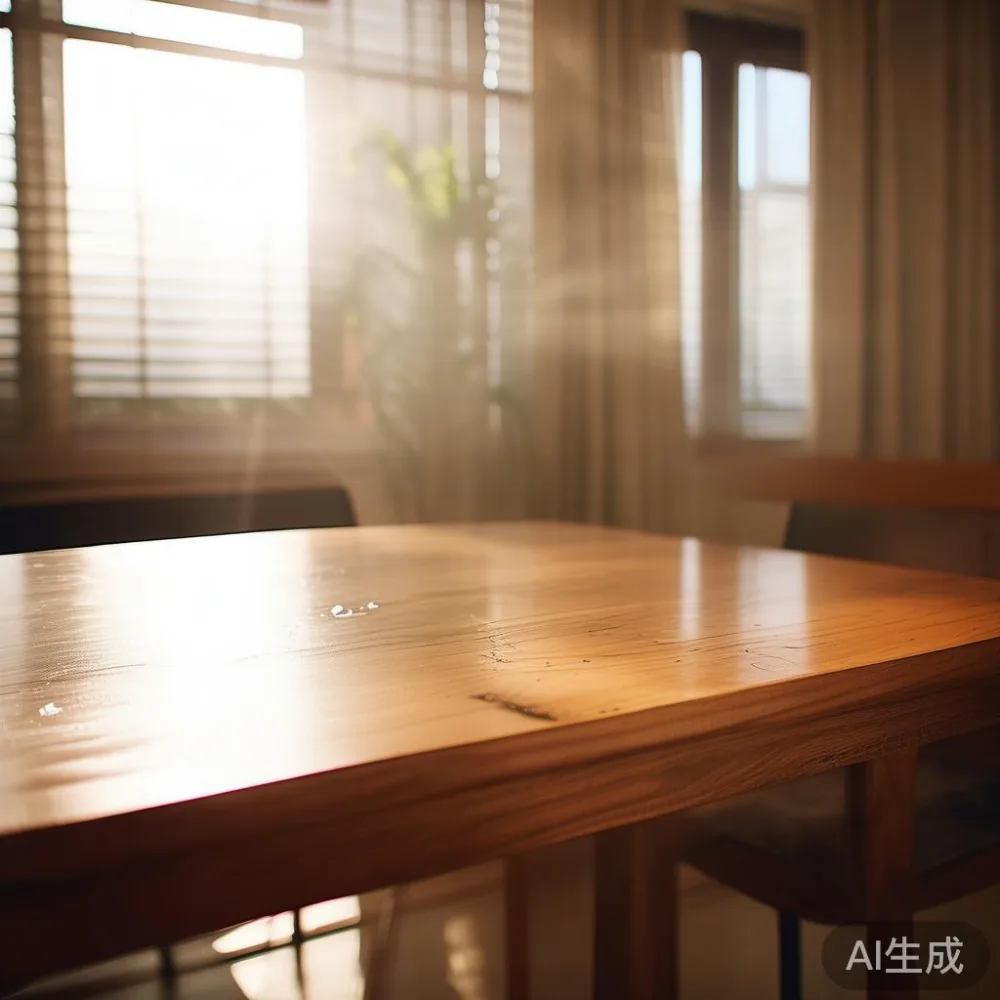
Why Singapore's Climate Is Especially Tough on Solid Wood
Singapore sits within one degree of the equator. The average relative humidity runs between 78 % and 88 % for ten months of the year, with daily peaks of 92 % during the December to February monsoon and the June to September southwest monsoon. Indoor humidity in an HDB unit rarely drops below 70 % unless a 24-hour dehumidifier is running. Wood is hygroscopic: it absorbs moisture when ambient humidity rises and releases it when the air dries. A typical European oak board, kiln-dried to 8 % moisture content, will move toward roughly 14 % to 16 % once it acclimatises to a HDB bedroom. That change drives most of the cracking, cupping, and stuck drawer problems owners blame on the factory.
The culprits you can measure with a SGD 25 thermo-hygrometer are temperature (26 °C to 32 °C), relative humidity, and the speed at which they swing between day and night. Solid wood furniture reacts to those swings every single day, while engineered alternatives tend to react only at the surface veneer. This is why a 100 % solid teak dining table purchased from a Foshan workshop behaves completely differently from a chipboard-veneer unit at the same price point.
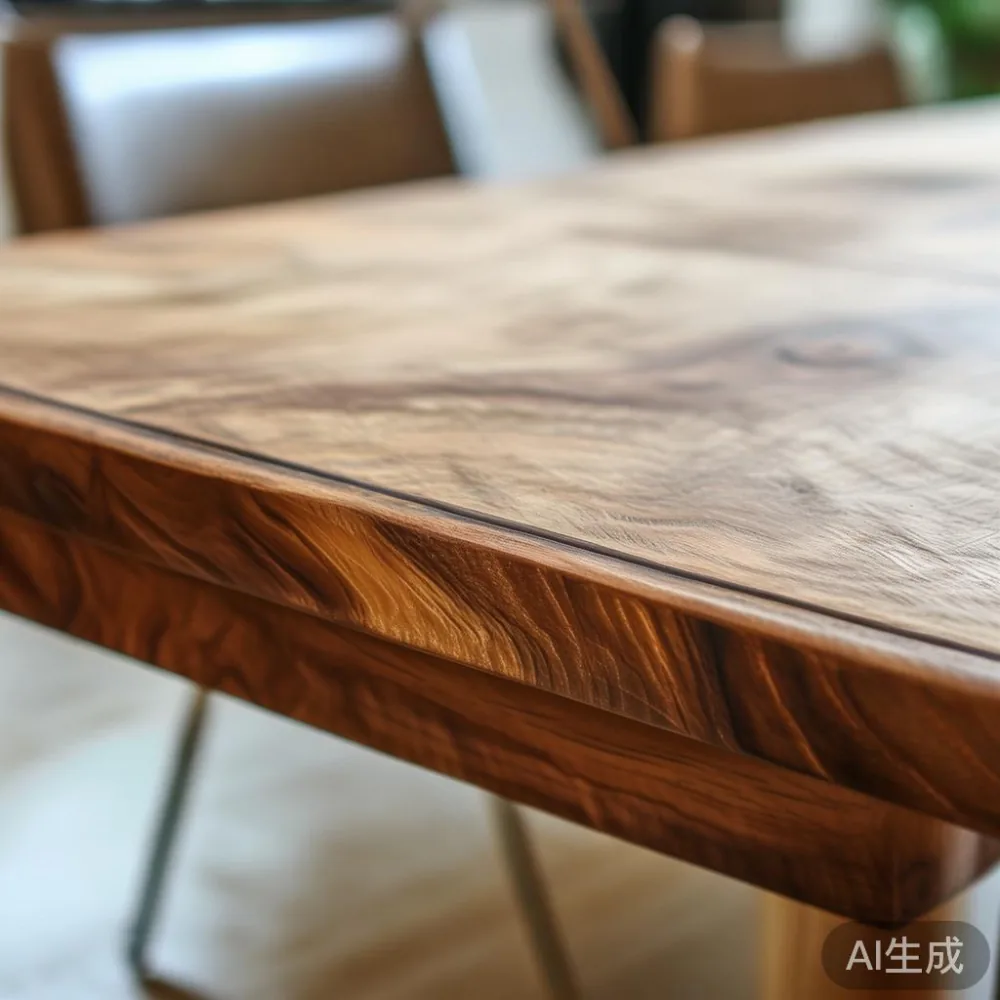
From the Foshan Workshop to a Punggol Living Room — What Actually Happens
Most pieces labelled as "solid wood" in Singapore showrooms are still made of staves, planks, or short components that are finger-jointed, glued, or dowelled. That is normal construction. What matters is the moisture content at the moment of assembly and the species. At MIDHILL furniture's Foshan factory, kiln-dried ash, oak, and walnut are brought down to 8 % to 10 % MC, then assembled in a controlled bay. By the time a 200 kg dining table for 6 seats leaves the workshop, every component has been sealed on all six sides. I saw this in person when a colleague toured a 12,000 sqm production hall — boards stacked with 1 cm spacer sticks, fans running for 18 to 22 days per cycle.
The journey to a Singapore address adds another variable. Containers cross the South China Sea in 5 to 7 days, with internal temperatures reaching 55 °C and humidity spikes close to 95 %. I have unboxed pieces myself in Jurong that arrived bone-dry on the outside but measured 12 % MC at the core, and small cracks had already opened along the end grain during the voyage. A reputable supplier pre-conditions the load, uses desiccant packs (usually 200 g per cubic metre), and warns the buyer to leave the piece in its packaging for 24 to 48 hours inside the home before opening. The MIDHILL team, for one, includes a printed acclimatisation card with every export order so the same instruction lands in English on a Tampines kitchen counter.
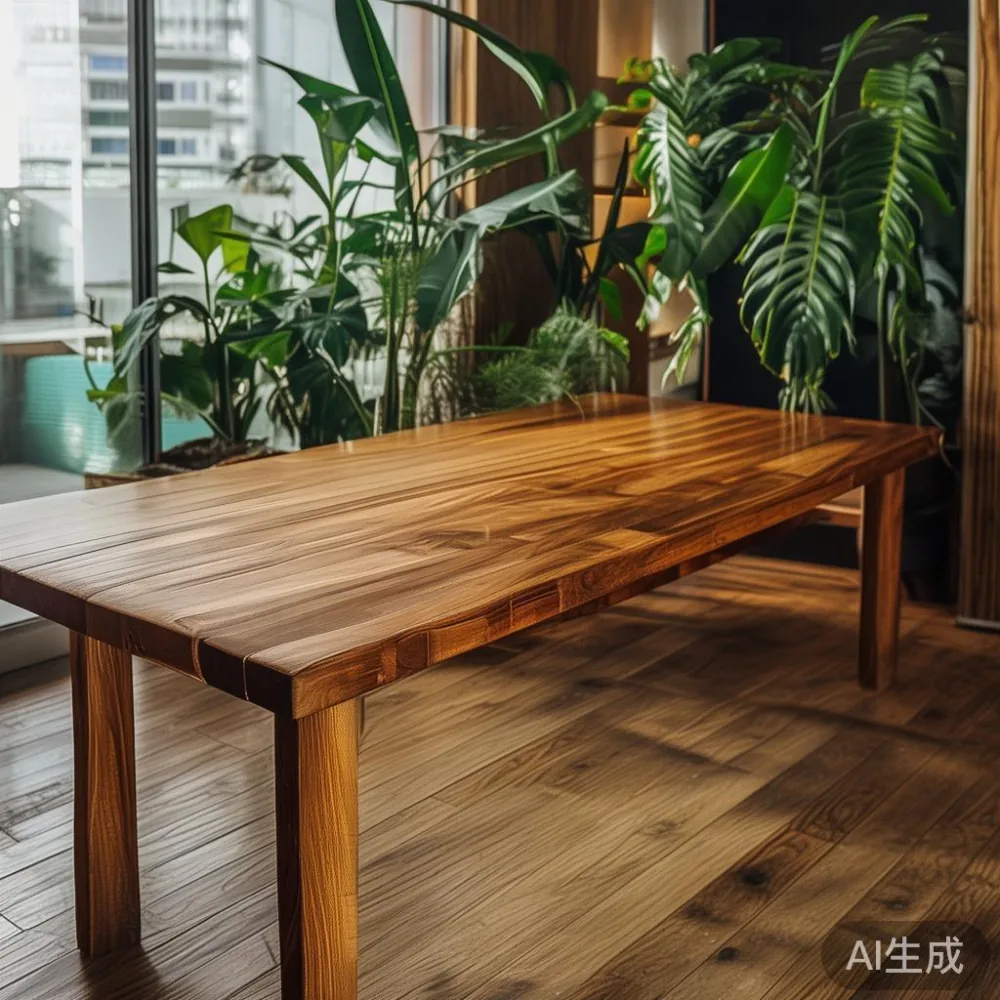
"Will My New Dining Table Really Survive a HDB Without Warping?" — A Direct Answer
Yes, if four conditions are met. The wood is a stable species, the construction is genuinely solid, the moisture content at delivery sits between 8 % and 12 %, and the home environment is actively managed. Pick the wrong species, and no warranty will save you. Chengal, teak, and white oak perform best in our climate because their tangential-to-radial shrinkage ratio stays close to 1.4, meaning they expand and contract evenly. Rubberwood, popular because of price, moves far more aggressively and tends to cup within eighteen months in an air-conditioned unit where the door is opened and closed all day.
For Singapore HDB layouts specifically, the lift and corridor dimensions govern everything. An HDB passenger lift measures roughly 1.5 m deep by 1.1 m wide with a 1.9 m door opening. A 1.8 m dining table for 6 seats will not fit flat — it has to be tipped on edge, which is why most buyers here choose 1.4 m to 1.6 m rectangular or 1.2 m round tops. Corridor turns at the lift lobby are usually 2.4 m wide, generous enough for a fully assembled piece. A marble table weighing 90 kg to 140 kg, however, often has to be split: top separate from base. Always confirm with the showroom whether a piece can clear both the lift and the door before paying the 9 % GST and a SGD 80 to SGD 200 delivery fee.
Day-to-Day Habits That Add Five Years to a Wood Table
Most warping I see in repair jobs in Bedok, Hougang, and Clementi comes from three habits: placing the dining table directly under a cold-air vent, ignoring coasters, and wiping with a damp cloth. Air-conditioning drops localised humidity to 40 % within twenty minutes when a vent blows across the top. The wood surface dries fast, the underside stays humid, and the panel cups toward the dry side. Aim the vent away, or close the louvre over the table.
Coasters are non-negotiable for any open-pore species such as ash or walnut. A 35 °C mug of kopi placed directly on the wood raises the surface moisture briefly, then creates a raised grain ring once it dries. The same logic applies to the solid wood sofa frames and bed frames I see arrive with raised grain on the armrests within months. A simple rotation every four months — front legs to back legs, dining table from one end of the room to the other — equalises light and humidity exposure.
The twice-a-year deep clean matters most. Lightly dampen a microfibre cloth (never dripping), wipe along the grain, then buff dry within 60 seconds. Follow with a thin coat of hard wax oil — Osmo, Fiddes, or Rubio Monocoat are common, each 500 ml tin costs SGD 35 to SGD 55 locally. Application is once every 6 to 8 months for an open dining table used daily, once every 12 months for a bedroom dresser or nightstand.
Matching Furniture Style to a Humid, Compact Home
Style matters here because the wrong silhouette works against humidity control. Heavy, panelled wardrobes pushed against an exterior wall trap moisture behind the carcass and grow black mould on the MDF backing. Lighter French light luxury frames with raised legs — 10 cm to 15 cm off the floor — let air circulate and dry the wall surface within minutes after a spill. The same logic favours American light luxury dining tables with slimmed-down trestle bases over chunky pedestal designs. Air moves around them, the wood dries evenly, and the room reads more spacious in a 90 sqm HDB or a 65 sqm two-bedder in Punggol.
For shoppers comparing light luxury bed vs Mid-century modern bed, the practical differences are real. Mid-century pieces often use thinner slats, exposed joinery, and shorter legs that read cleaner visually but sit closer to the floor — exactly where humidity pools. Light luxury French provincial silhouettes offer higher legs, deeper skirts, and richer moulding, which suits a maisonette or condo where ceiling fans stir the air above the bed. Pair that frame with a 1.5 m bedside table in the same species, and you extend a visual line that makes a small master bedroom feel 10 % to 15 % larger than it measures on the floor plan.
If the priority is storage, a wardrobe with full-length cedar lining buffers humidity swings by absorbing moisture on damp days and releasing it on dry afternoons. Buy one measuring 180 cm tall by 120 cm wide, and you can usually clear it flat through an HDB lift. Smaller dressers at 90 cm by 45 cm fit every lift and most condo service corridors.
"Which Pieces Are Worth Stretching the Budget For?" — A Singapore Buyer's View
In our climate, spend on pieces that face the harshest environment: dining tables, kitchen islands, and bathroom vanities. Save on pieces that sit in air-conditioned bedrooms. A 1.4 m solid ash dining table for 4 to 6 seats from a reliable Foshan workshop runs SGD 1,400 to SGD 2,400 before GST. A matching bench adds SGD 350 to SGD 600. The same brand's 1.8 m wide wardrobe in ash is SGD 2,800 to SGD 4,200. A marble table top in Carrara or engineered quartz on a solid ash base lands between SGD 2,200 and SGD 3,800, depending on the vein matching and the steel reinforcement under the slab.
Bargain pieces in the SGD 600 to SGD 900 range are usually thin (18 mm or less) and made from finger-jointed staves. They are fine for a study desk that will be replaced in three years, but they cannot handle a family dining room where hot pots, rice cookers, and humid plates land every evening. Look for top panels at least 25 mm thick, edges that show a single continuous grain run across the width, and underside bracing every 40 cm to 50 cm.
Long-term value lives in construction quality and refinishing access. A 10-year structural warranty is the floor you should accept. Lifetime refinishing — sanding and re-oiling — extends usable life by 10 to 20 years for a piece that costs SGD 1,500 upfront. Free shipping above USD 350 (around SGD 480) covers most dining configurations, and a 14-day return window lets the piece acclimatise long enough for any hidden defect to show. If you choose a dining table sg buyers rate highly for after-sales care, ask what happens at year five, year ten, and year fifteen — anyone can sell you a piece, fewer can stand behind it for a decade.
The Quiet Lesson from a Decade of Repairs
After watching dozens of households cycle through dining tables over the past ten years, the pattern is consistent. Owners who measure humidity with a SGD 25 metre, keep it between 55 % and 65 %, oil the surfaces on schedule, and rotate the piece seasonally still have their original table in service. Owners who don't, replace theirs every 4 to 5 years regardless of brand or price. The wood is rarely the problem. The environment is the problem, and the environment in Tampines, Bedok, and Punggol is the same environment a Foshan workshop plans for when it kilns and seals its boards.
Whether you eventually pick a slim American light luxury dining set, a French provincial bed frame, or a Japanese inspired low-line bedroom suite built for small living rooms, treat the purchase as the start of a maintenance routine rather than a one-off transaction. Climate-appropriate species, correct moisture content at delivery, honest construction, and two oilings a year will outlast any marketing claim. Style then becomes a question of taste, not a compromise against the weather. For anyone pairing a dining table with matching seating, sideboards, or wardrobes from the same workshop, this single habit — managing humidity — quietly protects every dollar spent, including the 9 % GST line on the final invoice.