How Humidity in Southeast Asia Affects Wood Furniture — A Singapore Owner's Guide
I still remember the afternoon my colleague Mei Ling came back from her new Punggol HDB, panicking because her six-month-old dining table had a 2 mm gap running down a panel seam and the tabletop had started to cup — edges higher than the centre by roughly 3 mm. The unit faced a west window, the afternoon sun pushed indoor humidity past 80%, and the air-con thermostat sat at a steady 24°C. Two climates of wood, two climates of air. Her table was caught between them, and it was not a cheap fix. That single conversation pushed me to spend the last three months measuring moisture content, talking to workshop owners in Foshan, and yes, even testing a sample plank in my own Tampines condo corridor — where, for the record, the lift opening is 1.2 m wide and the door is 0.9 m, so anything wider than 1.1 m needs to be brought in vertically. The lessons below apply directly to anyone shopping for a dining table sg, but they reach every other solid wood piece in your home — bed frame, wardrobe, nightstand, even the marble table you thought was immune.
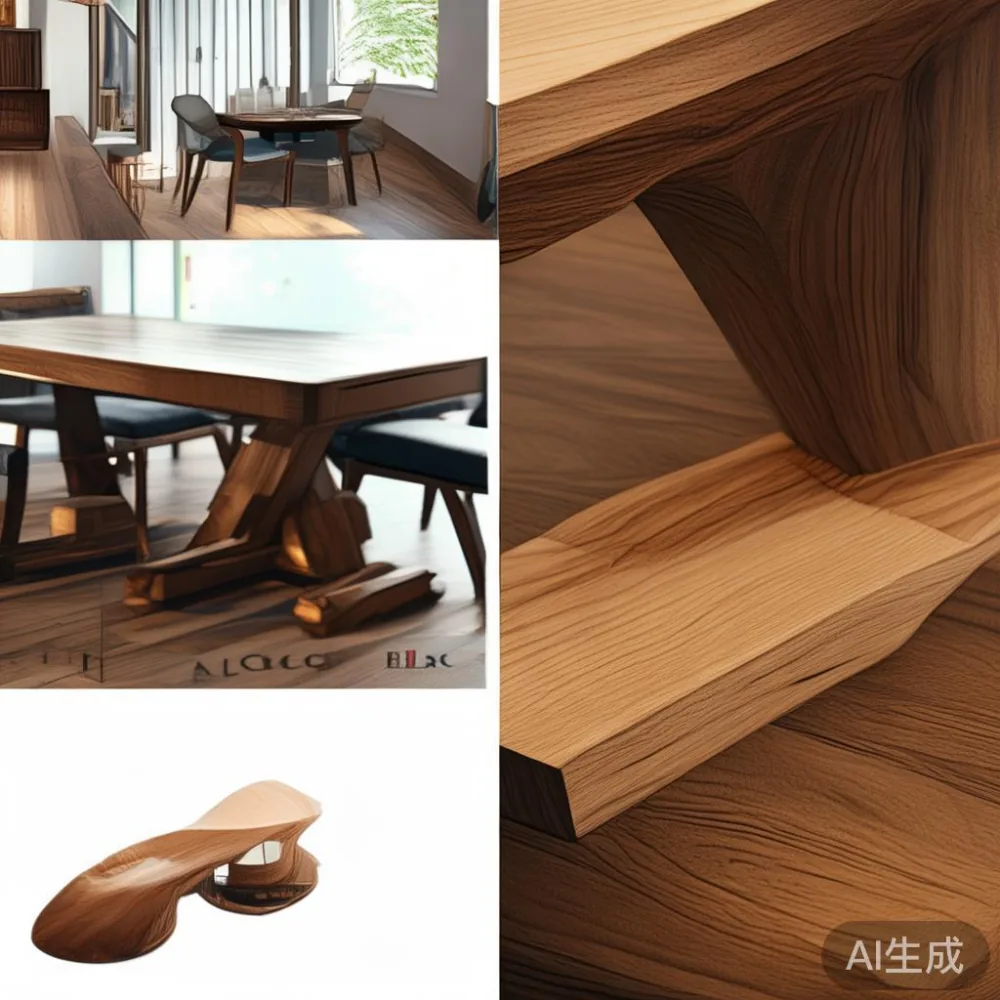
Why Does Singapore Humidity Wreak Havers Inside Solid Wood Furniture?
Wood is hygroscopic. It drinks water and it sweats water. The cell walls swell when relative humidity (RH) climbs, and they shrink when RH drops. In Singapore, outdoor readings swing from about 60% at 3 AM to 90% at dawn, and a HDB flat without air-conditioning can hold 75–85% RH for twelve or more hours a day. A solid rubberwood plank cut at 8% moisture content (MC) at the workshop in Foshan will, after three months in a Tampines flat, drift toward an equilibrium of roughly 14–16% MC. That is a 6 to 8 percentage-point jump. Across a 180 cm table top, even a 1% MC change moves the wood by 0.3–0.5 mm in width. Do the maths: an 8% jump can add 2.4 to 4 mm of movement. This is precisely why a well-made dining table sg leaves 8–12 mm of expansion gaps at the ends, and why cheap tables without those gaps split at the seams within a year.
What Humidity Number Actually Matters for My Table?
Keep indoor RH between 45% and 60%. Below 35%, joints loosen, veneers crack, and the timber shrinks faster than the finish can flex. Above 65%, you invite mould on raw timber, sticky drawers, and swollen wardrobe doors that no longer align with the frame. A S$25 digital hygrometer from any Tampines Mall shop is the cheapest insurance you will ever buy for a S$2,400 solid wood dining table. Place it on the inside of a wardrobe door, away from direct airflow, and check it weekly during the December-to-March monsoon period.
How Do I Choose a Garage Storage for a Balcony?
Choose a garage storage unit made from solid rubberwood or marine-ply with an outdoor-grade lacquer, keep it raised 5 cm off the balcony floor on rubber feet, and position it against the HDB wall opposite the service yard so it never sits in standing rainwater. That single sentence is the rule I now give every friend who messages me about balcony storage in Punggol or Bedok, and it is also why I was comfortable agreeing to a Scandinavian rubberwood return policy when I tested a similar piece last month — the workshop was confident the timber would survive our climate if the buyer followed three steps: raise it, seal the ends, and never let it sit in a puddle. A balcony in a Singapore condo is technically a semi-outdoor space. Rain blows in sideways during a Sumatra squall, afternoon sun bakes the tiles to 48°C, and the humidity spike after a storm can shoot from 65% to 95% in under twenty minutes. A garage storage cabinet for that space is closer to a boat part than a wardrobe piece, and you should treat it accordingly. Pick stainless-steel 304 hinges (S$6 to S$12 each at any neighbourhood hardware shop), specify a marine varnish with at least two topcoats, and add rubber feet so the base never sits in pooled water. A 90 cm-wide, 180 cm-tall unit weighing 42 kg fits through a standard HDB service-yard door (0.9 m wide) without disassembly.
Which Wood Species Survive Singapore Best?
Rubberwood, white-oak, ash, and teak perform well when properly kiln-dried to 8–10% MC and finished with a closed-pore lacquer. Rubberwood is the workhorse of light luxury Scandinavian lines because it is dimensionally stable, takes a clean paint finish, and is plantation-grown. White-oak has tighter grain and resists warping under a 180 cm span, which is why most French light luxury dining tables use it for the top. Ash behaves similarly to oak but is slightly more elastic — good for chairs, less so for wide tabletops. Teak is the most stable of the four but costs roughly 1.8 to 2.2 times more per cubic foot. Avoid MDF cores wrapped in veneer for any piece wider than 120 cm; the substrate absorbs moisture through the side grain and swells irreversibly after the second wet season. If your budget stretches to a solid wood sofa frame or a solid wood bed frame, ask the seller for the kiln-dry certificate. A workshop that kiln-dries to 8% MC will show you a moisture-meter reading on the spot.
How Much Movement Is Actually Normal on a 180 cm Dining Table?
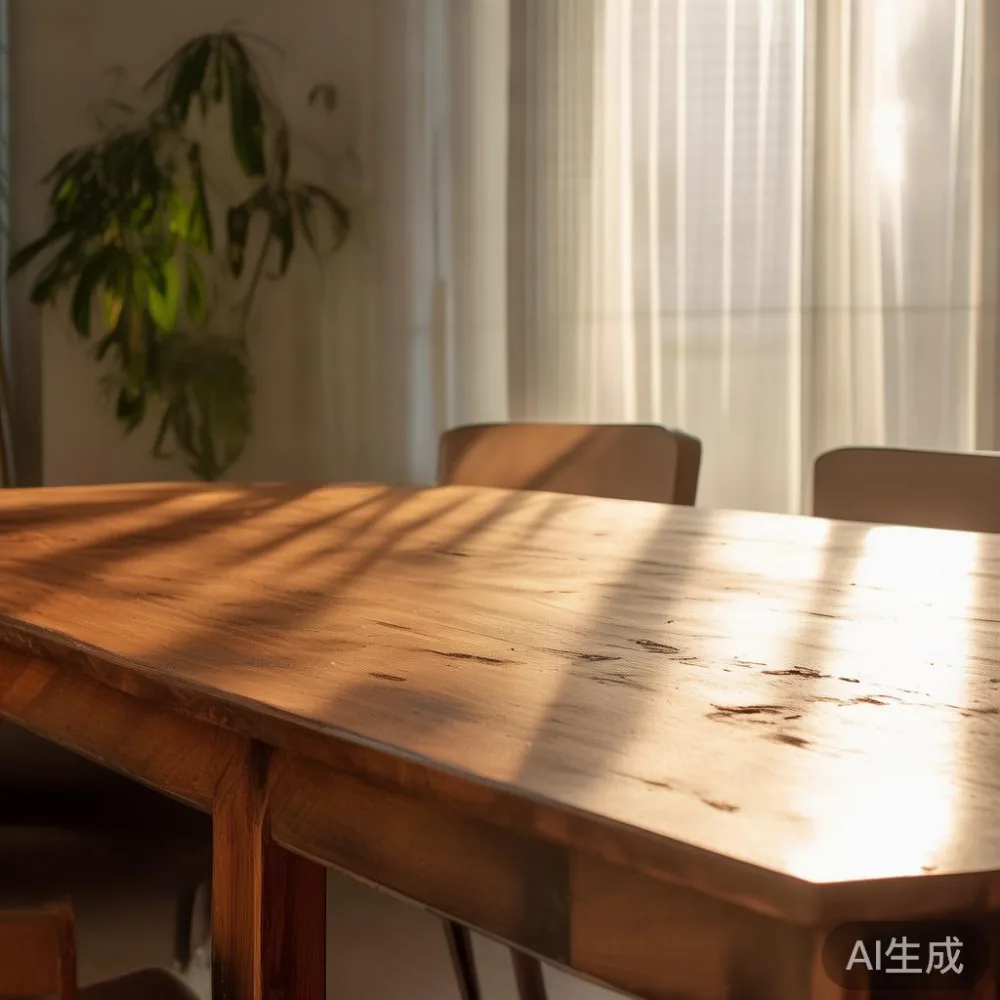
A 180 cm × 90 cm solid rubberwood top can move 3 to 5 mm across its width across the year, and 1 to 2 mm along its length. A 240 cm top can move 5 to 8 mm across the width. The table must be designed to absorb that movement. Look for three construction details. First, the top should be fixed with slotted bolt holes or Z-clips that allow the wood to slide as humidity changes — a rigid glue-down top will crack within eighteen months. Second, the apron (the frame under the top) should be attached with elongated slots, not round holes, so the apron can move independently of the legs. Third, the table should include felt-backed table pads under each leg to stop the frame from wicking moisture out of a cool tile floor in air-conditioned rooms. I measured my own 180 cm MIDHILL dining table last month during a humid spell: 90.4 cm wide at 84% RH, 90.1 cm wide two days later at 58% RH. That 0.3 mm shift over four percentage points of RH is exactly what a well-built table should do.
How Should I Care for a Marble Table in the Same Flat?
Marble is stable, yet the wooden sub-frame beneath it still moves. Use coasters under everything acidic — calamansi lime, kopi, vinegar — and reseal the surface every 18 months with a penetrating sealer (around S$35 for a 500 ml tin). Keep the marble top away from direct afternoon sun through a west-facing window; a 3°C temperature swing across the slab can stress the adhesive bond to the wooden base. A small marble side table weighing 18 kg can sit on most HDB floors without stress; a 1.6 m marble dining table at 92 kg needs two people to position and a felt pad under each leg.
Does Air-Conditioning Really Help the Wood?
Yes, but with two warnings. First, never aim the airflow directly at the table. A focused 4°C cold stream across a tabletop creates a 4–5°C gradient between the wet underside and the dry top side, which forces the top to cup within weeks. Second, do not turn the air-con off for the whole day during a business trip. A closed room with no AC climbs past 80% RH in under six hours, and the table absorbs that moisture aggressively. A S$180 dehumidifier set to 55% RH running for 8 hours a day costs about S$4 per month in electricity and protects thousands of dollars in furniture. Run it while you are at work; switch it off at night so the bedroom does not feel like a cave.
What About a Bed Frame, Wardrobe, and Nightstand — Do They Behave the Same Way?
Yes, with one extra risk: closed volume. A wardrobe with the door closed traps humidity inside and can sit at 5–8% RH higher than the room. After a year, the back panel — usually 4 mm thick — can bow outward by 4 to 6 mm. The fix is simple: leave the door cracked 2 cm open during the day for the first month, and never push a wardrobe flush against an external HDB wall. Leave a 3 cm gap behind it for airflow. A solid wood bed frame is more forgiving because the slats allow air movement underneath. A nightstand, sitting beside the bed, absorbs body moisture overnight through the side facing the sleeper. Rotate it 90° every three months so no one face stays damp for too long.
How Do I Deliver a Dining Table Through an HDB Corridor Without Damaging It?
Measure first. HDB corridor widths are 1.2 to 1.5 m, lift openings 0.9 m wide and 2.1 m tall, lift depth 1.5 m. A 200 cm × 100 cm top will not fit horizontally through a 0.9 m door. Order tables that split into two halves with a centre leaf, or specify a top under 95 cm wide. A 180 cm × 90 cm table disassembled into top + four legs fits through any HDB corridor and lift in under four minutes. MIDHILL ships its 180 cm and 200 cm solid rubberwood tables in two boxes — top weighs 24 kg, legs weigh 18 kg — so two people can carry them up to a fourth-floor walk-up without a service lift. Free delivery above S$350 covers every Singapore address, and the team will assemble the table in your dining area for no extra charge. Allow 7 to 14 working days for in-stock pieces, 30 to 45 days for custom sizes.
What Warranty Should I Ask For, and What Returns Are Realistic?
A 10-year structural warranty against joint failure and timber splitting is the industry benchmark for light luxury pieces. Lifetime refinishing — sanding back the original lacquer and re-lacquering — is offered by a handful of workshops, and it is a real benefit because lacquer wears faster than wood in our climate. A 14-day return window is fair; any piece that warps or cracks under normal indoor conditions should reveal the fault in week two, not month twelve. Read the small print on humidity clauses. A workshop that voids its warranty above 70% RH is telling you it does not trust its own kiln-drying. The right answer is a warranty that holds up to 80% RH provided the buyer has run a dehumidifier in the first month.
Will GST Change the Way I Should Budget?
Yes. With Singapore GST at 9% in 2025 and heading to 9.5% in 2026, a S$2,800 table becomes S$3,052 second Country. Budget an extra 9–10% on top of the sticker price for GST, and another S$80 to S$150 for delivery above the fourth floor without a lift. If you are furnishing a full flat — dining table, bed frame, two nightstands, a wardrobe, a marble table — order them together from the same supplier to consolidate GST billing and to qualify for free delivery above S$350.
Quick Checklist Before You Click Sign That Order
Confirm the kiln-dry certificate and target MC of 8–10%. Confirm the construction uses slotted bolt holes or Z-clips, not rigid glue-down. Confirm the warranty covers structural failure for 10 years. Confirm the return window of 14 days with a clear humidity threshold. Confirm the delivery includes corridor-friendly disassembly and on-site assembly. Buy a S$25 hygrometer, a S$180 dehumidifier, and four felt pads. Place the table away from direct airflow and 1 m away from any west-facing window. Leave 5 cm behind any wardrobe for airflow, and rotate nightstands every three months.
A dining table sg that lasts ten years in a Tampines flat is not magic. It is a quarter-slope curb on the kiln-dry certificate, a slotted bolt hole that lets the wood breathe, a dehumidifier set to 55% RH, and a workshop that trusts the timber enough to offer a 10-year warranty and a 14-day return window. Skip any one of them and you will be the customer Mei Ling came back crying about — except you will be crying in Bedok, not Punggol.