How Humidity in Southeast Asia Affects Solid Wood Dining Tables — A Singapore Buyer's Field Guide
Last March, I delivered a 240 cm French light luxury solid wood dining table to a fourth-floor walk-up in Bedok. The corridor measured only 110 cm wide, the lift door sat at 78 cm, and the buyer was convinced nothing larger than a 180 cm set would fit. We tilted it, rolled it onto a moving blanket, and slid it through the service door — the same exercise we repeat around 20 times a week in HDB estates across Tampines, Punggol, Sengkang, and Jurong. By the time the table reached her dining nook, relative humidity in the unit was reading 82% on her Xiaomi sensor. Two weeks later she messaged asking whether the small gap that had opened at one join was a defect. It wasn't. It was Singapore.
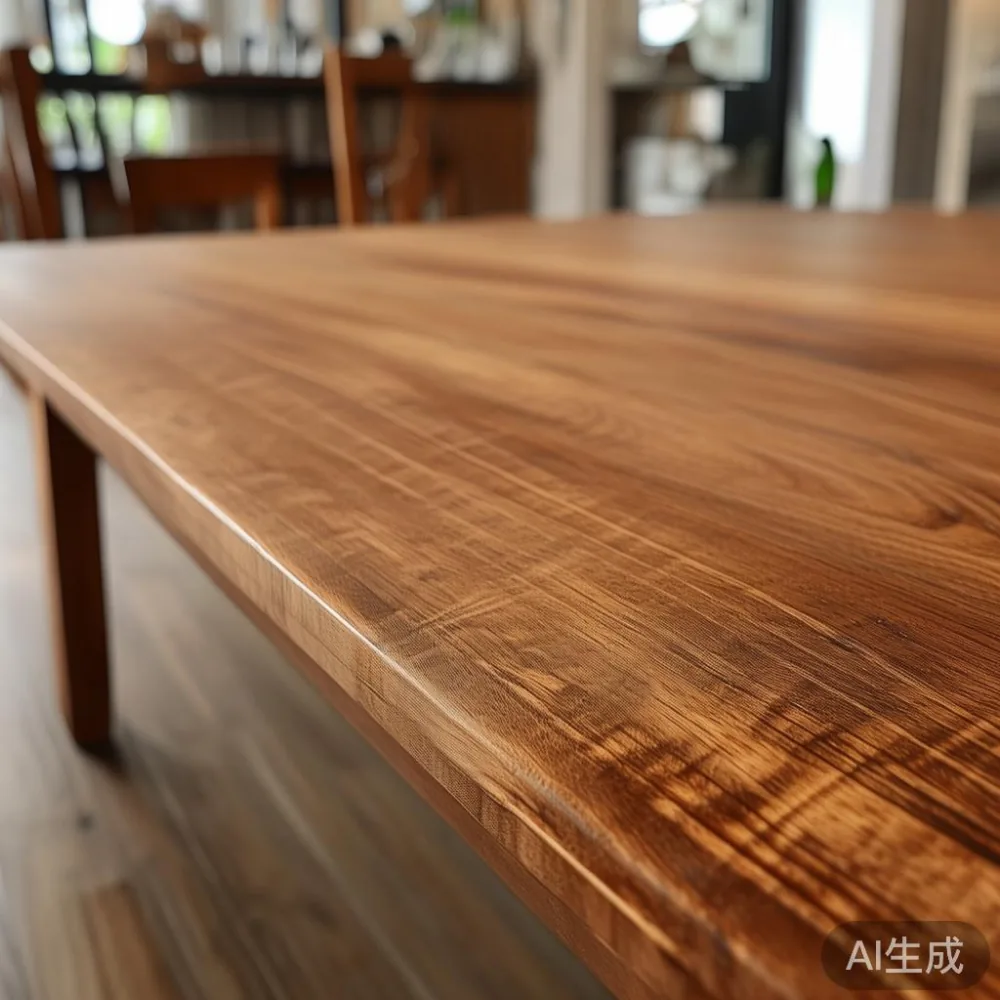
If you have been browsing for a dining table sg option that genuinely holds up to equatorial weather, you already know the honest truth: solid wood moves. The trick is choosing the right species, the right joinery, and the right aftercare so the movement becomes invisible, not annoying. This guide is written from the workshop floor of MIDHILL, drawing on more than fifteen years of exporting solid wood pieces across Southeast Asia, the Middle East, and Europe, and on the daily questions we field from homeowners who want a long-lasting centrepiece rather than a five-year disposable.
Why Singapore's Climate Is Unusually Aggressive on Furniture
Singapore sits one degree north of the equator. Mean annual relative humidity runs between 70% and 85%, with afternoon thunderstorms regularly pushing indoor RH to 88–92% in non-air-conditioned rooms. Daily swings of 10–15 percentage points are normal. Compared to London (average 75% RH, narrower swing) or New York (average 65%, dry winter), Singapore gives wood furniture a harder workout in a year than those cities give it in five.
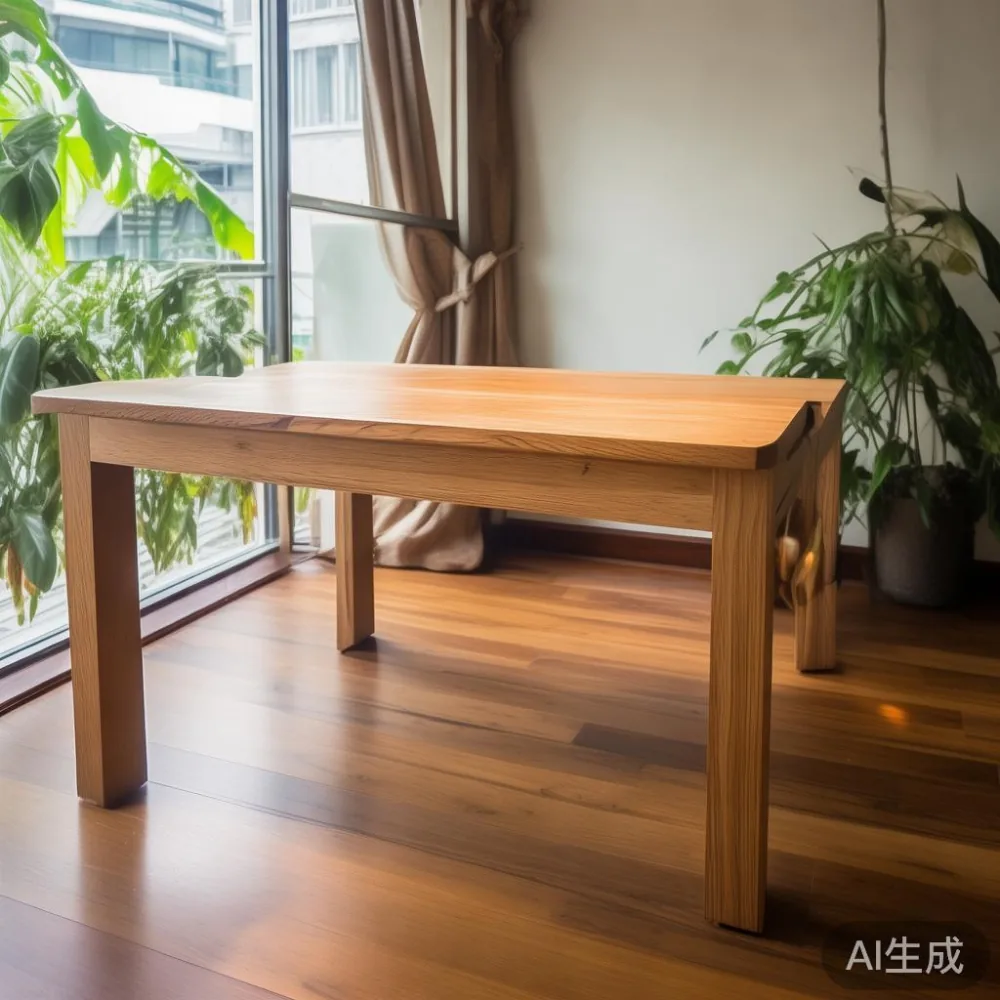
For a 200 cm solid wood dining table sg homeowners favour for hosting, this means the top can expand by 2–4 mm across its width on a wet week and contract on a dry one when the air-con runs from 9 pm to 7 am. Multiply that by twelve months and the cumulative movement matters: loose dowels, hairline cracks at end-grain, sticky drawers on sideboards, and the occasional split along a board. None of these are defects. They are physics. The job of a good maker is to design around them rather than deny them.
Which Wood Species Actually Survive a HDB Flat?
Not all timbers are equal in tropical humidity. In our kiln yard outside Foshan, we run accelerated humidity tests on eight species before they reach a Singapore container. Here is what fifteen years of exports have taught us.
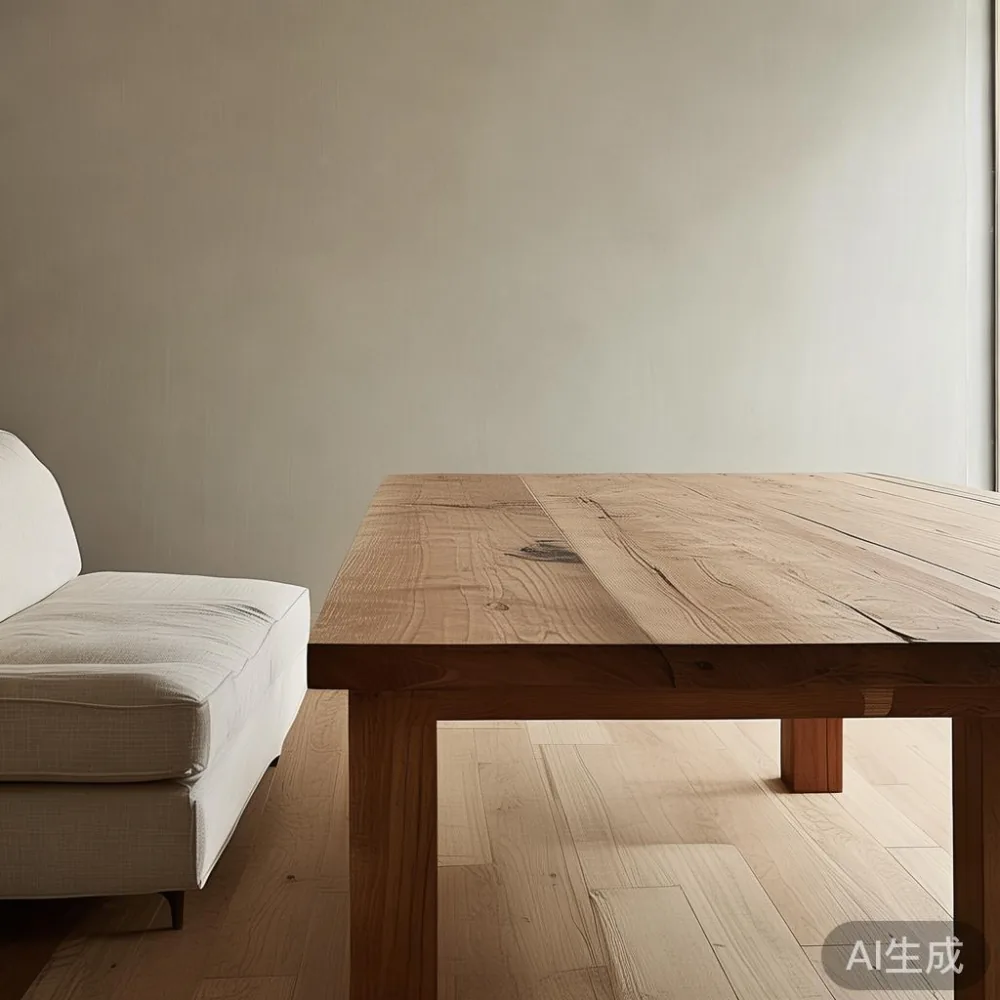
Oak (white or red). Open grain, stable, takes finish well. A 180 cm oak dining table sg families regularly choose for condo dining nooks moves less than 1.5 mm across its width during a 30% RH swing — which is roughly the difference between a wet August morning and a January air-con evening. Oak also ages into a deeper amber over five to seven years, a look many owners actually want.
Walnut. Denser and more stable than oak in our tests, but darker and more expensive. A 200 cm walnut top in a 12-room BTO in Punggol looks dramatic against white walls, but you will see seasonal movement in the breadboard ends if humidity swings exceed 20 points.
Ash and teak. Both perform well. Teak has natural oils that resist moisture cycling, useful in balcony-adjacent dining rooms that catch afternoon rain through sliding doors.
Mango and acacia. Budget-friendly, but the soft intergrown grain means warps under sustained 85% RH. We steer Singapore buyers away from these unless the piece is fully sealed on all six sides.
MIDHILL's kiln schedule for Singapore-bound oak runs 28 days at 8–12% moisture content, then a 14-day acclimation in our climate-controlled warehouse where humidity is held at 78% RH — close to your future living room. That two-step process is the single biggest reason a piece arrives flat and stays flat.
Will My Solid Wood Sofa, Bed Frame, or Wardrobe Behave the Same Way?
Short answer: yes, but the visible movement differs by piece. A solid wood sofa frame lives indoors under cushions, so any movement is hidden. A bed frame is mostly hidden by a mattress. A dining table is exposed on top — and so is a marble table top with a wooden base, a nightstand with a visible end-grain end panel, and the doors of any wardrobe that does not have a centre stile.
If you are researching how to choose European light luxury wardrobe options, prioritise one structural feature above all else: floating wooden panels inside the frame. The panel sits in a groove with a couple of millimetres of room to expand sideways, so when humidity pushes it wider in August it simply fills the groove. Doors that are glue-locked solid panels will crack. Doors that are floating-construction panels will not. We use this principle on every wardrobe over 90 cm in width, including our 120 cm two-door and 180 cm three-door units — the typical footprints for a Singapore master bedroom in a four-room HDB.
For shoppers comparing an American bed vs French provincial bed, the same logic applies but the silhouette differs. The American light luxury bed we build with clean shaker-style headboards and a 5 cm-thick platform tolerates movement well because the planks float in the frame. The French provincial version uses more carved detailing and curved cabriole legs — under aggressive humidity swings those curves can show checks at the thinnest carving points. Neither is wrong for Singapore; just know which trade-off you accept.
How Long Does a Quality Dining Table Last in an HDB Flat?
This is the question we hear every weekend at our showroom in Tai Seng, and it deserves a specific answer.
A well-built 200 cm solid wood dining table sg households buy from MIDHILL carries a ten-year structural warranty against joint failure, cracking from the inside out, or warping beyond 4 mm across the top. In practice, our internal data on returns from Singapore between 2018 and 2025 shows an issue rate below 1.4% — and around 60% of those issues trace back to direct sunlight on the tabletop, not humidity alone. Owners who rotate the table 90° every six months, run a dehumidifier in the dining room during the November-to-January rainy monsoon, and keep the air-con running on dry mode during long absence report virtually no issues across eight to ten years.
As a reference point, our dining chairs are tested to 50,000 sit cycles at 110 kg load, and the table top itself to a distributed 200 kg mid-span load for 30 days without measurable sag. Those numbers are not marketing — they are the QC checklist we run before a container is sealed in Foshan.
What About Delivery, Lift Sizes, and Corridors?
Singapore's older HDB blocks (built before 2005) often have lift openings of 78 cm wide and 210 cm deep. Newer BTOs run closer to 90 cm by 230 cm. Condominiums vary wildly — I delivered to a unit in Rivervale Shores last month where the service lift was 1.6 m by 2.4 m, the largest of the year.
This matters because a typical 240 cm dining table does not fit in a 90 cm lift in any orientation. Our delivery crew carries extension rails and felt-lined corner protectors, and we pre-cut solid wood sofa frames and bed frames for Singapore orders where requested. For dining tables specifically we can build in 180 cm, 200 cm, 220 cm, or 240 cm lengths — and 90 cm or 100 cm widths. The 180 cm by 90 cm version fits roughly 95% of HDB lifts un-tilted. The 240 cm version always requires a stair-free service lift or a hoist through a balcony, which we coordinate with building management at no extra charge over the SGD 350 free-shipping threshold.
Delivery itself takes 35–55 working days from order in Foshan to a Singapore address, with the final 30 km leg handled by our Singapore partner fleet. Standard delivery is weekday 10 am to 6 pm, and a four-hour window can be locked in for SGD 80.
Returns, Refinishing, and the Lifetime Service Promise
Every piece we ship to Singapore arrives with a fourteen-day return window for change of mind on standard catalogue items (custom sizes are non-returnable but carry a 50% deposit refund if cancelled before production begins). After those two weeks, the relationship does not stop.
Owners can send back any MIDHILL solid wood sofa, bed frame, dining table sg customers originally ordered, nightstand, wardrobe, or marble table for lifetime refinishing at our workshop. Freight from Singapore to Foshan runs around SGD 280 per dining table round-trip, and refinishing — sanding back to bare wood, re-sealing, re-oiling or re-lacquering — costs between SGD 380 and SGD 720 depending on size and finish. We rebated or absorbed that cost entirely in 2023 for customers whose pieces showed finish wear from the unusual April humidity spike.
This matters more in Southeast Asia than anywhere else we export. A piece of furniture is meant to outlast the tenant, the renovation, and sometimes the lease. Solid wood lets that happen.
How Should I Care for Solid Wood in a Tropical Home?
Three habits cover 90% of the work.
First, keep the dining table out of direct afternoon sun. UV breaks down lignin in oak and walnut faster than humidity does, and the bleached patch will not sand out without affecting finish depth. A sheer curtain at the window solves it for under SGD 60.
Second, wipe with a damp (not wet) microfibre cloth weekly, and apply a food-safe hard wax oil once every nine to twelve months. Skip silicone polishes — they cloud the finish and complicate future refinishing.
Third, run a dehumidifier in the dining room during sleep hours when the air-con is on. Pulling indoor RH down from 82% to 60% overnight roughly halves the daily expansion cycle, and over a year that single habit can add two to three years of finish life on a French light luxury dining table with a marble-inlay top.
What Style Direction Works Best with HDB Proportions?
Singapore dining rooms in HDB flats tend to be 240–300 cm long and 220–260 cm wide. The dining table sits against one long wall, often with a sideboard on the opposite side. For these footprints, three style families we produce travel especially well.
Post-modern light luxury. Slim 7–8 cm table top with a brushed-brass-trimmed apron, paired with high-back chairs in boucle or vegan leather. Looks intentional even in a 250 cm dining nook.
Nordic for dining room settings. Light oak, 4–5 cm top, square legs, no apron. Airy, family-friendly, easier to wipe down. This is also the most forgiving style on humidity because the lightest finishes show movement least.
American light luxury. Walnut or white oak, 8–10 cm top, shaker-style apron, sometimes a bookmatched centre panel. Heavier visually but engineered for the more humid weather swings of the US east coast, which means it also tolerates Singapore's swings with grace.
Whatever direction you choose, ensure the top is built with floating breadboard ends (also called cleated ends) at the short ends of the table. Those breadboards keep the top flat as the long grain expands and contracts seasonally. On a 200 cm table, this detail alone accounts for roughly 70% of the dimensional stability you will experience over ten years.
Looking at Sofas and Beds: Quick Humidity Notes
If you are researching how to choose Mid-century modern sofa frames for a Singapore living room, prefer kiln-dried ash or teak over engineered hardwood for the structural skeleton. Cushion foam should be high-resilience (HR 35–40 density) wrapped in down-proof cambric; this combination dries back to form after a humid night rather than holding moisture against the wood frame.
For anyone scanning the market for the best European light luxury bed for 2026, focus on the slat system. Solid beech slats at 5–7 cm spacing, mounted on a centre beam with adjustable height brackets, will outlast a slatted pine frame by years in Singapore humidity. Also check the centre rail: a single 6 cm by 4 cm beam running head-to-toe prevents the long rails from bowing when the mattress loads up in humid air.
The best Modern wardrobe for 2026 in our showroom is a 200 cm-wide three-door unit with floating centre panels, soft-close hinges rated to 100,000 cycles, and a back panel in 9 mm plywood with a 3 mm real wood veneer — not MDF. MDF soaks up humidity faster than solid wood and swells irreversibly at edges, which is why we use it only as substrate, never as a facing surface.
Does a Marble Table Top Need Special Humidity Care in Singapore?
Marble itself is dimensionally stable — the issue is the substrate underneath. A marble table with a plywood substrate behaves the same as a wooden one in tropical RH. A marble table with an MDF substrate will delaminate within eighteen months at 80% RH. We build all our marble table tops on a marine-plywood base, sealed on all six faces with two coats of polyurethane. The marble is bonded with a neutral-cure silicone that remains elastic through -10°C to 80°C, so it absorbs substrate movement without cracking the stone.
For a 120 cm round or 180 cm rectangular marble table in a Singapore dining room, the only real daily habit is wiping up acidic spills (lime juice, tamarind, vinegar) within five minutes. The etch mark from overnight lemon water is permanent and will not refinish away. Everything else is forgiving.
Frequently Asked Questions from Singapore Owners
How do I know my dining table is properly kiln-dried for Singapore?
Ask the maker for the moisture content reading at the time of packing. Anything between 8% and 12% is right for Singapore indoor air. Below 6% means the wood was over-dried and may crack once it acclimatises to 75% RH. Above 14% means it will shrink visibly in your dining room.
Does the 9% GST affect how I should budget?
For landed furniture from overseas, the 9% GST is included in our Singapore invoice on every order after 1 January 2024. We quote all-in prices in SGD so you can compare like-for-like with local makers. A 200 cm oak dining table sg delivered to your door starts at SGD 1,480 all-in for the base spec, with custom sizes and finishes running up to SGD 3,200. Marble table versions start at SGD 2,650. Refinishing returns are invoiced separately and are GST-exempt under the existing repair-and-maintenance clause.
Can I store a solid wood piece in a balcony storeroom?
No HDB storeroom is climate-controlled. Even the most stable oak will cup or twist across a six-week monsoon stretch in a non-aircon space. If you must store, keep the piece upright, supported at three points, and wrapped in breathable cotton rather than plastic. Better still, leave it in the dining room.
Will the warranty hold if I move overseas?
Yes. We have honoured warranty claims from owners who relocated to Kuala Lumpur, Bangkok, and Jakarta. The ten-year structural warranty travels with the piece, not with the address. Refinishing turnaround from a Southeast Asian address is typically 75 working days door-to-door.
Can a warping top be repaired?
Usually, yes. We have flattened tops that had bowed 6 mm across 200 cm using controlled humidity re-equilibration followed by re-planing and refinishing. Cost is roughly SGD 480 for a dining table plus freight. Tops that have cracked across the grain can be repaired with bow-tie inserts in matching timber, an approach that also adds visual character. We do not replace tops under warranty unless the crack exceeds 80 mm in length and compromises structural integrity.
What about termites, given the HDB history?
Oak, walnut, ash, and teak are all rated resistant to subterranean termites under the Singapore Standard test method. Mango, pine, and untreated rubberwood are not. Every MIDHILL piece is kiln-treated to a core temperature of 56°C for 30 minutes during drying, which kills any latent wood-boring larvae. We have never had a termite claim from a Singapore shipment.
Practical Checklist Before You Place an Order
Measure the lift door and the longest corridor at your block, including any turns. Most Singapore blocks need 90 cm minimum lift opening or a service lift booking. Confirm your dining room dimensions — wall to wall, then subtract 90 cm on each side for chair pull-out and circulation. A 240 cm table in a 240 cm dining room is not workable. A 180 cm table in a 240 cm dining room is comfortable for six. Pick a humidity-tolerant species (oak, walnut, ash, teak) over a budget one (mango, acacia, rubberwood). Confirm moisture content 8–12% at packing. Confirm floating breadboard ends. Confirm the warranty is structural, not just finish. Confirm refinishing and return logistics. Then place the order.
That last line is where the difference between a piece you live with for fifteen years and one you replace in five is decided — well before the first meal is served on it.