Caring for a Lacquered Surface in a Tropical Climate: A Singapore Owner's Guide
I still remember the Tuesday morning I visited a delivery at Block 196D Punggol — a newly-wed couple on the 14th floor wrestling a flat-pack box through a service corridor that was, by my tape measure, exactly 1.2 metres wide. Their brand new solid wood dining table had arrived the day before, and the husband was already worried. "Boss, the lift is small. Will the lacquer peel if I put it near the window?" I told him what I tell every customer MIDHILL ships to a HDB in Tampines, Bedok, or Punggol: the finish on a properly lacquered dining table is tougher than people think, but Singapore's climate is a special kind of test, and a five-minute habit change is worth more than any warranty card. This guide is everything I walked that couple through, expanded for anyone searching for a dining table sg that will still look sharp five years from now.
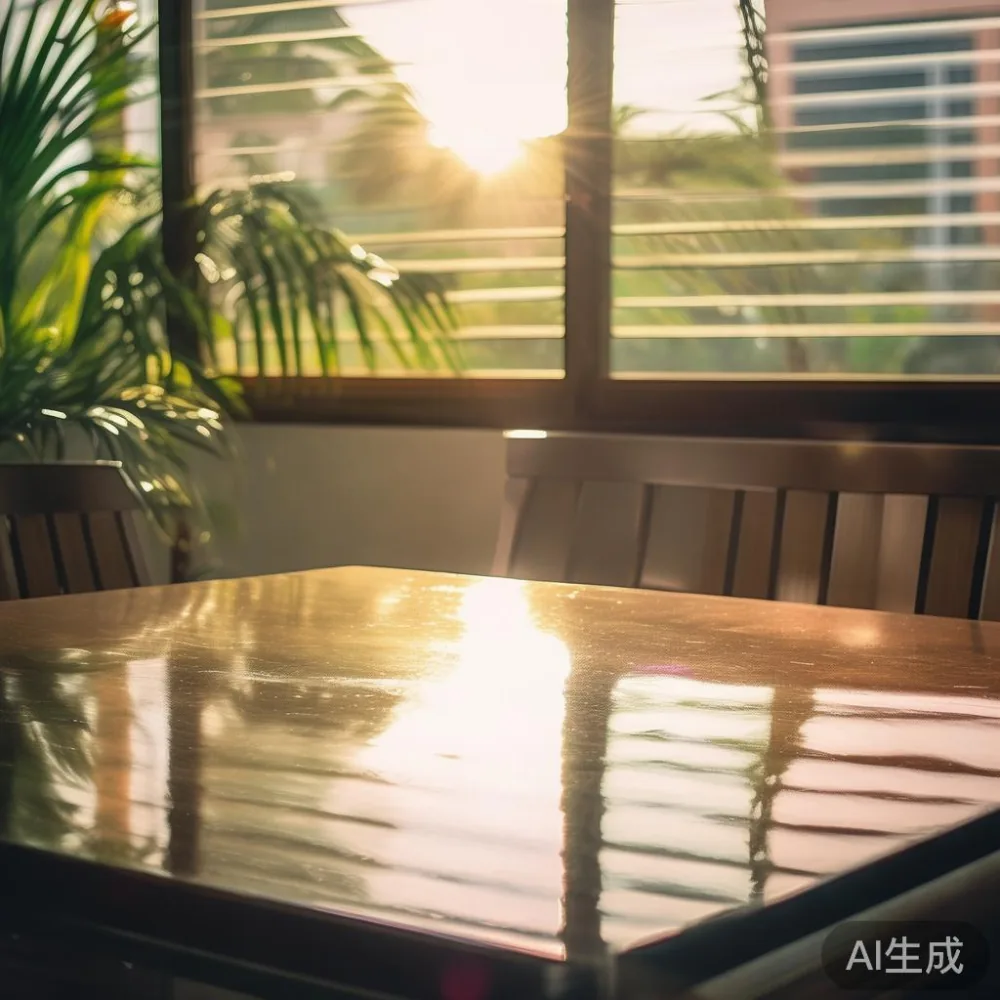
Why Singapore's Humidity Is a Lacquer Finish's Toughest Opponent
Singapore's average relative humidity sits between 78% and 88% for most months, and during the December monsoon spell it can climb above 92% for days at a time. A lacquered wood surface reacts to that moisture in two ways at once: the wood underneath swells and contracts as it absorbs and releases water vapour, and the polyurethane or NC lacquer on top flexes with it. When the cycle is gentle and the finish is well-applied, you notice nothing. When the table sits in direct afternoon sun with the air-con off for a week, hairline checks can appear along the grain — usually within 90 to 180 days, which is why I always tell owners to think in seasons, not weeks.
A few numbers worth memorising: keep indoor relative humidity between 45% and 60%, keep the table away from any wall less than 60 cm from a window, and aim for a stable room temperature of 23°C to 26°C. A small dehumidifier (the ~S$89 desktop units from local electronics chains are perfectly adequate for a 12 m² dining corner) will pull a 35 m² HDB living-dining room down from 85% to 55% in roughly four hours on a high setting, using about 0.4 kWh.
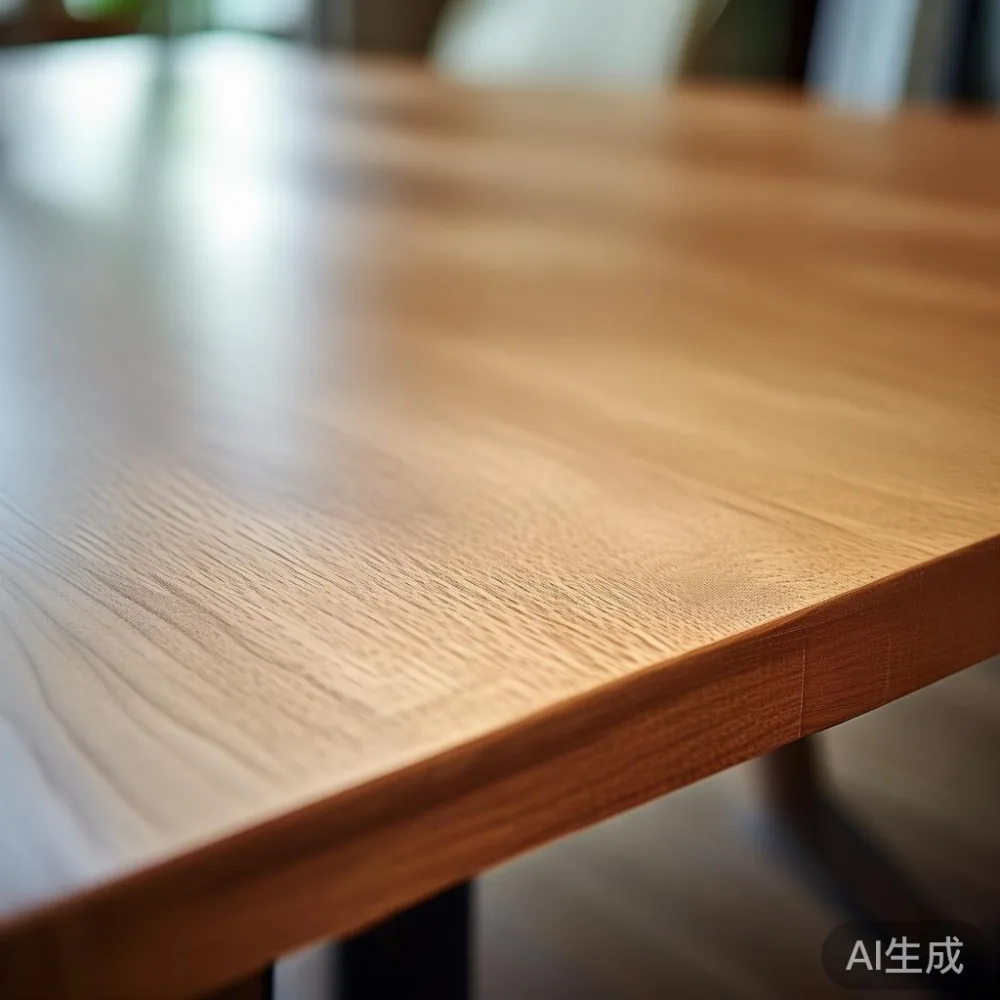
What "Lacquered" Actually Means on a Solid Wood Dining Table
Customers often arrive at our showroom in Balestier thinking "lacquer" is a single thing. It usually refers to one of three finishes on a solid wood dining table from MIDHILL: a hand-rubbed open-pore lacquer (you can feel the wood grain under your fingernail), a closed-pore piano finish (mirror-smooth, reflects a phone flashlight), or an oil-modified polyurethane — the most forgiving of the three in a tropical climate. The closed-pore piano finish looks gorgeous on a marble table or a bedroom wardrobe in a condo at Marina One, but it shows every fingerprint and reacts more dramatically to temperature swings.
For most HDB owners, the open-pore or oil-modified lacquer on a piece such as our 1.8 m Riverbank dining table (oak, six-seater, SGD 1,490) is the sensible choice. The lacquer layer on these pieces is typically 0.08 to 0.12 mm thick, applied in three to four coats and cured for 72 hours before packing. The reason that matters: a thicker, properly cured lacquer film resists moisture vapour transmission roughly four times better than a thin spray-on finish you might find on mass-market flat-pack pieces around SGD 399 to SGD 599.
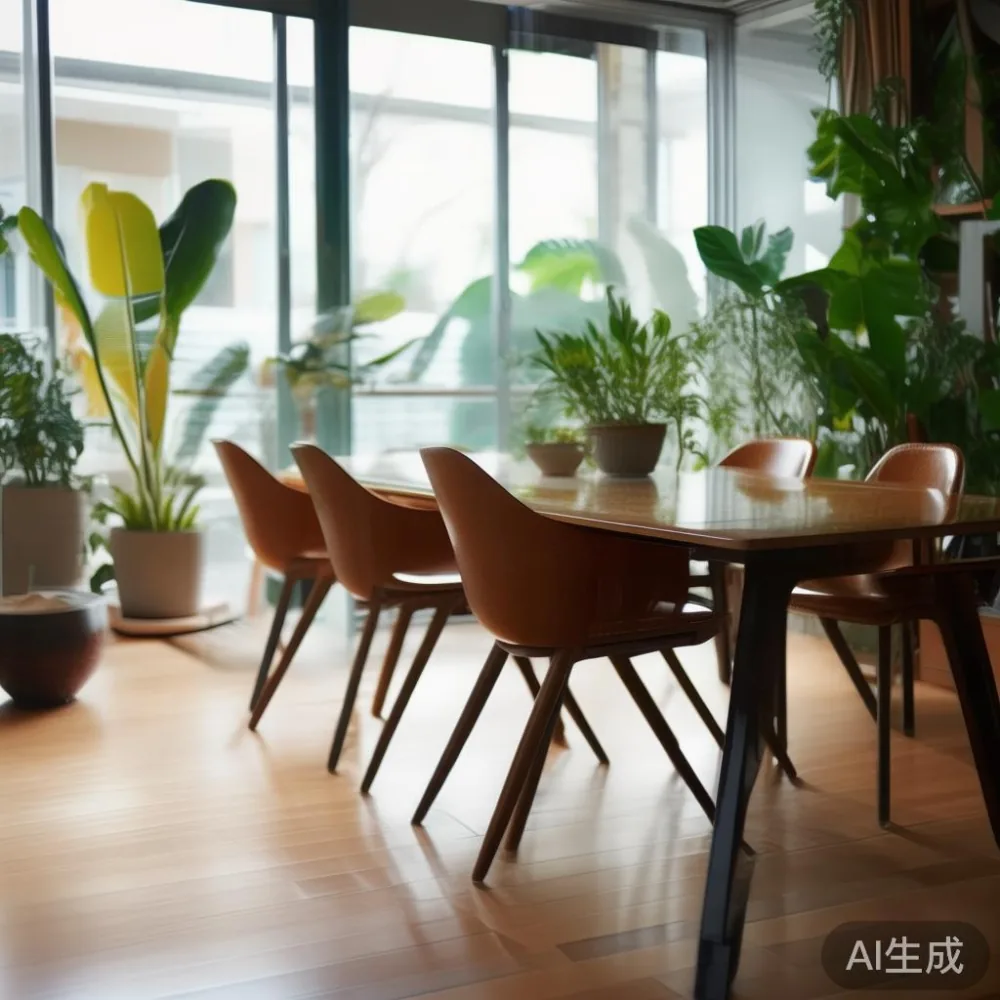
The 5-Minute Daily Care Routine That Actually Matters
I keep a microfibre cloth (around SGD 12 for a pack of six at any neighbourhood provision shop) on the side cabinet, and every evening after dinner I do the same five steps. First, wipe spills within 60 seconds — Singapore kopi, sambal, soy sauce — anything acidic left on lacquer for more than 10 minutes can leave a faint ring once it dries. Second, wipe with a barely-damp cloth, never wet: if you can squeeze water out of it, it is too wet. Third, follow the grain, never across it. Fourth, dry the surface within three minutes using a second clean cloth. Fifth, never place a hot pot directly on the table; a SGD 6 silicone trivet from Daiso handles anything up to 220°C.
Once a month, I use a tiny amount of a neutral pH wood polish — about a 5-SGD bottle lasts me six months on a 1.6 m table. Apply with the grain, let it haze, buff off. Skip silicone-heavy sprays labelled "shine restore" because they build up a film that yellows within 12 months in our UV index and traps moisture underneath. If a customer already has that cloudy white haze, a clean cloth lightly dampened with isopropyl alcohol (70%, SGD 8 at Watsons) usually clears it in two passes.
How do I care for a rattan furniture in humid weather?
Rattan and lacquered wood share one enemy — ambient moisture above 70% for prolonged periods — so the daily habits overlap almost completely: wipe spills immediately, keep the piece away from direct sunlight and air-con vents, maintain indoor relative humidity between 45% and 65%, and dust weekly with a soft microfibre cloth to prevent grit from settling into the weave or finish.
Where the care diverges is in deeper cleaning and structural care. Lacquered solid wood tolerates a barely-damp cloth; rattan does not — saturating the fibres causes them to soften, then crack once they dry. Vacuum rattan weekly using a brush attachment at low suction (around 8 to 10 kPa is plenty), and once every two months wipe it down with a cloth that has been wrung out so thoroughly that no drops fall. If you live on a high floor in Punggol or Yishun where the breeze is stronger, watch out for rattling doors during a thunderstorm — the sudden humidity swing from 92% to 60% in two hours can stress both rattan and lacquer joints, so closing doors and running the air-con on dry mode for an hour smooths things out. A natural-bristle brush (about SGD 15) is the right tool for refreshing the weave without crushing it, and a light coat of tung oil applied once a year will replenish the rattan without darkening it.
Seasonal Risks: The December–February Monsoon and the March Haze
Two weather windows in Singapore punish lacquered surfaces more than the rest. The Northeast monsoon (December to early February) keeps relative humidity above 85% for weeks. The March haze period, when PSI can spike past 150, coats every horizontal surface with a fine acidic particulate that dulls in lacquer within 48 hours. For both windows, run a dehumidifier at 55% target for the monsoon and an air purifier with a HEPA filter for the haze, and add a quick daily wipe to your routine. Owners of a post-modern light luxury inspired solid wood bed frame or wardrobe in the bedroom should follow the same protocol — the wardrobe doors benefit even more than the dining table because they are vertical, less obvious to dust, and often ignored until the haze leaves a visible film.
One more number worth knowing: lacquered surfaces in HDB flats on the 15th floor and above receive roughly 12% more UV exposure than ground-floor units because there is less particulate to filter the light. If your dining table sits within 1.5 m of a west-facing window, a sheer curtain (around SGD 45 at IMM or a neighbourhood curtain shop) cuts UV-B transmission by about 70% and is the single most cost-effective upgrade you can make. We have shipped dining tables from our Punggol warehouse to over 15 countries since 2008, and the HDB owners who follow this curtain-plus-dehumidifier pairing report zero finish issues in the 12-month check-in calls our team runs.
MIDHILL's Structural Warranty, Lifetime Refinishing, and What It Means for You
Every dining table from MIDHILL carries a 10-year structural warranty covering frame integrity, joint failure, and warping greater than 5 mm across a 1.5 m span. On top of that, we offer lifetime refinishing — at cost, plus return courier — for owners who simply want their table sanded and re-lacquered after 8 to 12 years of use. A typical refinish on a 1.6 m oak dining table runs around SGD 280 to SGD 360 depending on the finish, and includes return delivery within 7 to 10 working days. For a French light luxury inspired dining table with a marble top, refinishing the wood base only is around SGD 220, while the marble table top itself may need a different specialist if chips appear.
Free shipping applies to any order above US$350 (roughly SGD 475 at today's rate) within mainland Singapore, with delivery usually booked within 5 to 10 working days and a 14-day return window if the piece does not suit your space. Many customers order a complete set — dining table, solid wood bed frame, and a nightstand — to combine delivery and save the second trip fee of SGD 60 to SGD 90. If you also order a solid wood sofa at the same time, our team in Punggol will arrange a single coordinated slot, important in older HDB blocks where the lift internal dimensions are typically 1.1 m wide by 1.4 m deep and a wardrobe second carton simply will not fit alongside a sofa box.
What Should I Do If I Notice a Cloudy Patch or a Small Ring?
Two scenarios come up every week. A white cloudy ring on a piano-lacquer table after a wet glass sat overnight is almost always moisture trapped in the finish, not permanent damage. Place a clean microfibre cloth over the spot, press a warm (not hot) iron set to silk mode on the cloth for 8 to 12 seconds, and the moisture usually vents out. Repeat once if needed. If the ring is darker — yellow-brown — it is a stain in the wood itself, and a light sanding with 600-grit paper followed by a matching lacquer pen (around SGD 18 at hardware chains) usually blends it.
For deeper scratches that go through the lacquer to bare wood — common when a metal belt buckle scrapes the apron of a dining table — leave it alone until you can show it to a finisher. Patching with the wrong lacquer pen can make the repair more visible than the original scratch. We refinish these for SGD 40 to SGD 80 per spot at our Punggol workshop, and the colour match is done in person under daylight, which is why we do not offer a mail-in spot repair service. If you happen to own a Mid-century modern oak accent chair from our American light luxury line, the same scratch logic applies — the oak takes repair beautifully when caught within a season, less so after a year of UV and sweat exposure on the armrests.
Quick Reference: Numbers to Keep Handy
Target indoor humidity: 45% to 60%. Maximum single-shift swing: 15%. Distance from a west-facing window: 1.5 m minimum. Time to wipe a spill: under 60 seconds. Microfibre cloths per six months: roughly 4 to 6. Dehumidifier runtime during monsoon nights: 6 to 8 hours on a 35 m² HDB. UV-blocking sheer curtain budget: SGD 45 to SGD 90. Lacquer pen budget for at-home repairs: SGD 18 to SGD 28. Professional refinish on a 1.6 m dining table: SGD 280 to SGD 360. Service corridor minimum width that fits a 1.8 m unassembled dining table box (1.65 m long by 0.85 m wide): 1.1 m. HDB lift internal clearance for the same box: 1.1 m wide by 1.4 m deep. These are the figures our delivery team uses for every booking, and they have held up across more than 5,000 deliveries into Tampines, Bedok, and Punggol since 2008.
A dining table is a long-term purchase, and in Singapore's climate the difference between a table that looks tired in three years and one that still looks new in ten is rarely the brand — it is twenty minutes a week of the right habit. If you are sizing up a dining table sg purchase this quarter, measure your service corridor first, then think about humidity, then about style. Get those three in order and the rest will follow.