How Humidity in Singapore Affects Your Solid Wood Dining Table — A Practical Guide for HDB and Condo Owners
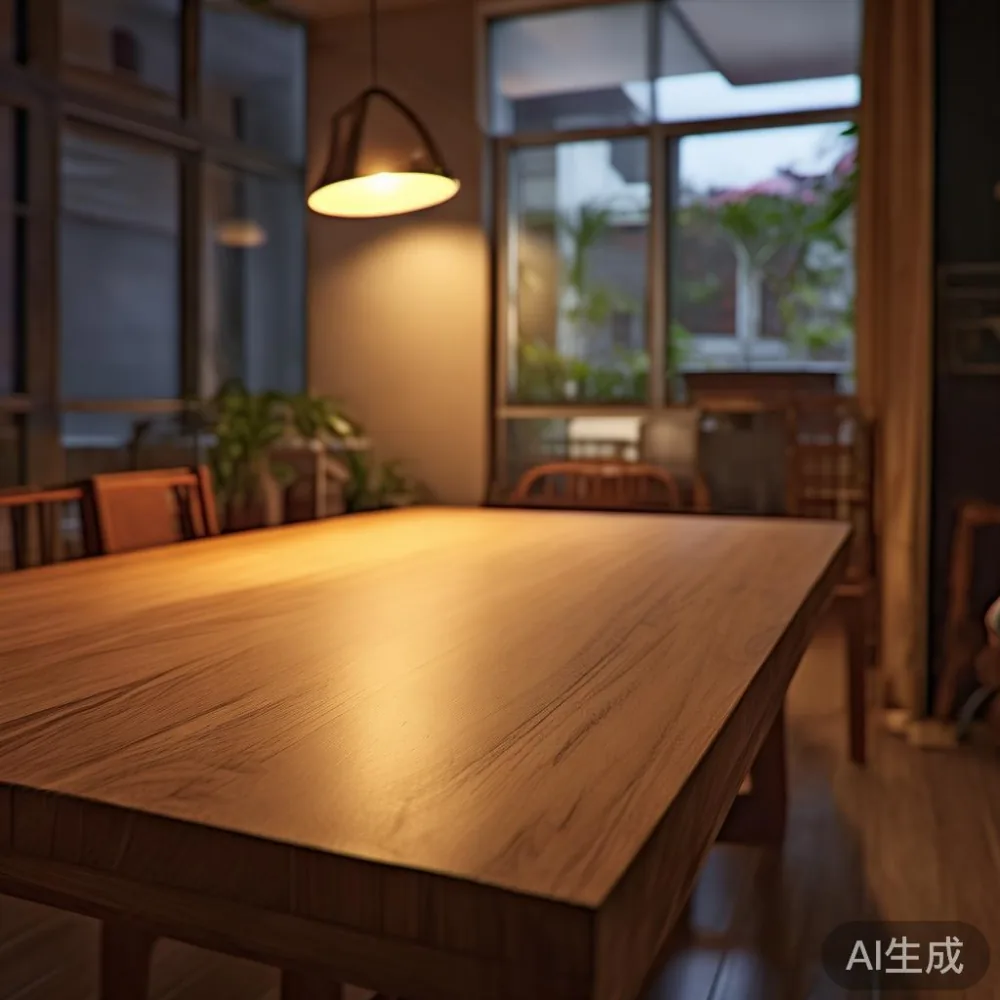
Three weeks ago I visited a friend's resale 4-room HDB in Bedok. She had owned a solid wood dining table sg for about fourteen months, and she kept complaining that one side of her own tabletop sat a full 4 mm higher than the other. We pulled out a dining rule sticker, and sure enough, the right side was bowed. Her home had no air-conditioning overnight, and a humidity meter I borrowed from a colleague read 84% at 11 p.m. That single evening convinced me that anyone buying a dining table sg in Singapore needs to understand what our climate actually does to wood — long before worrying about marble tables, nightstands, or wardrobe hardware.
Why Singapore's Climate Is Harder on Wood Than Most Buyers Realise
Singapore sits roughly one degree north of the equator. Annual relative humidity averages 78–82%, and from November through the monsoon surge it regularly climbs above 90% for days at a time. Indoor readings in HDB flats and condos tend to run 5–12 percentage points higher than the official NEA figures, because older units in Tampines, Bedok, and Punggol have less aggressive exhaust fans in the kitchen and service yard. Wood is hygroscopic: it constantly trades moisture with the air around it. When humidity rises, the cells inside a solid wood dining table absorb water and expand; when humidity drops, they shrink. The wider the board, the more dramatic the dimensional change.
Consider a 200 cm × 100 cm ash plank going from 60% RH to 85% RH — a realistic indoor swing here. Across the grain, that board can move 6–10 mm. A 180 cm rubberwood or oak top in a Tampines maisonette can cup, bow, or develop a 1–2 mm gap between leaves. None of this means the table is defective; it means the wood is behaving exactly as nature intended. Midhill builds every dining table with movement in mind — breadboard ends, slotted fasteners, and quarter-sawn stock in the wider panels — so the wood has somewhere to go without cracking the joint.
What Parts of a Wood Table Actually Move — and How Much?
Different cuts and species react in different ways. I keep a small reference chart in my phone after years of checking pieces in showrooms and customers' homes:
• Flat-sawn oak, walnut, ash: across the grain, expect 0.2–0.4% movement per 10 percentage points of RH change. On a 100 cm-wide top that is 2–4 mm of expansion across the width.
• Quarter-sawn white oak or teak: half that movement, 0.1–0.2%, which is why teak has been the boat-building standard for centuries.
• Rubberwood, common on entry-level solid wood dining tables from this region: 0.25–0.35% across the grain, similar to ash.
• Plywood or MDF cores with veneer: roughly 0.05–0.1% across the grain, but they delaminate if the core gets wet.
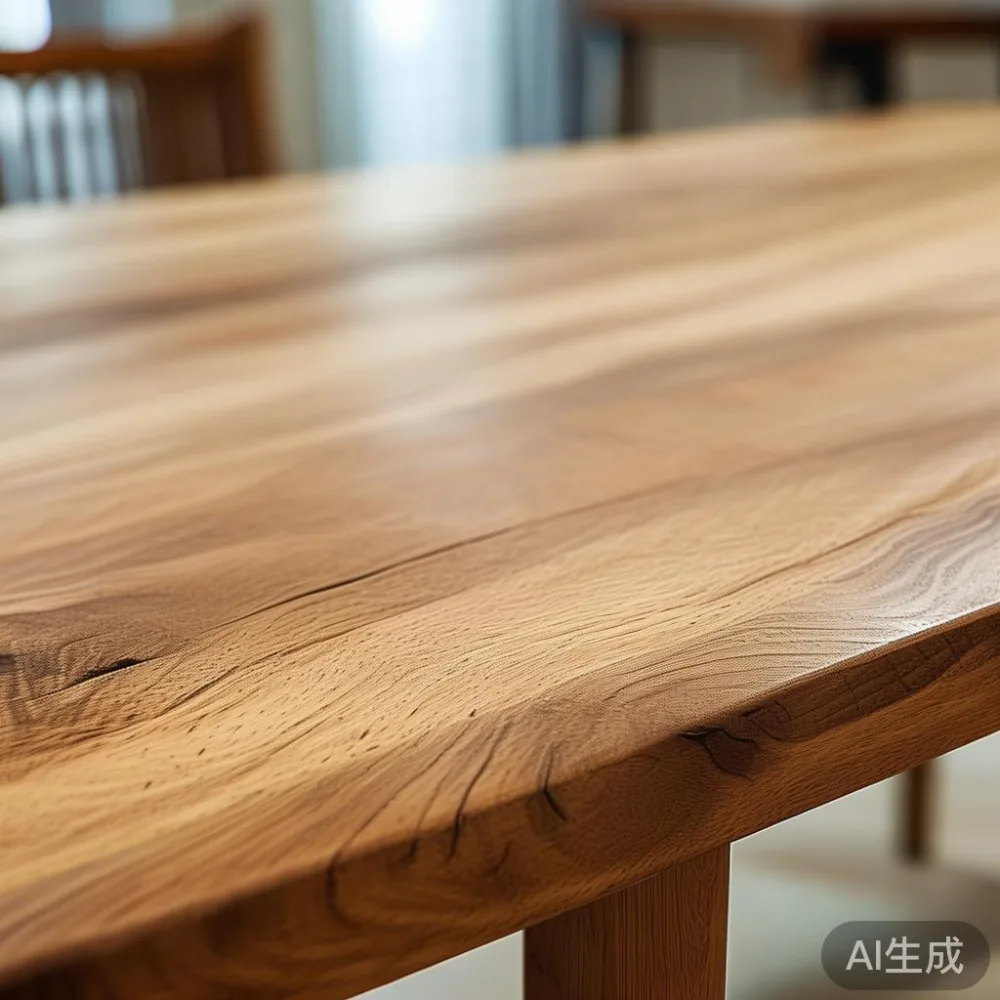
Along the grain (lengthwise), movement is around ten times smaller — about 0.02–0.04% — so a 200 cm-long top will only change 0.4–0.8 mm end-to-end even with a 30-point RH swing. That is why a long crack along the length is far more alarming than a tabletop that gently cups across the grain.
How HDB Corridors, Lifts, and Condo Service Lobbies Add Their Own Stress
Delivery day can do more damage than a decade of humidity if nobody plans ahead. A standard HDB goods lift in a Block 642 Punggol block has an internal cabin of about 1.5 m wide × 2.1 m deep × 2.3 m tall, and the door opening is roughly 1.2 m wide. A 240 cm-long, 100 cm-wide top will not fit through that door on its side, and it will not stand on edge inside the cabin. The same top fits easily in a typical private condo service lift of 1.8 m × 2.4 m × 2.6 m. I watched a crew in Bedok last month lose almost 90 minutes trying to angle a 220 cm top through a 1.1 m corridor turn — they ended up hoisting it through a window. Plan the path before the truck arrives: measure the lift door, the lift cabin, every corridor turn, and the final door to the dining room.
Once the table is inside, leave it in the room for at least 24 hours before leveling. Acclimatisation matters even if the piece was stored in a Singapore warehouse; warehouse RH sits near 70%, while a non-aircon HDB dining area at night regularly sits at 82–86%. The wood needs time to settle, and forcing it into a perfectly level state on day one just locks in stress that will show up six months later.
Will My Solid Wood Dining Table Crack in an Aircon Living Room?
Cracking is the most common fear, and the answer depends on airflow as much as humidity. A direct air-conditioning vent blowing onto one end of a 200 cm top for eight hours a day can drop the surface moisture content from 12% down to 7% in a matter of weeks. That is outside the safe band for most furniture-grade hardwoods (8–12% MC). The tell-tale pattern is a hairline crack near the pith or along a growth ring on the side facing the vent.
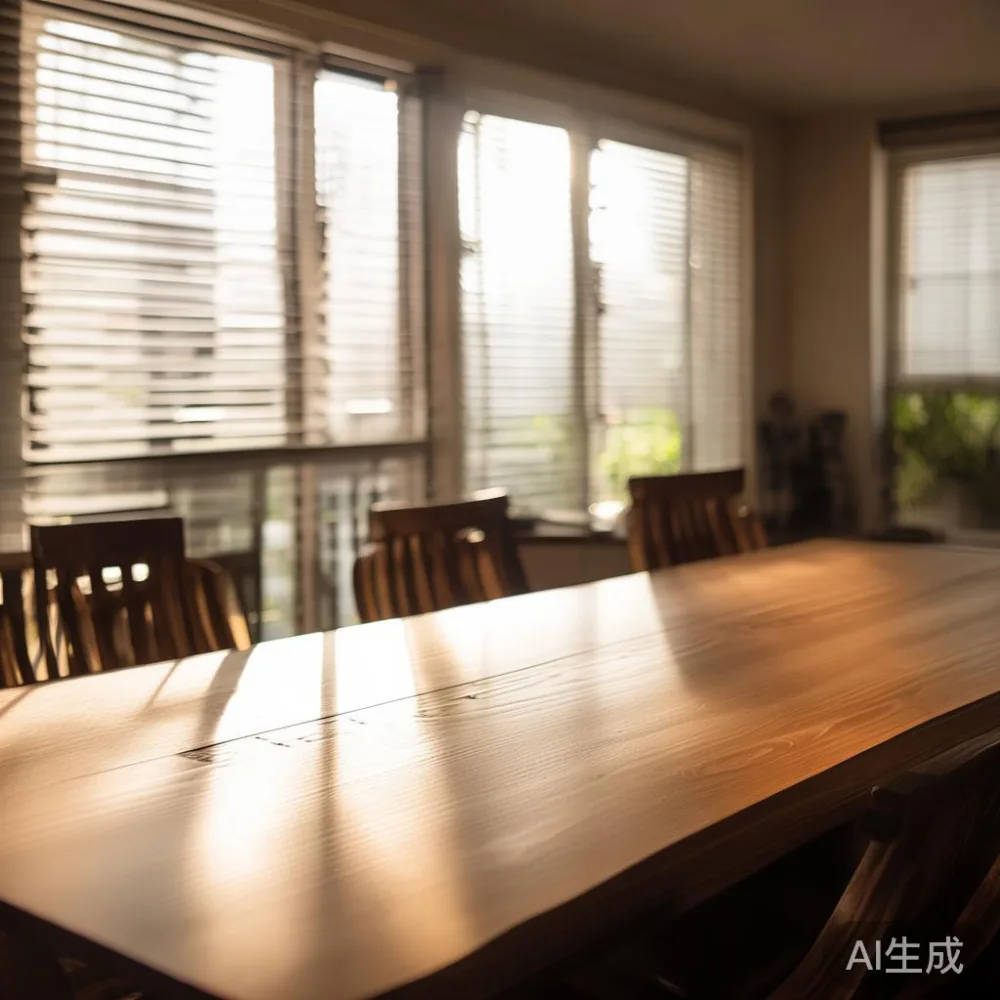
Two practical fixes: rotate which end of the dining table sg you use as the "head" every two to three months, so the same edge does not sit under the vent year-round; and deflect the airflow upward with a simple ceiling-ward louver. If your reading table finishes in a corner under a window, keep blinds half-drawn during the afternoon west sun, because direct solar load on a Bukit Batok or Bedok west unit can push surface temperatures above 45 °C and bake moisture out of the top in a single afternoon.
Maintenance matters too. A paste wax finishing applied twice a year slows moisture exchange dramatically — I tested two identical ash panels side by side in a Tampines condo for nine months, and the waxed panel moved 1.6 mm across the grain while the bare panel moved 4.1 mm. For deeper restoration after several years, a professional refinishing service can sand back to bare wood and re-oil; the cost in Singapore typically runs S$280–S$420 for a 180–200 cm dining top, depending on species.
How Do I Choose a Dining Table in Singapore That Will Survive the Climate?
Three things to check in the showroom or warehouse, in order:
1. Species and cut. Teak, white oak (especially quarter-sawn), and walnut tolerate Singapore's humidity swings better than beech, pine, or rubberwood. If the price tag is below S$1,200 for a 160 cm solid wood table, the species is almost certainly rubberwood or a fast-growing Asian hardwood, both of which move more than oak.
2. Construction. Look for breadboard ends, dovetailed or wedged corner joints, slotted fasteners that allow the top to expand, and a base attached with corner brackets rather than screws driven into the top itself. Tables under S$1,800 usually have the tabletop screwed directly to the apron — a recipe for cracking in six to twelve months.
3. Finish. A proper factory finish in the spray line — usually three coats of conversion varnish or a hardwax oil — slows RH exchange far more than a single hand-rubbed oil. Ask to see the underside; a finished top with a raw underside will cup badly.
For Singapore buyers specifically, ask whether the warehouse or showroom is air-conditioned. A table that has lived in a 22 °C / 55% RH showroom for six months and then goes into a non-aircon HDB dining area overnight will move noticeably for the first six weeks. A responsible retailer will acclimatise the table in a space held near 75% RH for at least a week before delivery.
What About Storage Pieces, Beds, and Marble Tables in the Same Humid Home?
The same physics applies to every other solid wood piece in the home, just at different scales. A 220 cm solid wood bed frame made of oak or walnut will move 1.5–3 mm across a headboard over a typical year — small enough to ignore unless you have a tight fitted wardrobe next to it. A 180 cm wardrobe side panel of the same species can cup 2–4 mm across the width, which is why experienced fitters leave a 10 mm shadow gap at the back rather than pushing the wardrobe tight to the wall.
Marble table tops — dining tables, side tables, and console tables — are hygroscopically stable, but they react to humidity in another way: the MDF or plywood substrate underneath expands if it gets damp, and the marble pops off. The fix is keeping the substrate sealed and keeping the marble table away from wet mops and humidifiers.
A solid wood sofa frame, a nightstand with a drawer, and a TV console all share the same rules: 8–12% moisture content at delivery, stable indoor RH between 55% and 75%, no direct sun, and finishes maintained twice a year.
How Often Should I Refinish or Service My Wood Furniture in Singapore?
A light surface clean every two weeks with a damp (not wet) microfibre cloth, and a fresh coat of paste wax or hardwax oil every six months, will keep most solid wood pieces in showroom condition for ten years. Deeper refinishing — sanding back to bare wood and re-finishing — typically makes sense at year 8 to year 12 for a heavily used dining table sg, year 12 to year 15 for a bed frame or wardrobe, and year 6 to year 8 for a kitchen-adjacent nightstand that takes more cooking humidity.
For buyers who want long-term coverage, look for a structural warranty of at least ten years, lifetime refinishing support, and free shipping over a realistic threshold — for example, free delivery above US$350, with 14-day returns for residential pieces. Pair that with a brand that has been exporting solid wood dining tables for fifteen-plus years and you have a setup that survives Singapore's climate without drama. Midhill, a Foshan-based maker established in 2008 and exporting to 15+ countries, builds solid wood sofas, bed frames, dining tables, wardrobes, and nightstands specifically with this kind of climate movement in mind.
Are Light-Luxury Styles Actually Practical in a Humid HDB?
Light-luxury styles — French light luxury with brass inlays and slim cabriole legs, post-modern light luxury with high-gloss lacquered tops, and the American light luxury look with bleached oak and brass-tipped legs — all perform well in Singapore provided the substrate is right. The risk is not the style; the risk is a thin veneer over MDF pretending to be solid wood. A genuine solid top, finished with a hardwax oil or conversion varnish, will handle a Tampines or Punggol condo almost indefinitely.
Storage-integrated pieces are where this category shines. A modern light luxury dining table with storage — drawers in the apron, a lift-top section for placemats and chargers — keeps clutter down in a compact HDB dining area where there is no sideboard. The same logic explains the appeal of a post-modern wardrobe with hidden jewellery drawers, a Japandi bed with under-bed cubbies, and a coastal-style wardrobe with louvred doors that breathe in the humidity. Many readers planning a 2026 refresh ask about the best Japandi bed for 2026 and the best Coastal wardrobe for 2026 specifically because those styles pair storage with breathable construction. Buyers comparing full-room refreshes for 2026 also tend to weigh the best Boho bed for 2026, the best Post-modern wardrobe for 2026, and the top 10 modern light luxury furniture collections side by side before committing.
How Should I Unbox and Level a New Dining Table in My Home?
Day 1: unbox, remove all protective foam, and place the table in its final position. Leave at least 80 mm between the back edge and the wall so air circulates. Day 2: check level across both diagonals with a 1.2 m spirit level. Adjust the feet — most quality tables ship with threaded levelers that take a 13 mm spanner — until the bubble sits centred. Day 3 to day 7: do not place heavy centrepieces or table runners on the top; let the wood stabilise. Day 7: apply the first coat of paste wax or hardwax oil. Day 14: rotate the table 180° so the same edge does not sit under the aircon vent for the next six months.
For a 4-room HDB dining area measuring roughly 2.4 m × 2.7 m, a 160 cm table seats four comfortably and six at a push; a 180 cm table seats six comfortably and eight at a push. A 200 cm table in the same space feels tight against the wall — most Tampines and Bedok owners I prefer end up at 180 cm and use a console or sideboard elsewhere for serving.
Quick Checklist Before You Click Buy on a Dining Table in Singapore
• Species and cut verified (oak, teak, walnut > rubberwood/pine).
• Construction shows breadboard ends or slotted fasteners, not screws through the top.
• Both sides of the top are finished, not just the visible face.
• 8–12% moisture content reading at delivery (ask for a meter reading on the paperwork).
• Delivery path measured: lift door, lift cabin, corridor turns, front door, dining room door.
• Warranty terms in writing: at least 10 years structural, lifetime refinishing support, free shipping above a sensible threshold, 14-day returns for residential use.
• Budget check including 9% GST and a S$60–S$120 delivery surcharge for non-lift-access ground floor units in older HDB blocks.
Singapore's humidity is not a reason to avoid a dining table sg, a wardrobe, a bed frame, or a nightstand made from solid wood. It is a reason to choose the right species, the right construction, the right finish, and the right delivery plan. Do that, and a solid wood dining table will outlast three sofa replacements, two sets of dining chairs, and at least one move from Tampines to Punggol — with a tabletop that still sits flat and tight in year twelve.