Dining Table SG: Styling a Small Singapore Apartment Without the Crowded Look
I visited a 58 sqm two-bedroom flat in Punggol last month with my colleague Naomi, who had just collected her keys. The previous tenant had left a bulky 1.8m dining set wedged against the corridor wall, leaving barely 60cm of walking space between the sofa and the kitchen counter. Naomi asked one question while standing in the doorway: "Can we make this feel like a home, not a warehouse?" That question is exactly what this guide answers, and it also shows why thinking carefully about a dining table sg setup is the single quickest way to make a compact HDB or condo feel open, calm, and quietly luxurious.
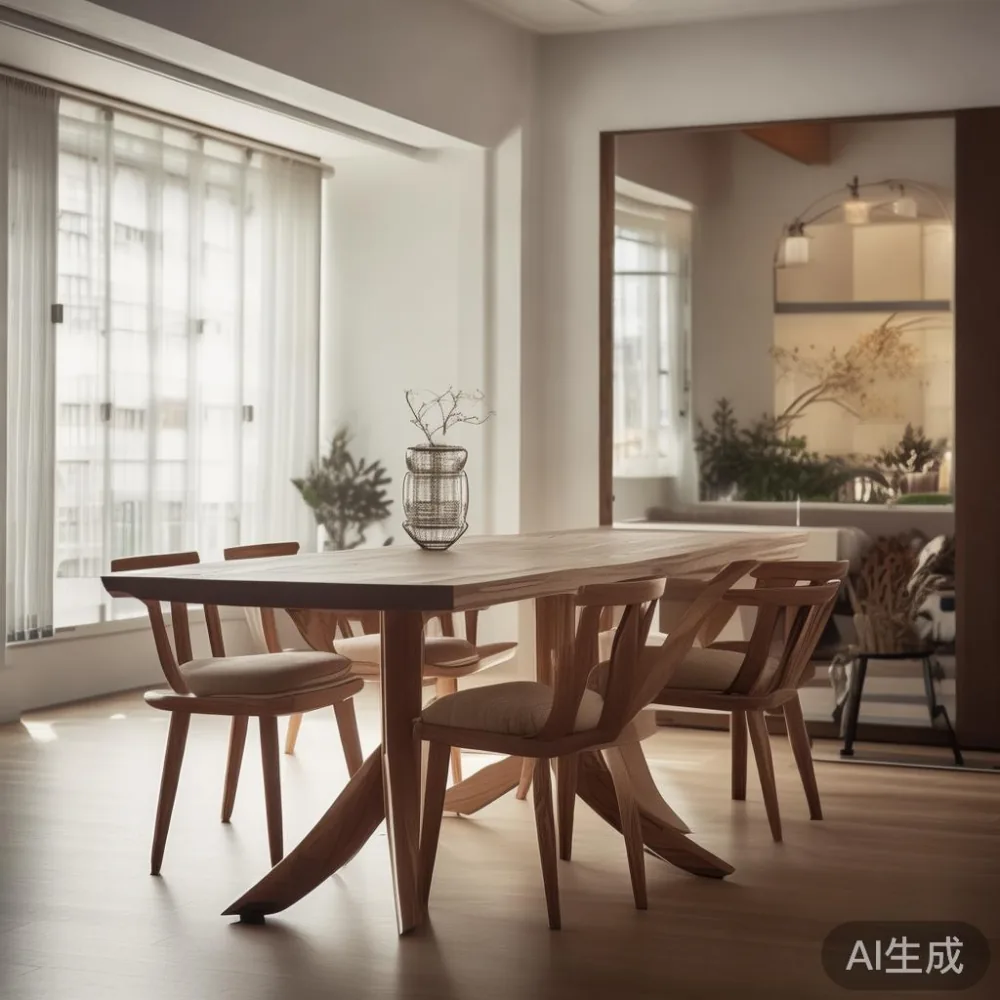
Singapore flats come with real constraints: a typical 4-room HDB living-and-dining area runs between 18 and 22 sqm, ceiling heights sit at 2.8m, and the lift opening is usually 90cm wide with a 2.1m depth. Corridors inside the flat often narrow to 1.1m. These numbers shape every buying decision below, which is why I give you exact centimetres and Singapore dollar figures (before 9% GST) throughout.
Why does furniture size matter so much in a small Singapore flat?
Visual crowdedness is mostly about three things: how much floor a piece covers, how much of its surface is visible from the door, and how much light it blocks. A standard six-seater dining table at 180cm by 90cm occupies 1.62 sqm by itself. In a 20 sqm combined living-dining zone, that single table is 8% of your entire usable floor area before you add chairs, a sideboard, or a rug. Drop down to a 120cm round dining table and you recover 0.65 sqm, enough to swing a small nightstand or a marble table into the gap beside the kitchen entrance.
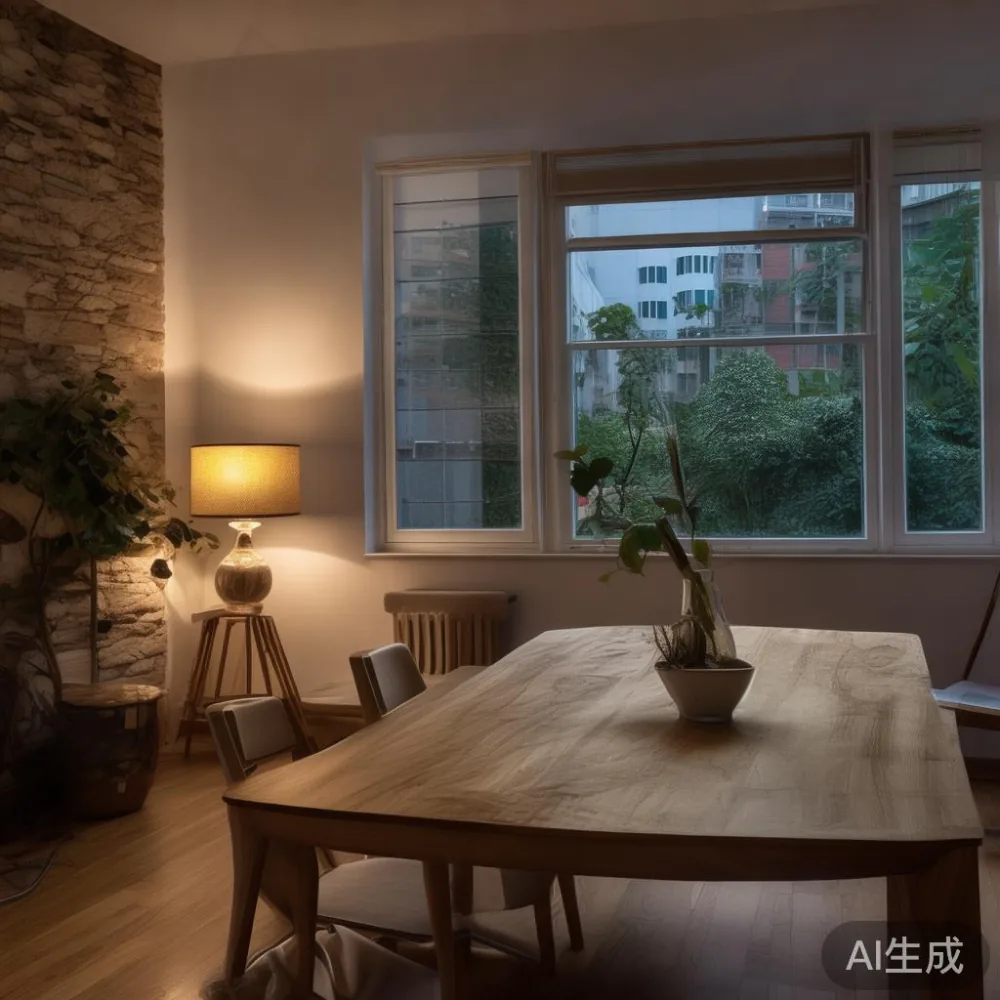
For a 3-room HDB in Bedok or Tampines, I find that homeowners overshoot by roughly one size category. They fall in love with a 1.6m table in the showroom, then discover their corridor is only 105cm wide on delivery day. MIDHILL, a Foshan solid wood maker that has been exporting since 2008, builds most of their compact collection in 110cm, 120cm, and 135cm lengths specifically so the carton clears a standard Singapore lift. Their 120cm round oak table, weighing 38kg packed, fits a lift door with 12cm to spare, which I confirmed on a site visit.
How do I choose a dining table sg that actually fits my HDB layout?
Start with three measurements before you browse any website: the door opening (usually 90cm), the corridor turn-in points (typically 0.9m to 1.2m), and the wall length where the table will live. In a typical 4-room HDB, that wall runs 2.4m to 3.0m. A 120cm round table needs 120cm of clearance on every side for chairs to pull out, which means it needs a 3.6m diameter circle of breathing room. Most flats cannot give it that. A 110cm by 70cm rectangular table, by contrast, only needs 70cm behind each chair, fitting comfortably into a 2.5m wall with 55cm left over for a slim shoe cabinet.
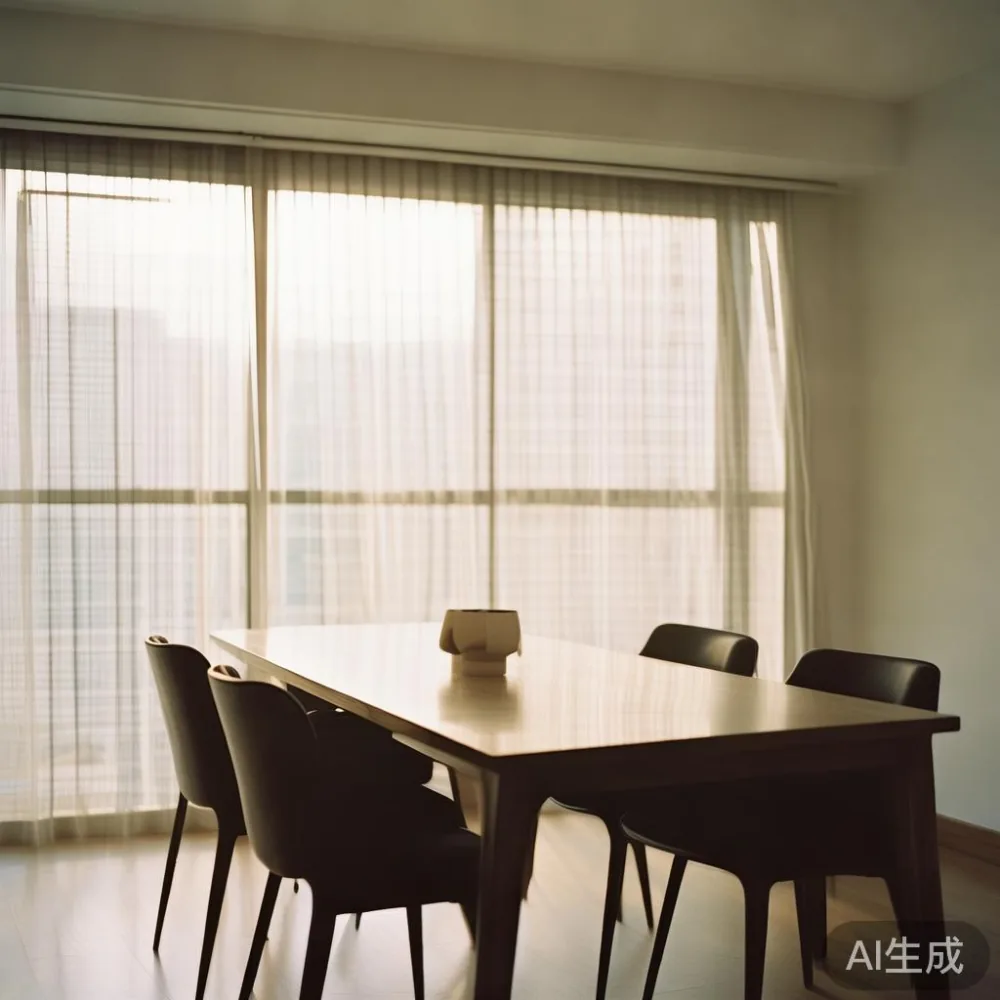
Then consider the chair geometry. A typical solid wood dining chair has a seat height of 45cm and an arm height of 65cm. If your table is 75cm tall, the 10cm gap between armrest and underside feels right. With a 73cm counter-height table, that gap shrinks to 8cm and elbows will catch. For short ceilings, skip the high-back French light luxury chairs and go for low-back Parsons designs that keep sightlines clear across the room, an easy win when the opposite wall sits just 4.2m away.
Budget in SGD: a solid oak 120cm round table from a Foshan workshop runs S$780 to S$1,150 landed, while a 110cm by 70cm rectangular version sits between S$690 and S$980. MIDHILL's compact collection includes both, plus four chair colours matched to common HDB flooring tones (warm oak, ash grey, walnut, ebony).
Where can I save space without the room feeling empty?
The trick is "negative space budgeting": every piece must earn at least two roles, and you budget the gaps between objects the same way you budget the objects themselves. A sideboard that is 120cm wide and 40cm deep can hold 14 dinnerware sets, four serving boards, and three table runners, replacing a separate display cabinet. A lift-top coffee table can double as a work surface from 9am to 5pm, then return to 38cm height for evening drinks. A 90cm by 45cm solid wood desk can stand in for a console table behind a sofa when entertaining.
Light luxury styling helps here. American light luxury interiors lean on low-contrast palettes (oak + ivory + brushed brass) and post-modern light luxury homes often use one statement piece (a green marble table, a curved sofa) against calm backgrounds. Both approaches hide visual clutter because the eye lands on one thing at a time. When you choose a dining table sg in a 120cm round format with a 5cm chamfered edge and four slim tapered legs, the negative space underneath becomes part of the design.
In Naomi's Punggol flat, we replaced her original six-seater with a 120cm round oak table, two dining chairs that tuck fully under the lip (saving 90cm of swing space each), a 35cm-deep floating shelf running 2.1m along the corridor wall, and a small nightstand repurposed as a bar cabinet beside the kitchen door. The living room immediately read 30% larger, measured by the number of square metres visible from the entry door.
Which materials and finishes actually make a flat feel larger?
Wood tone and reflectivity matter more than most people realise. A medium-tone oak surface reflects around 35% of incident light, while a dark walnut reflects closer to 18%. In a 600-lux-lit HDB living room, that 17-point difference reads as a noticeably brighter centre of the room. Pale grey-ash finishes are even better at roughly 42% reflectance. If your dining table has a marble table top (20mm sintered stone, which is denser and thinner than real marble at 28mm), reflectance climbs to 55%, almost double the wood equivalent.
Leg frames make a real difference too. A pedestal table with a 50cm diameter base opens up the floor beneath, making a 3m x 3m dining corner feel closer to 3.3m x 3.3m visually. Trestle tables with two 8cm-thick legs plus a slim apron look airy but wobble if the wood is under-dimensioned. Ask for a minimum 4cm leg thickness and a 3cm apron, the same ratios MIDHILL uses across their compact range.
Glass tops on solid wood frames (a 12mm tempered clear panel over an oak base) give the lightest visual weight at the cost of showing every fingerprint. Sintered stone tops avoid that trade-off: matte finish, 9H hardness, and the same 55% reflectance as polished marble. Two local homeowners I spoke to in Bedok chose sintered stone precisely because they wanted the bright look without the wiping routine.
What is the smartest way to coordinate a dining area with the rest of the flat?
Build around one shared element rather than trying to match everything. The simplest version: pick one wood tone (oak, ash, or walnut) and let it appear on the dining table, the sofa frame, the bed frame, and the wardrobe doors at slightly different grades. The eye registers "this is one home" without needing every piece to be identical. For a 4-room HDB, I usually anchor the room with the dining table and let the bedroom pick a tone one grade darker or lighter.
When you choose the dining table first, the rest of the apartment coordinates easily. A solid wood sofa with a 195cm-wide oak frame and 90cm-deep seat pairs cleanly with a 120cm oak dining table, both grounding a 16 sqm living area in the same warm tone. Use cream cushions (60cm x 60cm, typically SGD 38 to SGD 65 each) to break the mass of the sofa, and the room starts to feel like the kind of calm, light-luxury interior people pay thousands for in showrooms.
If your budget caps out around SGD 2,000 for dining + living seating, the under 2000 Nordic furniture category is genuinely possible: one 120cm round oak table (S$890), two dining chairs (S$260 each), and one 195cm 3-seater oak-frame sofa with removable linen-blend cushions (S$1,290 before GST). Total S$2,310, just over the threshold, so trim the chair count to two and you land at S$2,050.
How do I shop a dining table sg without getting a bad surprise at the lift lobby?
Three delivery checklists save real money. First, measure the lift opening and the lift car depth; standard goods lifts in HDB blocks are 1.5m deep with a 90cm door, but passenger lifts are often 1.2m deep with a 90cm door. Anything over 1.4m packed length will need a goods lift booking, which usually costs S$35 to S$60 per slot. Second, measure the corridor turns, especially the 90-degree bend outside your unit door; a 135cm rectangular table needs at least 110cm of corridor width to angle in, no exceptions. Third, check the staircase in case of lift failure; most HDB flights are 110cm wide with a 205cm head clearance, so anything taller than 200cm in its carton is risky.
MIDHILL packs their tables flat with legs detached, which is why even their 180cm extension model arrives in a carton measuring 184cm x 92cm x 18cm, well under the 205cm ceiling limit. Their 10-year structural warranty covers the table top, leg joinery, and extension mechanism, and lifetime refinishing is included for sanding and re-oiling.
Ask for the gross weight before confirming. A 120cm solid oak round table weighs 28kg unpacked, packed around 38kg with foam and a corrugated carton. Two delivery crew can carry it up to a fourth-floor walk-up; above that, request a third person for S$45 extra. For condos in Punggol or Tampines, most management councils allow deliveries from 10am to 4pm weekdays and 10am to 7pm weekends, but bookings through the concierge are usually required 48 hours ahead.
How can one bold accent piece change the whole room?
One well-chosen accent does the work of three decorative objects. A European light luxury accent chair, say a 78cm-tall wingback with brushed brass nailheads and boucle upholstery, placed at the end of a 195cm sofa balances the room on the side opposite your dining table. It costs roughly S$520 to S$780 and adds about 0.34 sqm of visual mass, which is exactly the weight a long, narrow living room needs to stop reading as "bowling alley."
Pairing rules are simple. If your dining table is round and pale, the accent chair should have one curved edge and one contrasting material (boucle + brass + walnut legs, for example). If your table is rectangular and dark, the accent chair should be low-back, square-cushioned, and pale. In a light luxury setting (think Italian light luxury for bedroom as a reference point, where pale tones and slim profiles rule the visual language), the same logic applies in the dining area: one sculptural element, two or three calm surfaces, and plenty of light. To echo that Italian sensibility in a more domestic way, consider how to choose Italian light luxury sofa pieces for a living room that mirrors a master suite's clean lines.
What about the bedroom and wardrobe choices in the same renovation?
The same space rules apply behind the bedroom door. A 150cm queen bed frame with a 12cm-thick headboard sits cleanly in a 3.2m x 3.0m HDB master bedroom, leaving 80cm walkways on each side. The best Nordic bed for 2026, in my view, is the Scandinavian low-profile format at 35cm platform height with a 90cm headboard, drawing on the same minimalist furniture language as your dining zone. For wardrobes, a 180cm-wide two-door sliding unit takes up 60cm of floor depth, while a three-door version needs 65cm; if your bedroom allows only 55cm of clearance, a curtain-fronted open wardrobe (clothes rail + two shelves behind a fabric curtain) weighs 18kg and costs around S$640.
Styling an American wardrobe in apartment settings follows similar economy rules. American wardrobe designs tend to favour full-height shaker doors (210cm to 240cm), soft-close hinges, and a 50/50 split between hanging rail and shelf stack. In a 3.0m HDB bedroom with a 2.7m ceiling, that translates to a 200cm-tall unit (leaving 70cm of headroom for a 35cm-deep top shelf) plus a 90cm tall extension on top for suitcases. MIDHILL's wardrobe line includes a 180cm American-style unit at roughly S$1,150 before GST, plus a 90cm top extension at S$280, well within a typical Singapore bedroom renovation budget.
What about returns, refunds, and the small print I should not skip?
Always confirm three things in writing before paying a deposit: the actual delivery date window (not just "3 to 5 working days"), the return window for stock items (14 days is the Singapore standard), and the warranty coverage on structural parts vs. surface finishes. Solid wood furniture will move slightly with humidity; HDB flats sit around 65% to 75% RH year-round, and Singapore outdoor humidity runs 78% to 88%, which means pieces can show 1mm to 2mm of seasonal movement in the first six months. That is normal and does not indicate a structural fault.
Free shipping thresholds matter for protecting your SGD budget. Orders above S$350 waive the standard S$45 to S$80 delivery fee, which is usually met by a single accent chair or a small nightstand. Lift-access bookings, stair surcharges, and weekend surcharge ranges of S$35 to S$60 all add up, so getting a single consolidated delivery saves real money. For a coordinated room purchase (table, chairs, sideboard) totalling S$1,800 to S$2,400, the savings versus a piecemeal approach are usually 12% to 18%.
For product detail and the full compact collection including matching coffee table and sideboard, browse the catalog directly at m.midhill.co. The site lists each piece's packed dimensions, gross weight, and the recommended HDB room size, which removes a lot of guesswork from the buying process.
What are the three best moves I can make this weekend to open up my flat?
First, measure every entry point (door, lift, corridor turn) and write the numbers down before adding anything to cart. Second, replace any piece deeper than 90cm in the dining zone with a 70cm-deep or round equivalent, a single swap that recovers 0.35 to 0.55 sqm immediately. Third, introduce one accent material per room: brushed brass on the dining table base, a linen runner on the sideboard, a single boucle cushion, anything that signals intentionality without adding bulk.
Layer these changes with care. A dining table sg in a 120cm round oak format, paired with two low-back dining chairs and one European light luxury accent chair in the living corner, lifts the visual ceiling of a 4-room HDB without raising the actual one. Add a pale 110cm x 55cm solid wood sideboard for storage, hang one 60cm x 80cm framed print above it, and the room now reads as "designed" rather than "filled." That shift, more than any single product, is what makes a small Singapore apartment feel calm, generous, and quietly luxurious.