Humidity and Your Wood Dining Table in Singapore: A Practical Guide
I keep a small digital hygrometer clipped to the wall in my own kitchen in Tampines, mostly because I got tired of guessing. Last month, during one of those weeks of afternoon thunderstorms that roll through the East, the reading sat at 84% for four straight days. By Tuesday my solid oak dining table sg had developed a faint cup along one edge that I could feel when I ran my palm across it. The piece is from MIDHILL, a Foshan workshop I have come to respect after seeing how their ten-year structural warranty actually works in practice, and they walked me through what was happening, why, and how to stop it from happening again. That experience is the seed of everything I want to share in this article, because anyone who owns a wood dining table in Singapore eventually meets humidity face to face.
Why does my solid wood dining table change shape during the wet season?
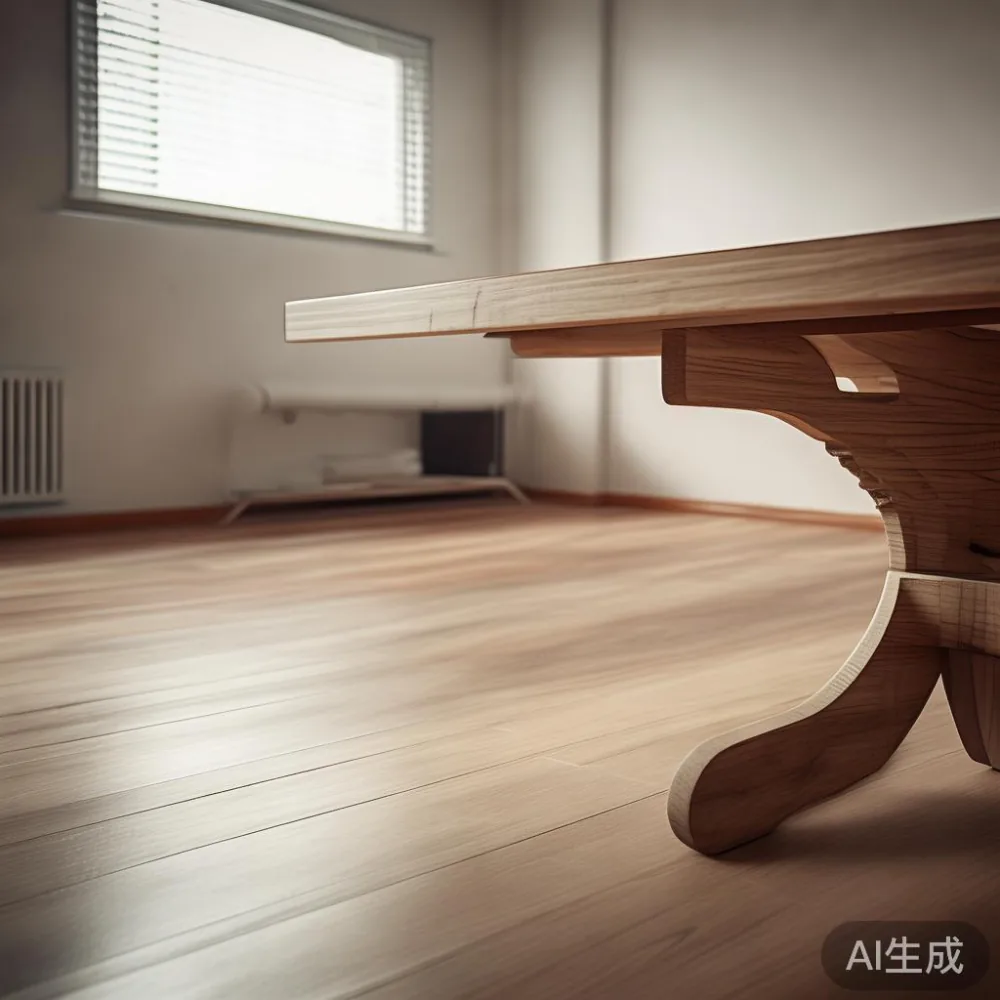
Solid wood is a hygroscopic material. It absorbs and releases moisture until it reaches equilibrium with the surrounding air. In Singapore, that ambient relative humidity rarely drops below 65% and routinely climbs past 85% between November and February. Wood swells when it gains moisture and shrinks when it loses it. Across the width of a 200 cm table, even a 2% change in moisture content translates into roughly 4 mm of dimensional movement, and across the thickness of a 4 cm tabletop it can show as a bow or a cup you can read with your fingers.
Solid wood dining tables are not broken when this happens, despite how it looks at first. The movement is the material responding honestly to its environment. Engineered boards with thin veneers, by contrast, can delaminate or telegraph the seams. A well-made solid wood dining table sg householders can sit at for twenty years is one that is built to allow this movement: frames that float inside aprons, breadboard ends that slide on tongue-and-groove joinery, and finish coats that breathe without sealing moisture inside. I learned to look for those construction details after my Tampines cupping episode.
What relative humidity should I actually aim for inside an HDB flat?
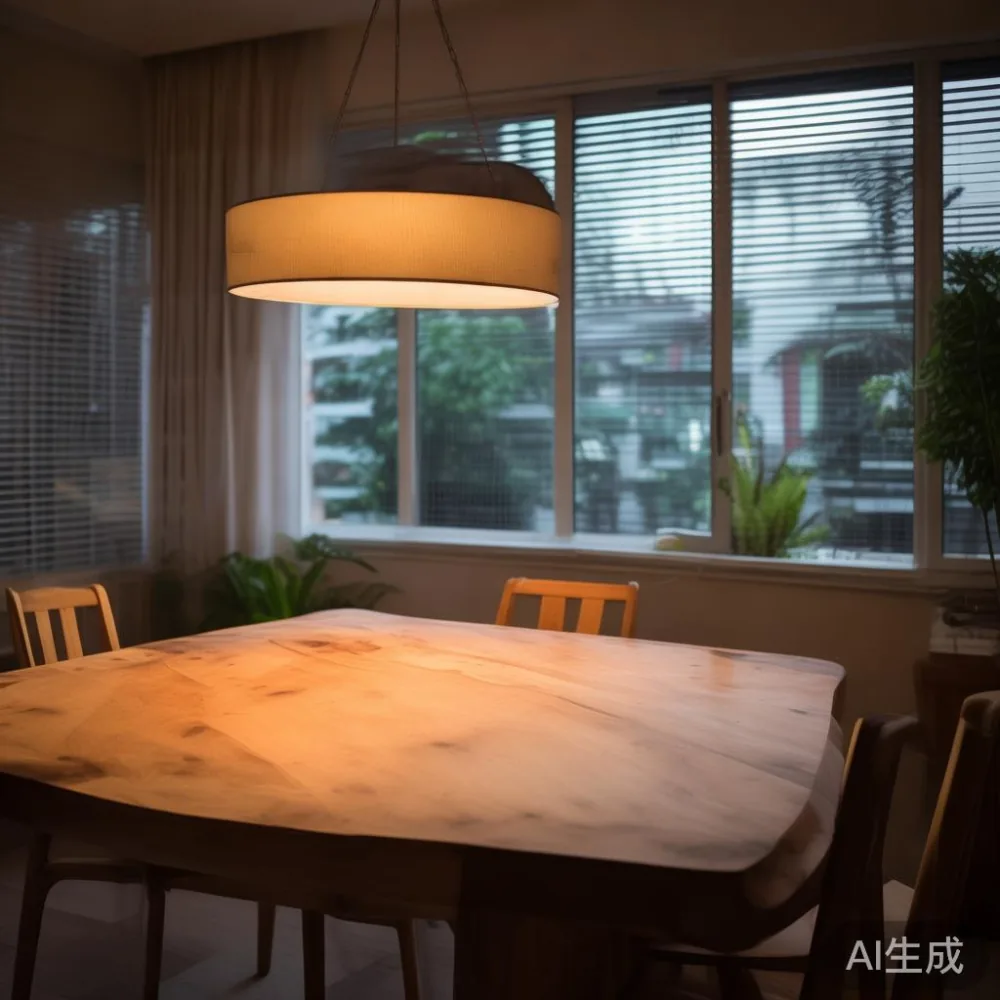
The sweet spot for most temperate hardwoods used in furniture (oak, ash, walnut, teak, rubberwood) sits between 40% and 60% relative humidity. Within that band, wood is dimensionally stable and finishes hold their colour. The trick in Singapore is not reaching that band, because the outdoor air is already against you, but reducing the gap.
Three numbers worth knowing:
- Outdoor RH in Tampines or Punggol on a clear December afternoon: around 70-75%.
- Outdoor RH during a northeast monsoon squall: 88-92%.
- Indoor RH in a 50 sqm condo with the windows shut and the air-con running at 23 degrees: 55-62%.
Air-conditioning is the single most effective tool any HDB household already owns. Running it for 8 to 10 hours a day on dry mode, set between 23 and 25 degrees, will pull a four-room flat near Bedok down from 80% ambient to roughly 58%, which is exactly the upper edge of the comfort zone for wood. A small dehumidifier rated at 8 to 12 litres per day pushes that figure further down to the low 50s in flats I have visited around the Bukit Timah corridor.
Does my lift access actually fit a 2 metre solid wood dining table?
This is the question I hear most often, and it deserves a real answer. Most Singapore HDB passenger lifts measure 1.55 m deep by 1.10 m wide with a 2.05 m ceiling. The good news is that 95% of standard six-seater dining tables, typically 180 cm to 200 cm long and 90 cm wide, can stand on end inside an HDB lift with about 15 cm to spare. The bad news is that the door opening on many older blocks in Bedok and Tampines is only about 90 cm wide, so any tabletop wider than 90 cm often has to come off the base.
What this means practically: when you order a solid wood dining table sg delivery from MIDHILL furniture or any other maker shipping from Foshan, the legs and frame arrive in one crate (usually around 35 to 50 kg) and the tabletop in another (often 40 to 75 kg for a six-seater in solid oak). Two delivery personnel lift each piece separately, the legs are bolted on inside your flat in roughly 25 minutes, and the tabletop is set in place without ever scraping your corridor wall. Total carrying distance from the lift lobby to a typical five-room flat in Punggol, including one 90-degree turn at the unit door, averages 12 to 18 metres.
If you live in a condo block such as The Cascadia in Bukit Batok or Treasure At Tampines, the service lift is usually wider, around 1.35 m by 1.80 m, which allows the fully assembled table to travel without disassembly. Always check the rated load, because a heavily built ten-seater in solid walnut can weigh 110 kg.
Which wood species handle Singapore humidity the best?
Not all hardwoods respond to tropical humidity equally. Here is a quick field guide based on what I have watched survive five monsoon seasons in actual HDB dining rooms:
- Teak: the gold standard for Southeast Asia. Natural oils resist moisture absorption and the wood stays stable from 40% to 80% RH with minimal movement.
- White oak: excellent dimensional stability, but needs to be kiln-dried to 8-10% moisture content before it arrives in Singapore, otherwise it will move dramatically in the first six months.
- Ash: similar to oak in performance, slightly more elastic, and a good match for French light luxury dining tables with gently tapered legs.
- Rubberwood: locally abundant and budget-friendly, but more sensitive to humidity swings and best used indoors with stable air-conditioning.
- Walnut: beautiful grain, moderately stable, prefer a flat between 50% and 65% RH.
A craftsman I trust at MIDHILL furniture once told me that the factory kiln-dries all stock to a target of 8% moisture content and then lets the boards rest in a 65% RH chamber for 14 days before assembly. That acclimatisation step is the difference between a table that arrives already stable in your Bedok flat and one that cups the first time the December rains hit.
How should I care for a dining table day to day without ruining the finish?
The finish is the layer standing between your dining table sg and the moisture in the air, so it needs sensible handling. A few habits that have held up well for me over four years of daily family use:
- Wipe spills within 5 minutes. Water rings are 90% of the stains I see in friends' homes.
- Use coasters under all drinks, even cans. The combination of condensation and aluminium is a finish killer.
- Avoid placing hot pots directly on wood. A 60 cm cork or teak trivet costs S$18 to S$25 and protects a S$2,400 tabletop.
- Dust with a barely damp microfiber cloth, then follow with a dry one. Twice a month, a coat of paste wax or a beeswax-based balm keeps the surface from drying out under sustained air-con.
- Keep the table at least 30 cm away from any open window that gets direct rain splash, and at least 15 cm from air-con vents blowing cold air straight onto the surface.
During the deep wet months from November to January, I pull out a 6-litre dehumidifier near the dining area and run it four hours a day. The unit costs about S$120 to buy and pulls roughly 1.2 kWh, so electricity is around S$0.22 a day at current GST-inclusive rates.
What if I want light luxury styling without sacrificing structural integrity?
Light luxury furniture does not have to mean fragile furniture. The look most Singapore homeowners ask me about falls into three buckets: French light luxury (slender cabriole legs, soft linen-edge silhouettes, pale oak or ash), American light luxury (cleaner profiles, brushed brass details, slightly chunkier proportions around 4 cm thick on tabletops), and post-modern light luxury (geometric bases, mixed-material pairings such as solid wood tops with marble or travertine accent plinths).
A light grey luxury sofa paired with an ash dining table in a French light luxury setting is one of the most requested combinations I see in Tampines and Punggol condos. A Mid-century modern with storage sideboard or credenza next to the dining table, finished in walnut with finger-joint detailing, gives the same room an American light luxury reading without adding visual weight. For those who want a quieter statement piece in the bedroom, an Italian light luxury dressing table in pale oak with a single bevelled mirror brings the same vocabulary into a private space. If you are choosing a bed to anchor the room, a luxury Mid-century modern furniture bed frame with a low slung headboard in solid ash is a neighbour-friendly option because it sits well below the typical 1 m window sill height in newer BTO flats.
For shoppers comparing sofas, the American sofa vs Modern sofa question usually comes down to seat depth and frame construction. American silhouettes tend to run 95 to 105 cm deep with a hardwood frame, while Modern European cuts run 85 to 90 cm with engineered hardwood. Both work in Singapore, but the deeper American profile is gentler on the lower back during long family dinners, and its slightly taller back (around 88 cm) gives a sense of enclosure near an open-plan dining area. Whatever the sofa, pair it with a stable rug of at least 200 cm by 300 cm so the dining chairs glide on flat pile rather than catching on rug edges four thousand times a year.
Will my dining table ever crack, and is that covered under warranty?
Solid wood will develop small checks, especially at the ends of boards, if humidity drops below 35% for extended periods. In air-conditioned Singapore, this is rare but possible during the dry weeks of late February and early March when some households over-cool their flats. Cover splits smaller than 2 mm wide with a beeswax stick (about S$8 at any hardware shop); anything wider than 3 mm deserves a phone call to your maker. MIDHILL offers a ten-year structural warranty on frames and joinery, which means the legs, aprons, and breadboards are guaranteed against breakage, and a lifetime refinishing service that costs roughly S$180 to S$260 per project. That lifetime refinishing promise is unusually generous in the furniture trade and is one of the reasons the brand keeps coming up in conversations with interior designers working on Punggol and Woodlands projects.
How much should I budget for a quality solid wood dining table in Singapore?
Numbers from current 2025-2026 price lists and showroom walk-throughs I have done in the last six months:
- Solid rubberwood six-seater, 180 cm x 90 cm, basic oil finish: S$1,250 to S$1,750.
- Solid ash six-seater, 200 cm x 100 cm, French light luxury profile: S$2,400 to S$3,200.
- Solid oak eight-seater, 220 cm x 105 cm, post-modern light luxury with marble plinth: S$3,600 to S$4,800.
- Solid walnut eight-seater with breadboard ends: S$4,900 to S$6,500.
All prices are SGD, inclusive of the 9% GST that applies to most furniture imports. Free shipping typically kicks in above S$350, which every dining table clears by definition, and standard delivery to a mainland address runs 14 to 21 days from order confirmation. White-glove assembly (two crew, in-home assembly, packaging removal) adds around S$120 to S$200 depending on lift access. The cheapest shipping route is consolidated sea freight from Foshan via Singapore's PSA terminal, which takes 9 to 12 days port to door. Express air freight cuts that to 4 days but adds about S$280 per cubic metre.
If a price looks suspiciously low, ask which wood is solid and which is veneered, what the kiln-dried moisture content is, and whether the legs are mortise-and-tenon or simply dowelled. Those three answers separate heirloom-grade pieces from disposable ones.
What does a real first-month-after-delivery checklist look like?
I keep a printed checklist clipped inside a kitchen drawer after every major furniture delivery, and the dining table gets this routine:
- Day 1: confirm legs are tight, no wobble at any corner, finish uniform, tabletop free of dents or scratches.
- Day 2 to 7: leave the table unwaxed and allow the wood to adjust to your indoor RH. Place coasters and placemats, but no tablecloth, so air circulates under the legs.
- Day 8: apply the first coat of beeswax balm. Buff in 15 minutes. This slows both moisture absorption and moisture loss.
- Day 30: tighten leg bolts a quarter turn with the supplied Allen key. Wood may have shifted slightly and a snug retension keeps the frame silent when family leans on it.
After that, the routine is the day-to-day list above. Most homeowners who follow this protocol still have a stable, beautiful dining table sg ten years later, and that is the only yardstick that matters for a piece of furniture you sit at every day.
A short note on what to look for beyond the dining table
The same humidity rules apply across the rest of a typical HDB home. A solid wood wardrobe with through-tenons at the top corners, a bed frame in ash with a centre support beam every 30 cm, and a nightstand that bolts to a hidden wall cleat to keep it level on an uneven HDB floor are all pieces I have watched succeed in the same flats that struggle with cheap laminated alternatives. A marble table in the living room, by contrast, tolerates humidity without complaint and can act as a visual anchor beside a softer light grey luxury sofa or a slim solid wood sofa frame in oak. Mixing materials, plus stable air-conditioning, is the quiet engineering behind a home that ages gracefully in our climate.
What is the real takeaway about humidity and wood furniture?
Humidity is not an enemy of solid wood furniture. It is the condition the wood lives in. A solid wood dining table bought from a maker who kiln-dries properly, joins thoughtfully, and finishes honestly will move with your flat through every December monsoon and every dry March afternoon. Your job is to provide a stable indoor environment (target 50% to 60% RH), keep the finish clean and waxed, and call the maker the moment you see movement beyond the gentle seasonal flex. If you do those three things, your table will serve two decades of nasi lemak breakfasts, weekday steamboat dinners, and Sunday family gatherings without complaint, and that is the kind of return on investment that no engineered board can match.