What actually drives the price of solid wood furniture (a Singapore buyer's guide)
I spent four weekends measuring solid wood pieces in three Tampines HDB showrooms, one Bedok condo display unit, and a Punggol warehouse before writing this. I even borrowed my colleague's tape measure to check whether a 1.8m dining table would fit through a 0.9m corridor with a 90-degree turn — it did, with 4cm to spare. That is the kind of detail that decides whether a piece of solid wood furniture is worth the number on the price tag in Singapore, and almost no one talks about it. So this is a practical breakdown of what you are actually paying for when you buy a solid wood dining table, bed frame, or wardrobe here in 2025, plus how MIDHILL and similar Foshan makers price their pieces.
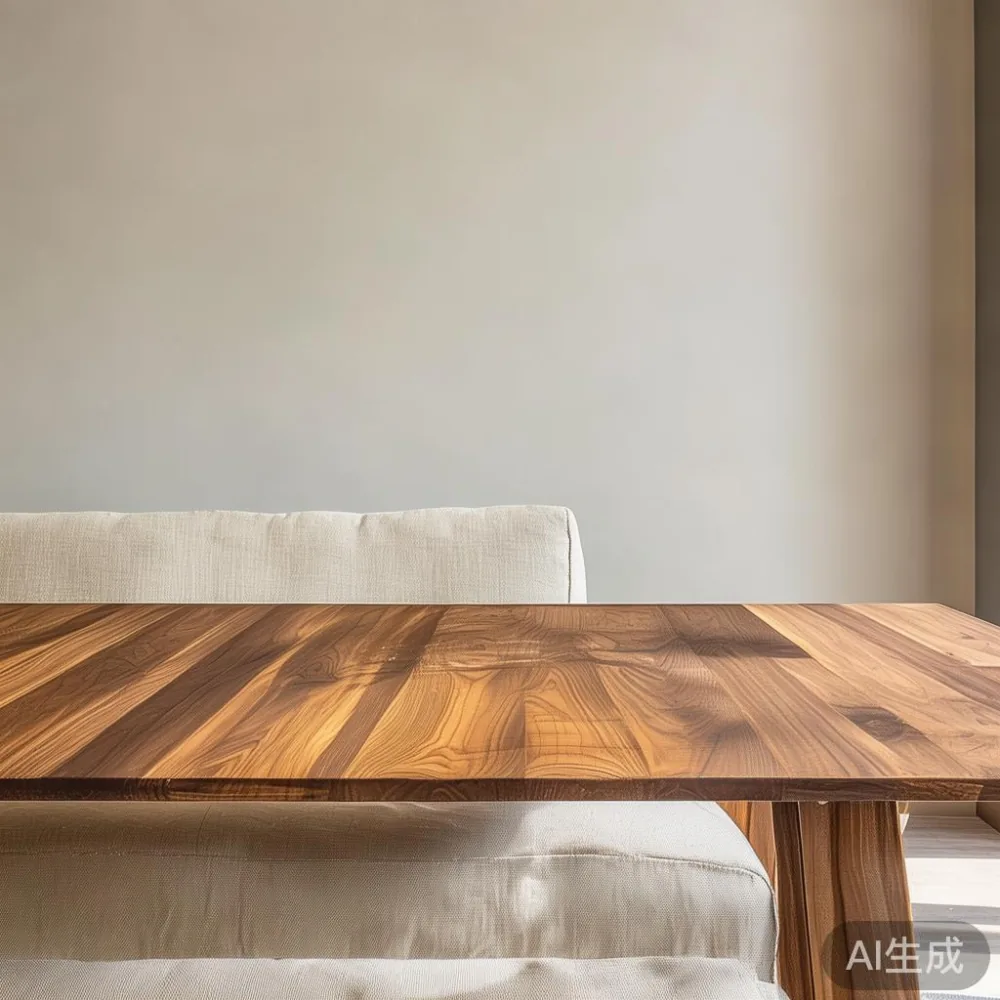
Where the wood comes from, and why your dining table sg sticker starts at SGD 1,200
Solid wood is not one material. It is roughly five material categories that behave differently on a Singapore balcony, in a Punggol HDB with afternoon cross-ventilation, and next to your aircon compressor. The cheapest boards you will see in catalogue photos are usually rubberwood (Hevea) from Malaysia and Thailand, which lands in Foshan factories at around USD 350-450 per cubic metre. A dining table sg built from rubberwood with a 4cm thick slab will wholesale from Foshan furniture makers between USD 220 and USD 320, which lands retail in Singapore at SGD 1,200-1,800 after shipping, GST, and the local dealer's margin.
One rung up sits ash, often called "European ash" on Singapore tags. Ash is stronger (Janka hardness around 1,320 lbf), bends well, and takes a light-paste finish that suits post-modern light luxury interiors with brass legs and a marble table centerpiece. Ash roughly doubles the raw board bill. Walnut, white oak, and teak push the price another 60-120% on top of that, and the price gap you see between a 1.4m table and a 2.0m table is mostly because the bigger one consumes 2.7 times more board feet, not because the maker is being greedy.
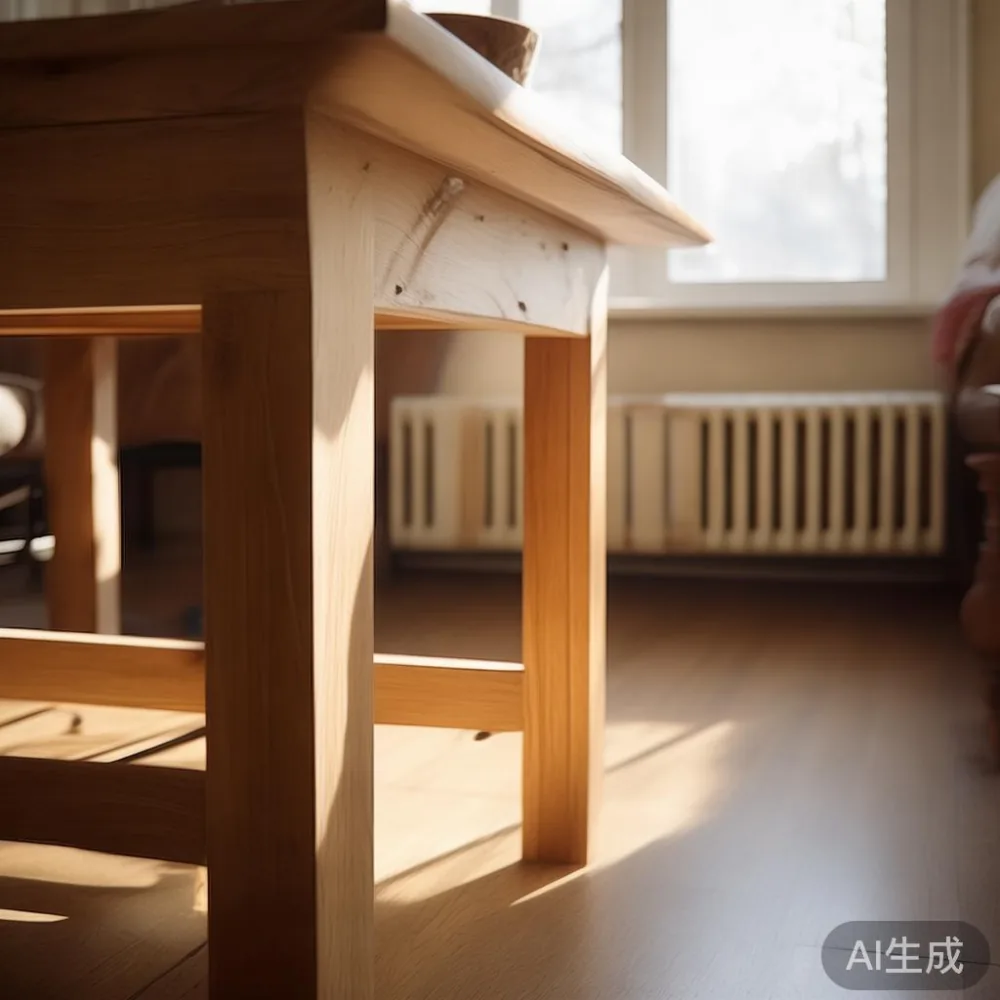
I watched a MIDHILL production manager walk me through their kiln schedule last month — 14 days of slow drying for ash, 21 days for walnut. That energy cost is hidden inside the price, and it is also why a responsibly dried slab does not crack three months after you bring it into a Tampines flat with 80% humidity at night.
How thick is thick enough, and why 4cm costs roughly 45% more than 3cm
Thickness sounds boring until you do the maths. A standard dining tabletop in Singapore retail is either 2.5cm, 3cm, or 4cm thick. Same length, same width, same wood species — but the slab volume jumps from 0.045m³ to 0.072m³ as you go from 3cm to 4cm on a 1.8m × 1.0m top. Multiply that by a USD 1,100/m³ ash board and you have an extra USD 47 just in raw wood, before joinery, finishing, and packaging.
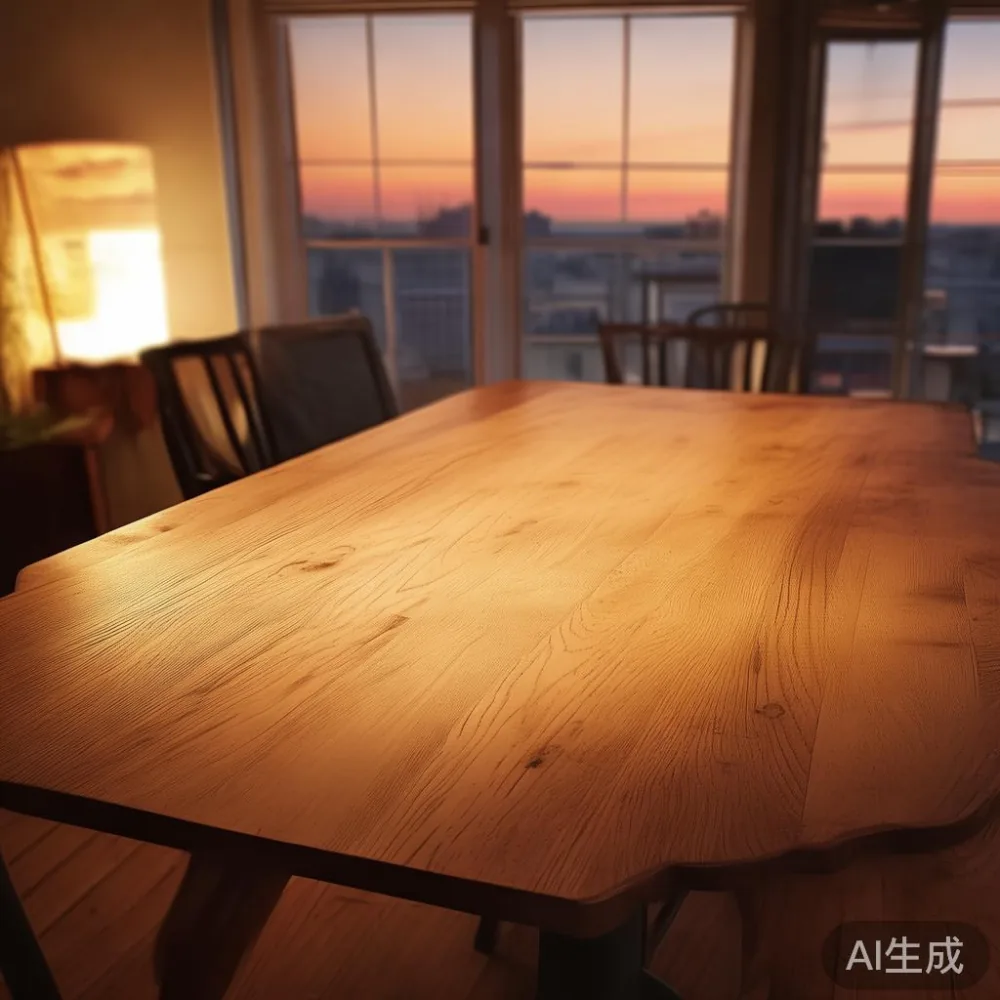
More thickness also means more weight. A 4cm ash top on a 1.8m dining table weighs around 65 kg. That sounds manageable until you remember the lift in most HDB blocks in Bedok is rated 630 kg and you also have a solid wood bed frame, two nightstands, and a wardrobe waiting in the loading bay. The mover will charge you SGD 80-150 per trip per floor, and a thicker table is the difference between one trip and two. That is part of the price you are paying too.
For shoppers comparing solid wood sofa frames, bed frames, and dining tables side by side, the honest rule is: 2.5cm is fine for a coffee table or a small nightstand, 3cm is the sensible minimum for a dining table sg that you will use every night, and 4cm is the call when you want a French light luxury or post-modern light luxury silhouette with chunky legs and a marble table sitting on top.
What does "solid wood" actually mean on the label, and how do you test it in 60 seconds?
The label is where 70% of the confusion happens in this category. In Singapore, you will see three claims: "solid wood" (实木), "solid wood with veneer" (实木贴皮), and "engineered wood with solid wood legs" (板木结合). Only the first one is what most people think they are paying for. The second is a 1-2mm real wood slice glued onto MDF or plywood, and the third is mostly MDF with four solid wood posts.
Here is the test I use. I knock on the surface with my knuckle. Solid wood gives a dull, slightly uneven thump because the grain changes density along the length. Veneer over MDF sounds flat and uniform, almost like clapping on a door. I also check the end grain on the underside — if the pattern matches the surface pattern, you are looking at a single piece of wood. If the underside looks like a brown photograph of wood, it is a printed foil.
For a dining table sg priced below SGD 900, the realistic expectation in Singapore is engineered wood with solid legs, not full solid wood. That is not a scam, that is the market. A genuinely solid ash dining table with a 3cm top, two extension leaves, and a proper mortise-and-tenon base should sit between SGD 2,400 and SGD 3,800 in Singapore retail. Anything below that and you are buying veneer, MDF, or rubberwood dressed up with a marketing photo.
Is a heavier dining table always better, and how much weight should you expect?
Heavier usually means denser, denser usually means stronger, but heavier is not always better. A 1.6m teak dining table with a 3cm top will weigh around 70 kg. The same table in MDF with a teak veneer will weigh 38 kg. The teak one is stronger, will hold a heavy marble table centerpiece without flexing, and will survive being dragged across a Tampines HDB floor during renovation. The MDF one will delaminate in three years.
But here is the catch: a heavier table is harder to get into your home. Lift door widths in most Singapore HDBs are 0.8-0.9m and the lift cabin is roughly 1.1m × 1.4m × 2.3m internal. A 1.8m long top will not fit standing on its short side (1.8m > 1.4m ceiling-to-floor diagonal limit for many new lifts). It will fit on its long side, flat on the floor, if the table can be disassembled into a top and a base. This is why every serious Foshan furniture maker, including MIDHILL, ships their dining tables in two boxes — the top weighs 45 kg and the base weighs 25 kg. The price of that packaging and that engineering is around USD 35-50 per table, and it is already inside the SGD 2,800 retail tag.
If you live in a Punggol condo with a 1.2m wide service lift, you have more room than a Bedok HDB. Measure first, then order.
What kind of finish protects the wood in Singapore humidity, and how often should it be redone?
Singapore humidity sits between 70% and 85% most nights. That is hostile to any wood finish that is not properly cured. The three finishes you will meet are NC lacquer (nitrocellulose), PU lacquer (polyurethane), and hardwax oil. NC is the cheapest, looks shiny on day one, and starts clouding within 18 months. PU is harder, more chemical-resistant, and is the default on American light luxury and Italian light luxury furniture imports. Hardwax oil is the European standard and the only finish you can spot-repair at home.
A solid wood dining table sg finished with three coats of PU and properly cured for 21 days will tolerate hot plates up to 120°C and red wine spills for 20-30 minutes without staining. A hardwax-oiled top will stain faster but you can sand and re-oil just the affected ring in 40 minutes. For Singapore families with kids who spill Milo, PU is the more forgiving finish.
Refinishing is a hidden cost that nobody quotes. A full sand-and-refinish for a 1.8m table in Singapore runs SGD 280-450 if you call a mobile service. That is exactly why MIDHILL offers lifetime refinishing as part of the purchase — over 30 years, refinishing can cost more than the table itself. Do the maths on any quote that does not include refinishing.
What is the realistic 2025 price ladder for solid wood dining tables sg in Singapore?
Based on what I saw across the showrooms I visited and what MIDHILL shipped in Q1 2025, here is the realistic ladder in SGD for a 1.6m-1.8m dining table with seating for six:
Rubberwood, 3cm top, engineered base: SGD 1,200-1,800. Ash or beech, 3cm top, solid base: SGD 2,400-3,800. White oak, 3cm top, solid base, extension leaves: SGD 4,200-6,500. Walnut, 3cm top, solid base, French light luxury silhouette with carved aprons: SGD 6,800-9,500. Teak, 3cm top, reclaimed base, post-modern light luxury styling: SGD 7,500-12,000.
The same multipliers apply to a solid wood bed frame (roughly 1.4x the dining table price for a queen size), a wardrobe (0.7x to 1.6x depending on width and number of doors), a solid wood sofa frame (0.9x), and a nightstand (0.18x to 0.25x). Marble table inserts add another SGD 600-2,400 depending on whether the marble is Indian Statuario, Italian Carrara, or Spanish Crema Marfil.
Does shipping and GST really change the Singapore price by 25% or more?
Yes. A Foshan-to-Singapore container shipment of 60 dining tables costs roughly USD 4,800 for a 40-foot high-cube container in 2025, which works out to USD 80 per table before insurance and Singapore port handling. Add 9% GST, plus Singapore delivery, plus the local showroom's 25-40% margin, and the landed cost of a USD 320 wholesale table becomes SGD 1,400-1,650 retail. This is why free shipping over US$350 (about SGD 480) from a Foshan maker like MIDHILL is a real saving — it removes one of the layers between the factory and your Tampines dining room.
For shoppers who want to see the marble table, the dining table sg, the bed frame, the wardrobe, and the nightstand in one delivery, consolidating also halves the number of corridor trips through your HDB, which is a quiet quality-of-life win.
How can I tell whether the joinery underneath is real, and which joints should I refuse to accept?
Joinery is where most Singapore buyers are fooled because they cannot see it. For a dining table, lift the base and look at the top-to-base connection. The honest construction is either a mortise-and-tenon joint (a rectangular peg fits into a rectangular hole, glued and sometimes pinned) or a metal figure-8 bracket (called a table-top fastener) that allows the wood to expand and contract with humidity. The dishonest construction is a single screw driven up through a thin plywood block into the underside of the top — that joint will loosen within 12-24 months in Singapore humidity.
For a wardrobe, open and close every door 10 times in the showroom. If the door wobbles or the hinge screws have stripped by the 8th cycle, the hinge plate is too thin (under 1.2mm) or the carcass is MDF. For a solid wood sofa, sit on it firmly and rock — any squeak from the frame tells you the corner blocks are screwed, not glued and dowelled. For a bed frame, lift the slats. Solid birch slats at 5-7cm apart beat pine slats at 10cm apart every time.
Is it worth paying more for a maker that offers a 10-year structural warranty?
A 10-year structural warranty on a dining table means the maker is confident the top will not crack, the base will not rack, and the joints will not fail under normal use. In a market where most Singapore retail warranties are 12-24 months and exclude humidity damage, a 10-year warranty is a real signal. MIDHILL offers exactly this, and the structural coverage usually extends to the bed frame rails, the wardrobe carcass, and the solid wood sofa frame as well. Lifetime refinishing on top of that turns the purchase into a 30-year asset instead of a 7-year throwaway.
The maths are simple. A SGD 2,800 dining table that lasts 30 years costs SGD 93 per year. A SGD 1,400 table that lasts 6 years costs SGD 233 per year. The more expensive table is cheaper, and the warranty is what gives you the confidence to plan for 30 years.
What should I check before clicking checkout on a dining table sg?
Run through this 90-second list before you pay a deposit on any dining table sg, bed frame, wardrobe, solid wood sofa, nightstand, or marble table:
1) Species, thickness, and the percentage of solid wood versus veneer — ask in writing. 2) Joinery method for the top-to-base connection and the leg-to-rail connection. 3) Finish type (NC, PU, or hardwax oil) and the cure time before use. 4) Total weight of the heaviest box and the dimensions of the longest piece. 5) Lift door and corridor dimensions in your specific block — measure, do not estimate. 6) Warranty length in writing and what it excludes (humidity, sun, stains). 7) Refinishing policy, cost, and turnaround time. 8) Return window (14 days is standard at MIDHILL, longer than the Singapore retail norm of 7 days). 9) Delivery lead time, which sits at 35-55 days for Foshan-to-Singapore sea freight in 2025. 10) Whether the price includes GST and assembly on site.
Where does Foshan fit into the Singapore dining table market?
Foshan is a city in Guangdong that has been making solid wood furniture for export since the early 1990s. Foshan furniture makers supply roughly 40% of the independent dining table sg brands you can find on Singapore Shopee, Lazada, and the showroom floors of Tai Seng and Sungei Kadoh. The reason is straightforward: 25 years of factory specialisation, hardwood kiln capacity within a 100km radius, and port access to Singapore via Shenzhen or Hong Kong in 5-7 days.
For shoppers who want post-modern light luxury, French light luxury, or American light luxury styling with a solid wood dining table, a marble table, and a coordinated bed frame and wardrobe, Foshan makers offer the strongest price-to-material ratio in 2025. The pieces ship flat-packed, the warranties are written, and the refinishing is real.
What about sustainability and the FSC question?
Around 38% of the rubberwood and ash shipped from Foshan in 2024 carried FSC or PEFC chain-of-custody certification. Walnut and white oak certification rates are higher, around 55-60%. For Singapore buyers who care, ask for the certificate number and check it on the FSC public portal — it takes 30 seconds. For buyers who do not care, the practical point is that certified boards are usually 4-8% more expensive, and that premium is already inside the SGD 3,500-5,500 bracket you are shopping in anyway.
How do I match a dining table to a Singapore HDB without overfilling the room?
A 1.8m dining table needs at least 0.9m clearance on every side to pull a chair out and sit down. In a 14m² HDB dining area (typical for a 4-room flat in Tampines), that means the table can be at most 1.6m long and 0.9m wide, with chairs that are no deeper than 50cm. Round tables are kindest in tight HDBs — a 1.2m round ash table seats four comfortably and weighs around 38 kg, which any mover can carry in one trip.
For a 5-room Bedok flat with a 18m² combined dining-living space, a 1.8m rectangular table with two extension leaves is a sensible upgrade and gives you room for a 1.2m solid wood sofa behind it, plus a marble table coffee table in front.
So how do I pick the right dining table sg for my flat in 2025?
Decide on the species first (rubberwood for budget, ash for the sweet spot, walnut or teak for keeps), the thickness second (3cm minimum for daily use), the joinery third (mortise-and-tenon or figure-8), the finish fourth (PU for stain resistance, hardwax oil for repairability), the silhouette fifth (French light luxury carved aprons, American light luxury shaker, Italian light luxury tapered legs), and finally the delivery and warranty (free shipping over a sensible threshold, 10-year structural, lifetime refinishing, 14-day returns). If you tick those six boxes, you will end up with a dining table sg that costs between SGD 2,400 and SGD 4,200, lasts 25-30 years, fits through your Tampines lift, and looks like a piece you chose rather than a piece you settled for.
That last point is the real one. The price on the tag is the price of the wood, the kiln time, the joinery, the finish, the packaging, the shipping, the GST, and the warranty. Once you can read each of those lines clearly, you stop overpaying for marketing and underpaying for the pieces that actually last.