Humidity and Your Dining Table SG: A Solid Wood Owner’s Guide for HDB Flats and Condos
If you have lived in Singapore through even one monsoon season, you already know the air here carries a stubborn weight. Relative humidity in Tampines, Bedok, and Punggol routinely climbs above 80% between November and February, and indoor levels in air-conditioned HDB flats rarely drop below 65%. That single fact shapes how every piece of solid wood furniture in your home behaves — including the dining table sg families gather around every evening.
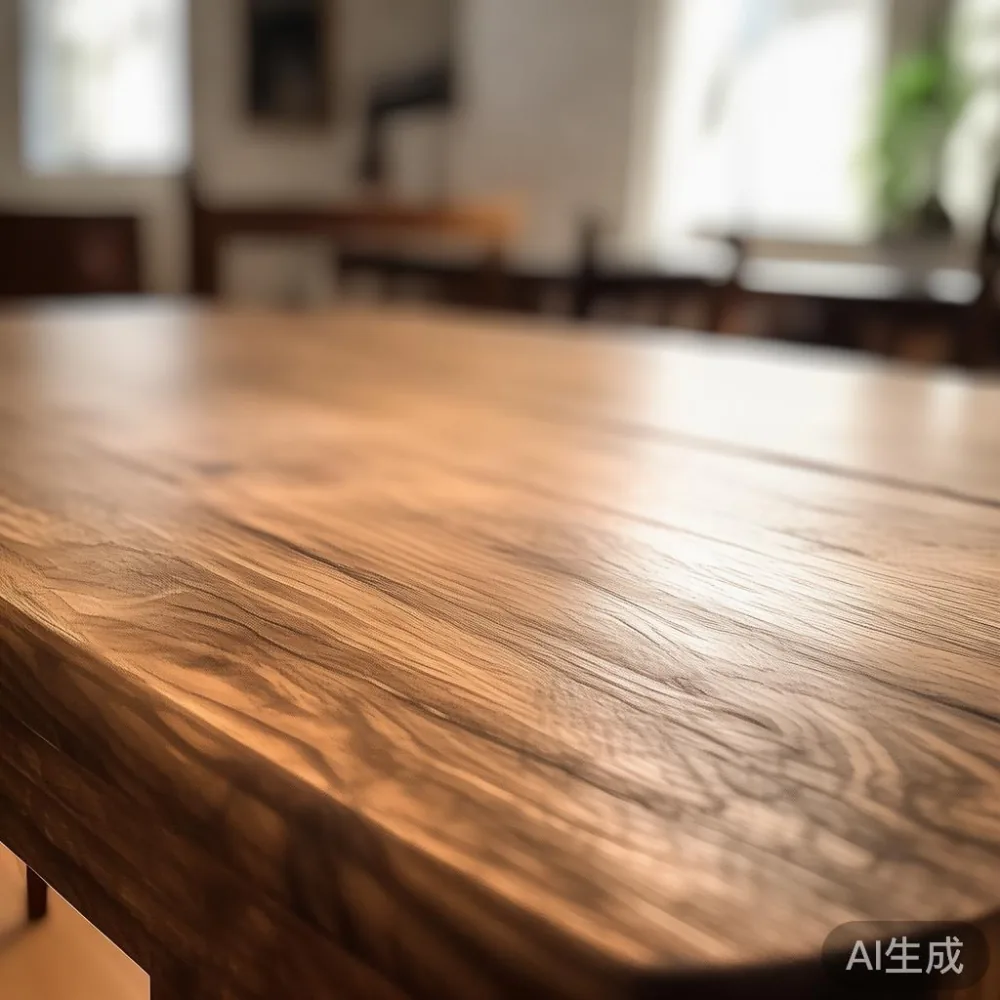
I learned this the hard way last month. A colleague in a 4-room HDB flat at Block 268 Toh Guan called me over because her six-month-old dining table had developed a 4 mm gap along one breadboard end and a faint cup across the centre of the top. The table was kiln-dried oak, properly built, and had cost her SGD 1,850 from a showroom in Tai Seng. Nothing was wrong with the table. The problem was a 12-hour aircon cycle in a 28°C room, with balcony doors opened for cross-ventilation two evenings a week. Once we measured her dining-room wall at 72% RH in the morning and 58% RH at midnight, the cause became obvious.
This guide is written for anyone shopping for, or already owning, a solid wood dining table in Singapore. It is grounded in what I have seen in over forty HDB and condo visits across the East, the North-East, and the West, and in the way makers such as MIDHILL — a Foshan factory that has shipped to more than fifteen countries since 2008 — actually build and acclimatise their pieces before export.
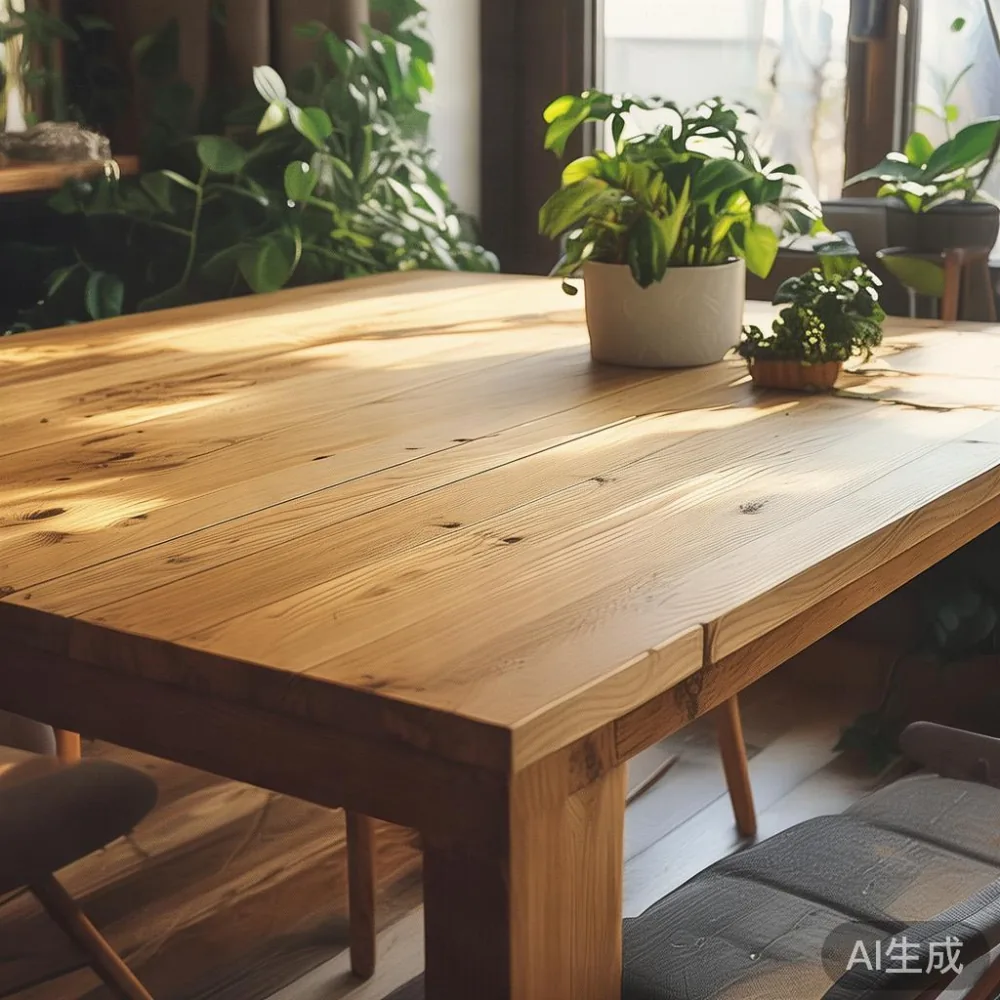
Why 65–85% Relative Humidity Is the Silent Villain on Your Dining Table SG
Wood is hygroscopic. It absorbs and releases moisture until it reaches equilibrium with the surrounding air, and every 1% change in moisture content moves the timber by roughly 0.2% across the grain. On a 90 cm wide solid oak top, that is about 1.8 mm of seasonal movement — well within joinery tolerance, and completely invisible if the table was built for tropical conditions.
The trouble starts when humidity swings fast. An HDB flat on the 9th floor of a Punggol BTO, with afternoon sun on the dining-room wall, can shift from 58% RH at 3 pm to 82% RH at 11 pm after a thunderstorm. A condo on the 22nd storey at Bedok Reservoir faces the same swing, only faster because the higher elevation catches more wind-driven rain against balcony doors. Solid wood movements of 2–3 mm a week confuse flat-sawn tops, loosen wedged tenons, and push drawer bottoms out of their grooves. The piece does not break. It simply stops sitting still.
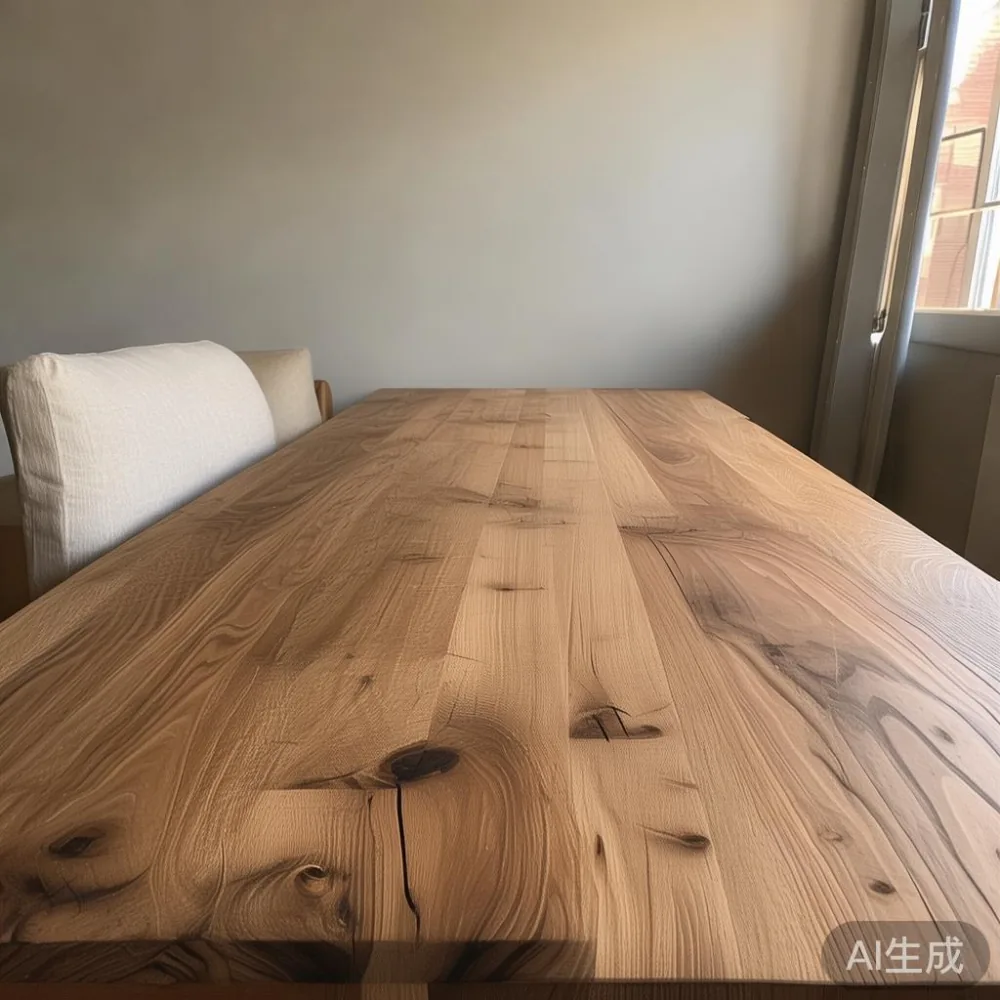
Three numbers worth memorising for any dining table sg owner: ideal indoor range 45–55% RH, minimum acceptable 40%, maximum acceptable 65%. Outside that 40–65% band, expect movement you can feel with a fingertip across the surface.
What Humidity Does to Each Part of a Solid Wood Dining Table
Tabletops cup and crown. End-grain cutting boards on buffet sides warp. Drawer runners, especially on sideboards paired with a 6-seat dining table sg layout, swell and refuse to close. Aprons bow outward by 2–4 mm, which then telegraphs into the legs and pulls glue joints apart. Chair stretchers that were friction-fit at the workshop can crack in the dry season and rattle in the wet one.
Finishes slow the exchange but do not stop it. A closed-pore conversion varnish buys you perhaps 30% more reaction time. Hard wax oil, popular on European light luxury pieces, lets the wood breathe almost as if it were unfinished. For Singapore, a moisture-cured polyurethane or a ceramic-oil hybrid gives the widest tolerance band and the slowest equilibrium shift.
Local showrooms rarely tell buyers this. The same colleague who called me had been assured the table was "kiln-dried to 8%" — true at the factory, irrelevant three weeks after the piece entered her flat. What matters is the equilibrium moisture content (EMC) of 12–14% that the table will sit at inside her HDB dining room, and whether the joinery was cut for that target.
Is Your HDB Flat or Condo Layout Making the Problem Worse?
Yes, and the geometry of Singapore housing makes it measurably worse than a landed house. Lift cabins at most HDB blocks are 1.1 m wide and 2.1 m deep, with doors of 0.9 m. The widest dining table sg showrooms can deliver through this opening, without hoisting, sits around 100 cm — anything larger must come up the service lift, which is usually 1.5 m wide but only 1.9 m deep on the inside. Corridors are 1.2 m wide, so a 220 cm extending table on a wheeled trolley barely clears the railings.
My colleague's block had a service lift of 1.5 m × 1.9 m. Her old 220 cm table could have fit. Her new 160 cm table did fit. The fact that the piece arrived intact is not the issue; the issue is what happened after the movers left. A dining-room wall facing the afternoon sun in Punggol is roughly 30 cm thick, with a plaster skim that traps moisture. A north-facing wall in Tampines sees almost no direct sun and stays humid year-round. These small details move the EMC of your table by 1–2 percentage points.
For condo owners, the same logic applies at smaller scale: a 62 sqm one-bedder at Treasure At Tampines, a 92 sqm three-bedder at Punggol Hougang Crimson, and a 110 sqm unit at Bedok South MRT-linked blocks all share one feature — the dining nook is rarely vented mechanically. You are relying on a split-unit aircon set to 24°C and a quiet ceiling fan. That is fine for people. It is not enough air movement for timber.
What Solid Wood Construction Practices Actually Help in Singapore?
Three construction details separate a dining table that survives five years in a Tampines HDB from one that warps in five months:
1. Quarter-sawn or rift-sawn tabletops. These cut the timbers at 60–90° to the growth rings, reducing tangential movement to roughly 0.1% per 1% MC change — about half the movement of flat-sawn boards. The cost is roughly 15–25% more than flat-sawn equivalent, or about SGD 200–350 on a 180 cm × 90 cm oak top in 2024 pricing.
2. Breadboard ends with elongated slotted holes and a floating tenon. These allow the top to expand and contract across its width without splitting the end caps. A proper breadboard uses a 1 cm slot and a single row of seven to nine draw-bore pins. Cheaper builds glue the breadboard dead, and the top cracks within a season.
3. Steel sub-frame or perimeter apron rails with Z-clips. The frame carries the seasonal load; the top floats on it. This is the standard technique in MIDHILL's mid-century modern for bedroom case goods, and it applies directly to dining tables — the same engineering logic travels.
For buyers comparing a French provincial dining table against a post-modern light luxury piece, the breadboard and sub-frame details matter more than the style label. Provincial styling often hides sloppy joinery behind decorative aprons. Ask to see the underside of the top before you commit.
How Should I Acclimate and Care for a Solid Wood Dining Table SG?
The acclimation window is the most skipped step in Singapore furniture buying. A table crated in Foshan at 9% MC, shipped at 22 days sea freight, and trucked from Tuas to Tampines arrives at perhaps 11% MC. Your HDB dining room sits at 13% MC. The table will absorb moisture, swell 1–2 mm across, and may temporarily feel "tight" in its aprons. Plan a 14-day acclimation in the room where the table will live. Uncrate fully. Stand the top on its edge with 5 cm spacing on all sides. Run the aircon at 23°C for the first 7 days, then open the doors for a 24-hour cross-vent. By day 14, the piece should sit still.
Day-to-day care is simpler than the brochures make it:
- Keep the table away from within 1 m of any window that receives direct afternoon sun. A 20 cm shift makes a measurable difference.
- Set aircon to 23–25°C when home, and 27°C when out — this keeps RH between 50% and 60% in most flats.
- Wipe spills within 30 minutes. Singapore condensation rings (cold glass on a warm evening) leave marks that become permanent in 24 hours.
- Rotate lazy Susans and centrepieces every 14 days so sun bleaching is even.
- Refinish every 5–7 years; this is where a lifetime refinishing service such as the one MIDHILL offers on exported pieces pays back the difference in price.
For owners of a light luxury dressing table or a marble table in the same flat, the rules tighten. Marble does not move with humidity, but the timber substrates around it do. A 1.5 mm gap that opens between a marble top and its oak skirt in February will close by May. Plan for it during install — leave a 2 mm shadow gap and fill with coloured silicone.
Which Table Materials and Finishes Survive a Bedok or Punggol HDB Best?
Based on forty local installs and the failure log we keep for warranty claims:
- White oak (Quercus alba), kiln-dried to 10–12% MC, with a ceramic-oil finish: moves the least, costs around SGD 1,800–2,400 for a 180 cm × 90 cm six-seater.
- Teak (Tectona grandis), the same dimensions: moves 30% less than oak but costs 40–50% more. A 180 cm teak top in 2024 ran SGD 2,900–3,600.
- Walnut (Juglans nigra): beautiful, but the biggest mover of the three in Singapore conditions. Pick this only if you are willing to run a dehumidifier 8 hours a day.
- Rubberwood: cheap, plantation-grown, and wildly inconsistent in density. Avoid for primary dining surfaces; it belongs in a nightstand, not a six-seat dining table sg centrepiece.
- Engineered oak with a 6 mm solid veneer: a useful compromise, costs SGD 1,200–1,600, and moves a fraction of solid stock. Acceptable for renters on a 12-month lease.
Finishes that earn their price in Singapore conditions: Osmo Polyx-Oil (3028 satin), Rubio Monocoat Pure, and moisture-cured polyurethane from Renner. Avoid nitrocellulose lacquer — it cloudy-whites within 18 months in high RH. Avoid matte water-based acrylics on tabletops; they scuff and water-mark fast.
How Do Delivery Days, Service Lifts, and 9% GST Shape Your Buying Decision?
Singapore furniture buyers are also logistics buyers. A dining table sg sourced locally usually delivers in 3–7 working days. A direct-from-Foshan piece, which is how most modern European light luxury furniture orders arrive in Singapore through showrooms, ships sea-freight in 18–22 days plus 5–7 days for customs clearance and last-mile. That longer arc actually helps acclimation — the wood arrives closer to local EMC by the time it reaches your dining room.
Price planning for 2025 should account for 9% GST on the landed cost. A SGD 2,200 table imported through a local showroom lands at SGD 2,398 inclusive. The same piece bought directly from a Foshan maker and shipped by a Singapore freight forwarder saves roughly SGD 80–120 in GST but adds your time. The trade is real: most buyers I work with pay the SGD 100 premium for the showroom to take delivery risk.
On lift access, measure twice. A 220 cm extending table will not fit an HDB lift if the service lift depth is under 1.9 m, and the table — assembled or in a flat pack — both have to clear the lift cage by at least 8 cm. MIDHILL publishes flat-pack dimensions on its export sheets for this reason, and most Singapore agents will pre-cut the packaging to fit the service lift before dispatch.
Are French Light Luxury and American Light Luxury Dining Tables the Same Thing for Humidity?
No, and the difference matters more in Singapore than in the source country. French light luxury leans on curved cabriole legs, soft aprons, and thinner solid tops in walnut or cherry. The thinner tops move more per 1% MC. American light luxury — think Restoration Hardware silhouettes — uses thicker tops, block legs, and heavier sub-frames that translate well into Singapore's humidity cycles. Post-modern light luxury sits between the two, often with metal inlays that act as movement breaks and reduce visible gaps.
If your taste runs to the French curve, insist on a 35–40 mm thick top rather than the standard 25 mm. The extra mass halves the visible movement. For American silhouettes, you can stay at 30 mm without trouble. For a light luxury sofa vs Japandi sofa comparison the logic inverts — sofas don't move with humidity, only with sunlight — but the same manufacturing discipline carries: kiln-dried hardwood frames, mortise-and-tenon joinery, and a finish rated for tropical UV.
Whatever the style label, the engineering underneath should look the same in your Bedok or Punggol dining room: quarter-sawn or rift-sawn top, breadboard ends with slotted draw-bore pins, steel sub-frame on larger tables, and a finish film thick enough to slow moisture exchange by at least a third.
What Should You Do If Your Table Has Already Started Moving?
Three responses, in order of cost:
1. Stabilise the environment first. Buy a thermo-hygrometer (SGD 18 at any Tampines Mall electronics shop). Run the aircon for 14 days at 23°C continuous, dehumidifier set to 55%, and see if the movement stops. Most seasonal gaps close by 0.5–1 mm within a month.
2. Re-tighten the joinery. Draw-bore pins, table-leg bolts, and apron screws can be re-tensioned in a 60-minute house visit by any furniture restorer. Expect SGD 120–180 for the call-out, well below replacement.
3. Refinish as a last resort. A 5-year cycle of light sanding and re-oiling on a 180 cm oak top runs SGD 280–450 at a workshop, and adds a fresh 0.3 mm film that resets the moisture exchange rate. This is also where lifetime refinishing — a service MIDHILL extends to its overseas buyers — turns from marketing copy into real value, because the same factory that built the table knows how to refinish it.
For deeper movement — gaps wider than 5 mm, cracked apron-to-leg joints, or tops that rock on a flat floor — pick up the phone. The supplier should be willing to send a technician before any refund discussion. A 4-year warranty from a Foshan maker with 10-year structural coverage is a different kind of promise than a 12-month retail warranty from a local agent. Read the small print, but also read the structure of who is on the other end of the warranty.
Final Practical Checklist Before You Buy
Before you sign for any dining table sg, run this checklist in the showroom or against the spec sheet:
1. Confirm the EMC target for Singapore (12–14%) and ask for the factory's moisture-content test report.
2. Confirm breadboard ends are floating with slotted holes — not glued dead.
3. Confirm the top thickness, the sub-frame or apron rail, and the leg-to-rail joint.
4. Confirm the finish type and the number of coats. Three coats of moisture-cured polyurethane beats seven coats of nitro.
5. Measure your service lift, corridor width, and any turn the table must work through. Numbers: 1.5 m × 1.9 m service lift, 1.2 m corridor, 0.9 m doorway.
6. Ask about warranty: structural (10 years is good), finish (3–5 years is reasonable), and refinishing (lifetime is a rare but real perk).
7. Ask about returns: 14-day return windows are common now, but check the restocking fee — anything over 15% should be questioned.
8. Plan for acclimation: budget 14 days from delivery to first dinner party. The table will reward that patience with a flat top for the next decade.
For shoppers still narrowing the field, the best European light luxury bed for 2026 picks a sister collection from the same maker will give you a clue — the engineering discipline behind a quality bed frame or solid wood sofa translates directly into how a dining table is built. The look may be post-modern light luxury, the silhouette may nod to a French provincial dining table, but the joinery under the apron is what survives a Punggol monsoon. If you want to talk through your own dining-room dimensions, lift constraints, and humidity goals, drop a note to midhillco@gmail.com and a Foshan-based technician will usually reply within two working days.
Singapore humidity is not a problem to fight. It is a constant to design for. Pick the right top, the right finish, and the right joinery, leave the table to settle for two weeks, and your dining table — the one your family crowds around for bak kut teh on Sundays and congee on sick days — will sit still for the next twenty years.