Solid Wood Tables: Working through Humidity Challenges in Singapore
Singapore’s equatorial climate can change the dimensions of solid wood furniture more than many buyers expect. Outdoor relative humidity often ranges from 70% to 90%, while the interiors of HDB flats and private condos can fluctuate by roughly 20% between humid afternoons and air-conditioned nights. A dining table may therefore absorb moisture during the day and lose it overnight, causing repeated expansion and contraction across its top, joints, and legs.
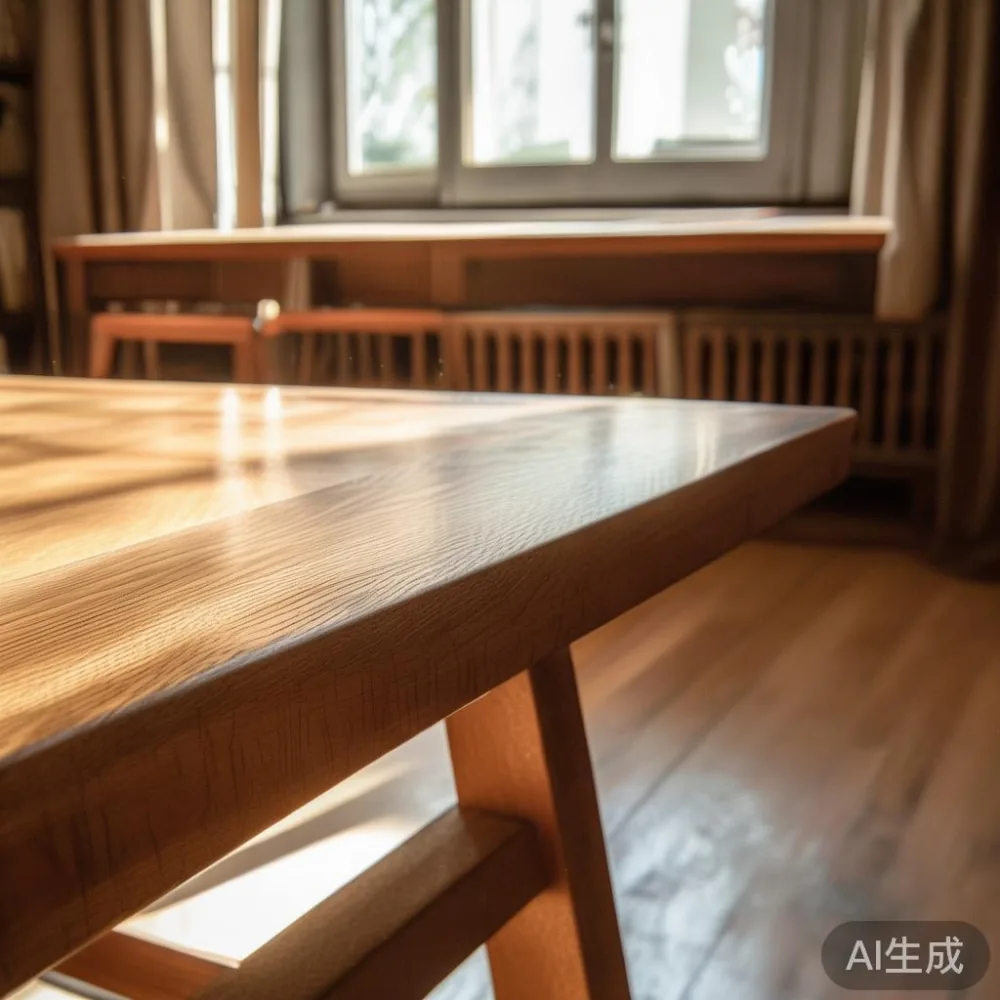
At MIDHILL, we treat moisture control as part of furniture design rather than an afterthought. Our solid wood dining tables are made for real homes in places such as Tampines, Bedok, and Punggol, where corridor and lift dimensions also influence delivery and installation. The aim is not to promise that wood never responds to humidity; it is to explain how that response occurs, how to reduce it, and what Singapore owners should consider when choosing a dining table sg supplier.
Why Singapore’s humidity changes solid wood furniture
Wood is hygroscopic: its cell walls take on moisture when the surrounding air is humid and release it when the air becomes drier. Movement happens along the grain, so a 180 cm long solid wood dining table may expand by approximately 1.5 to 4 mm across its grain during severe seasonal changes. Movement across the grain is usually smaller, but seasonal variation in Southeast Asia can still produce visible changes of about 0.5 to 2 mm.
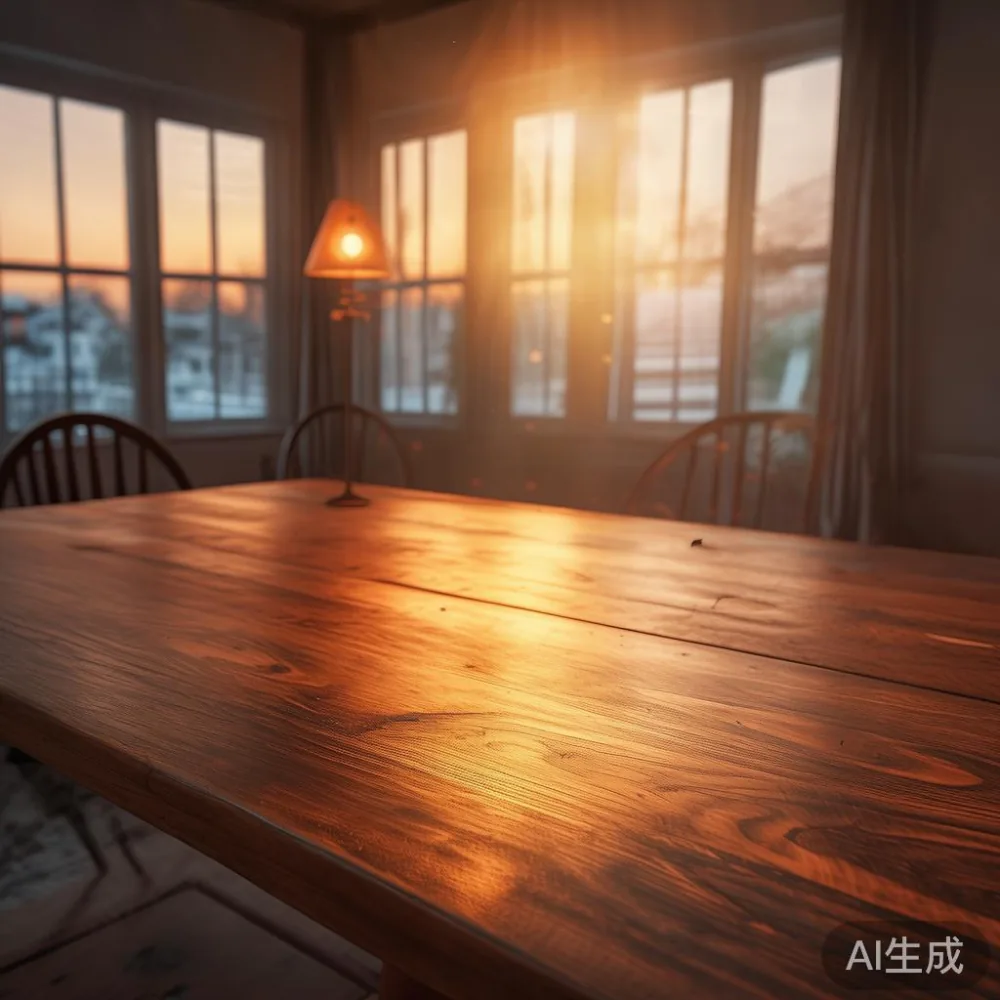
Singapore does not have the sharply divided wet and dry seasons found in some other parts of Asia. Instead, daily changes matter. A balcony or dining area beside a west-facing window may reach 31°C and 85% relative humidity. After sunset, an air conditioner may lower that same room to 23°C and 55% humidity within 2 hours. The table then completes one cycle of moisture gain and loss every day rather than every few months.
Humidity also affects joinery differently from a solid panel. A solid wood dining table with a wide top may show small movement across its width, while a mortise-and-tenon frame can open subtly at its joints. Veneered furniture may be less affected because thin veneer can flex, but adhesive layers, particleboard, and painted edges still respond to temperature and moisture. No construction method eliminates natural movement.
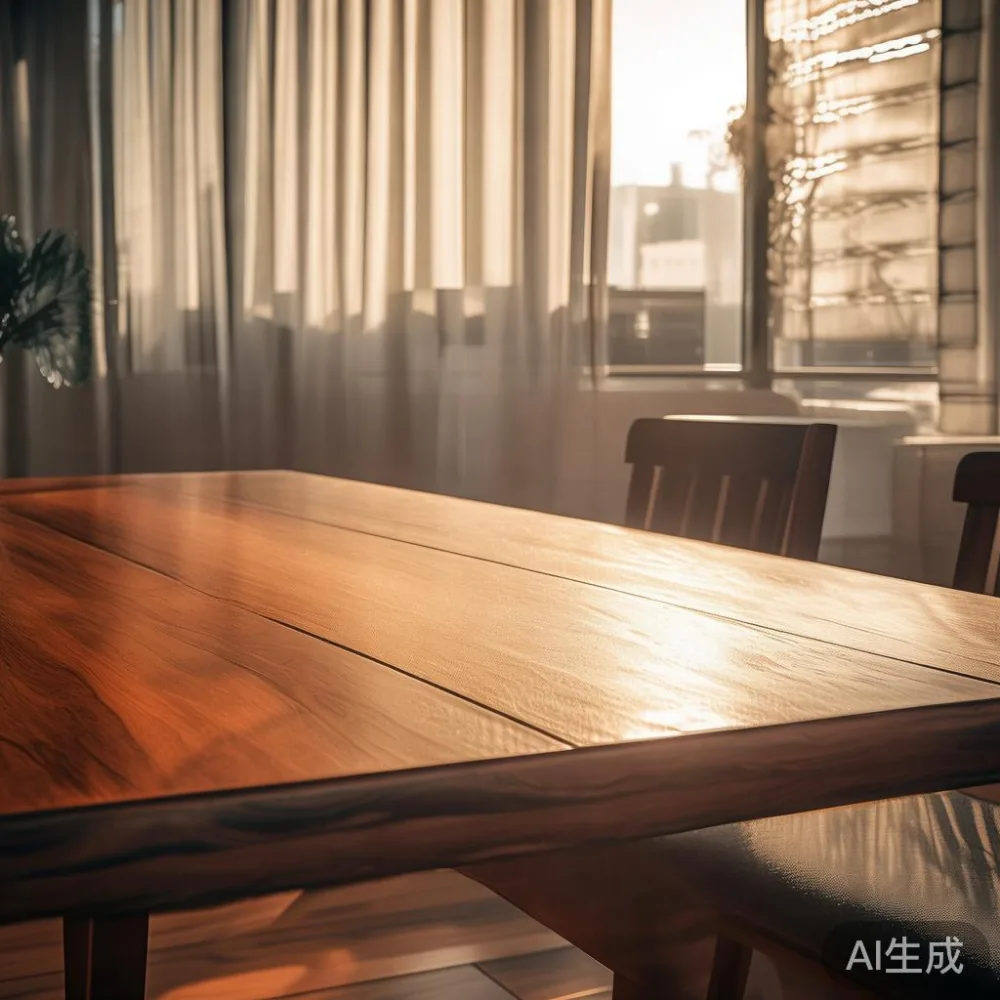
The practical target is stable indoor conditions. Keeping relative humidity between 45% and 65% limits unnecessary dimensional change while protecting finishes, floors, and indoor air quality. Singapore owners can use a digital hygrometer, available for about SGD 12 to SGD 35, to check the dining area rather than relying on a weather app that reports conditions outdoors.
What does humidity do to a dining table finish?
Oil, wax, and water-based finishes each react differently. A penetrating hardwax oil commonly used on solid wood dining tables leaves the grain visible and allows wood to breathe. Under sustained humidity, a film finish such as polyurethane can look glossier as moisture reaches the underlying surface. Over time, repeated wetting and drying may contribute to fine checking, especially if a hot dish is placed on an unprotected area.
Use a placemat at least 30 cm by 38 cm beneath a hot serving dish and leave a 3 cm gap around tableware with direct wood contact. Wipe spills within 10 minutes with a soft, slightly damp cloth, then dry the surface immediately. Cleaners containing ammonia, bleach, alcohol, or silicone should be avoided because they can haze an oiled surface or leave a patchy film.
For routine care, apply a suitable maintenance product every 6 to 12 months, following the finish manufacturer’s instructions. A 500 ml bottle of approved wood care product typically costs SGD 18 to SGD 45. Tests are still important: rub the product into a concealed 5 cm by 5 cm area and wait 24 hours before treating the full tabletop. Refinishing services can restore more severe surface wear, and MIDHILL offers lifetime refinishing for qualifying furniture orders.
Will a dining table sg fit through HDB flats, condos, and lift lobbies?
Humidity protection is only one part of selecting furniture for Singapore homes. Physical access can be just as demanding. Standard HDB flat doors are often around 80 cm to 90 cm wide, while corridor turns may be 100 cm to 140 cm wide. Condo service corridors can be narrower near lift lobbies, particularly during renovation periods.
A dining table should be checked in a disassembled state whenever possible. Ask the supplier for the packed dimensions of each component, not only the assembled table. For example, a 200 cm by 100 cm dining table might arrive as a top measuring 200 cm by 72 cm, with legs under 55 cm long. If the packaged top exceeds the diagonal clearance of a stair landing, the table will not pass even when its length appears acceptable.
MIDHILL can coordinate delivery details for Singapore orders, including lift and corridor access. Delivery commonly takes 7 to 14 days after production and stock confirmation for standard solid wood dining tables, while custom sizes may need 21 to 45 days. Orders above US$350 qualify for free shipping under the stated delivery policy, although local GST, installation, and access charges should still be confirmed before payment.
For lifts, measure the door opening, internal depth, and turning space rather than relying on the building’s stated lift size. A table top of 145 cm to 180 cm can often be turned inside a standard Singapore lift, but a rigid top above 190 cm usually requires corridor angling or staircase handling. Professional movers may charge about SGD 80 to SGD 250 for a standard Singapore move, depending on the floor and difficulty.
How should you prepare a dining area in a humid climate?
Begin by identifying the most stable room in the home. A dining space inside the condo or HDB flat, away from exterior walls, is preferable to an open veranda, bathroom landing, or unconditioned balcony. Keep the table at least 30 cm from a window that receives direct afternoon sun and at least 20 cm from an air-conditioning vent if the airflow causes rapid surface drying.
Dehumidifiers are useful where indoor humidity regularly exceeds 65%. A model rated for 20 to 30 square metres can maintain reasonable conditions in a compact dining area and may cost SGD 250 to SGD 650. Running a dehumidifier is more effective than leaving a table near a vent because the goal is balanced moisture rather than repeated drying followed by re-wetting.
Mats and rugs should not seal the underside of the furniture permanently. Felt pads about 2 mm thick can protect floors and permit slight airflow beneath the legs. Leave enough clearance for inspection, with approximately 5 cm beneath the apron in locations where floor moisture is a concern. Wipe any condensation from nearby windows and check beneath the tabletop after heavy rain.
New wood may settle into a home over roughly 6 to 12 months. It is reasonable to expect small adjustments in fit and finish appearance during this period. Call out any persistent gaps larger than 3 mm, a visibly twisted top, or a joint that continuously opens; these can indicate a construction or moisture issue that should be reviewed rather than accepted as normal seasonal movement.
Can air-conditioning make a solid wood table move too quickly?
Yes. Strong air-conditioning can lower humidity sharply, but the concern is not air-conditioning itself. The issue is an uneven moisture gradient across the tabletop. Cold air from a ceiling vent may dry one edge while the centre remains near 75% humidity, encouraging the wet section to expand while the dry section contracts.
Set the thermostat near 24°C to 26°C rather than 20°C for extended periods. Avoid directing vents straight at the table and keep doors to air-conditioned rooms open for 20 to 30 minutes after a family meal if convenient. The aim is a gradual change of roughly 5% to 10% relative humidity over 24 hours, not an immediate switch between two extreme environments.
Small dining rooms in HDB flats make this balance particularly practical. A 90 m² flat may include a dining zone of only 6 m² to 10 m², where a large table can dominate the available air volume. Air circulation helps the entire room reach similar conditions, reducing repeated moisture movement around edges and legs.
How do French light luxury and American light luxury styles handle this?
Humidity affects all styles of solid wood, but the visual design can make certain movements more noticeable. French light luxury often uses pale oak, walnut, sculpted edges, slender profiles, and upholstered seating. American light luxury commonly combines substantial proportions, clean lines, and natural timber grain. Post-modern light luxury may combine wood, marble, metal, and curved forms.
A Modern light luxury dining table with a marble table centre behaves differently from an all-wood top. Marble has very low moisture absorption, but its weight, brittleness, and support requirements need separate consideration. A 200 cm dining table with a 20 mm marble slab can weigh about 95 kg to 140 kg, so an installer should check lift capacity and use proper lifting equipment.
For solid wood dining tables, allow the design to include controlled movement. Floating tops should be attached with fittings that permit expansion rather than rigid screws that can split the board. A well-made frame should remain square as humidity changes. Light luxury accent chair choices and other accessories should also be moved away from walls if they trap condensation behind them.
For a coordinated interior, owners sometimes search for Italian light luxury with storage when planning a dining room, yet storage must not obstruct the table’s movement or ventilation. Likewise, a search for luxury Italian light luxury furniture may lead to detailed cabinets, a solid wood sofa, a bed frame, a wardrobe, and a nightstand; each piece should use stable finishes and moderate humidity exposure. A solid wood sofa can develop fabric-related dampness if it sits against an external wall, while a nightstand near a bathroom should have a little distance from the door and regularly cleaned footing.
What should Singapore buyers ask before ordering solid wood?
Ask whether “solid wood” covers the complete top, frame, and visible legs, or only selected components. Request the expected moisture range for Singapore conditions and the finish used on each surface. A reputable dining table sg supplier should provide dimensions, net weight, packed component sizes, care instructions, and a warranty that distinguishes structural defects from normal movement.
For a product styled as a MIDHILL bed, a wardrobe, a nightstand, or a dining table, the same questions apply. If you are comparing how to choose Mid-century modern bed options, pay attention to slat spacing, centre supports, and ventilation beneath the frame rather than focusing only on the headboard profile. When asking is European sofa worth it for a humid apartment, consider frame stability, removable cushion covers, and whether the seat base can dry after spills. A fabric sofa in an air-conditioned living room faces less humidity than one in an open porch.
Clearance is another useful measure. For six diners, allow at least 60 cm of table edge space per person, resulting in a recommended top length of about 180 cm to 220 cm and a depth of 90 cm to 100 cm. For four diners, a 140 cm to 160 cm table usually works. These dimensions should fit the actual circulation route, not just the photograph in a showroom.
What humidity problems should trigger a service request?
Small checks of 0.5 mm to 1 mm may appear as wood ages in a humid climate, particularly in end-grain areas. Persistent cupping across a wide top, a crack longer than 10 cm, or a gap exceeding 3 mm deserves attention. So does a joint that no longer sits flush, a leg that rocks, or a finish that repeatedly peels in the same location.
Before contacting a service team, photograph the affected area, record room temperature and humidity, and note when the issue appeared. Place a hygrometer beside the table for 48 hours. This information helps distinguish a room-condition problem from a manufacturing fault and prevents unnecessary work.
Keep a simple maintenance record: the date of cleaning, the product used, humidity readings, and any refinishing treatment. For a high-use dining table in Bedok or Punggol, this log can reveal whether an issue occurs beside a balcony door, near an air-conditioning vent, or after periods of heavy rain.
How do I make one dining table sg purchase last for decades?
Choose the room and size before selecting the finish. A stable indoor location and a table that allows 60 cm of movement space will reduce daily stress. Use coasters, felt pads, and placemats, clean spills promptly, and keep relative humidity near 45% to 65%. Inspect the underside twice a year, especially before Singapore’s wettest months.
My colleague in our regional product team visited a customer dining area in Tampines last month and measured 82% humidity beside an open balcony door at 4:30 p.m. The same room read 57% near the air-conditioned dining table after two hours. The customer moved the table 70 cm inward and placed the balcony door closer to its frame; a week later, readings had stabilised around 65%. The small change mattered more than any expensive coating because it reduced the daily moisture swing.
MIDHILL was established in 2008 and exports to more than 15 countries, giving the company practical experience with furniture exposed to different climates. Its 10-year structural warranty covers qualifying structural issues, while lifetime refinishing helps owners maintain rather than replace a well-chosen dining table. Standard delivery is generally 7 to 14 days for in-stock models, and qualifying orders above US$350 receive free shipping. Singapore buyers can return an eligible standard item within 14 days, subject to the stated return conditions.
The central point is straightforward: Singapore humidity is manageable when furniture, room conditions, and maintenance work together. A stable dining table sg purchase should show only modest movement, remain square, and retain its finish over time. With realistic care and periodic checks, solid wood can remain a warm, durable centrepiece for many years of humid tropical living.