Selecting the Perfect Dining Table for Your Singapore HDB
Last month I visited a resale 4-room flat in Bedok with a young couple who had just received the keys. The previous owner left a 2.4-metre Italian leather sofa behind. It physically would not fit through the corridor on the 7th floor — we measured 1.05 metres across the lift door and only 1.2 metres of clear width down the hallway once the fire hose cabinet swung open. We ended up sawing the legs off and rebuilding it in the living room. That afternoon cost them S$480 in carpentry rework, and it is the reason I now write everything down on paper before a single piece of furniture is ordered.
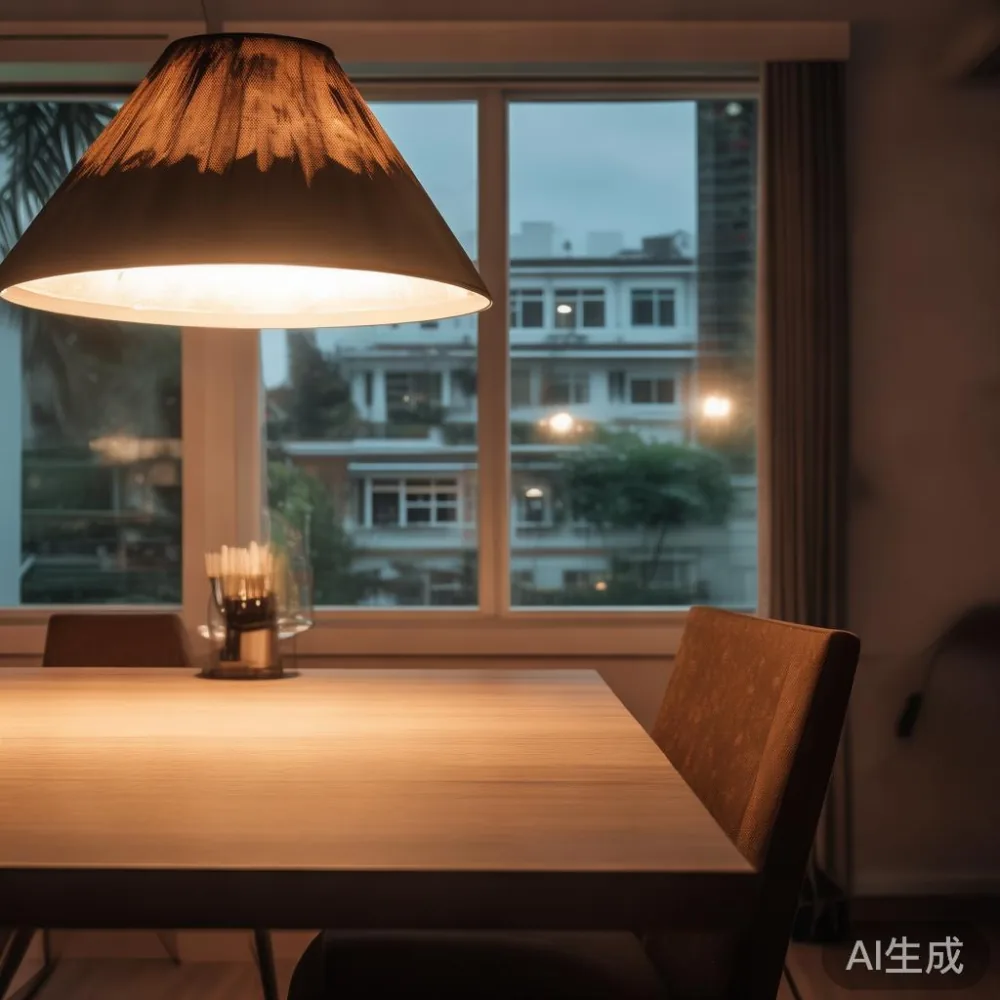
Singapore HDB and condo living rooms are unusually small by global standards. A typical 4-room BTO in Punggol or Tampines gives you roughly 16 to 20 square metres of combined living-and-dining space, and a 5-room flat rarely pushes past 28 square metres once you subtract the open kitchen, the corridor, and the household shelter. A 1,000-square-foot condo in District 15 is generous by local standards but still tight by American or Australian benchmarks. The job of choosing the right size, therefore, is mostly the job of subtraction: subtract what the lift can take, subtract the corridor can pass, subtract the room can breathe around.
One more thing to settle before measuring anything: budget. Most of the readers I speak to in Singapore are shopping between S$2,800 and S$9,000 for a full living-room set — a three-seater solid wood sofa, a marble table for the centre, a tall display cabinet, and a dining table sg that pulls out for Sunday family lunch. Once you know that ceiling, the rest of the maths falls into place quickly.
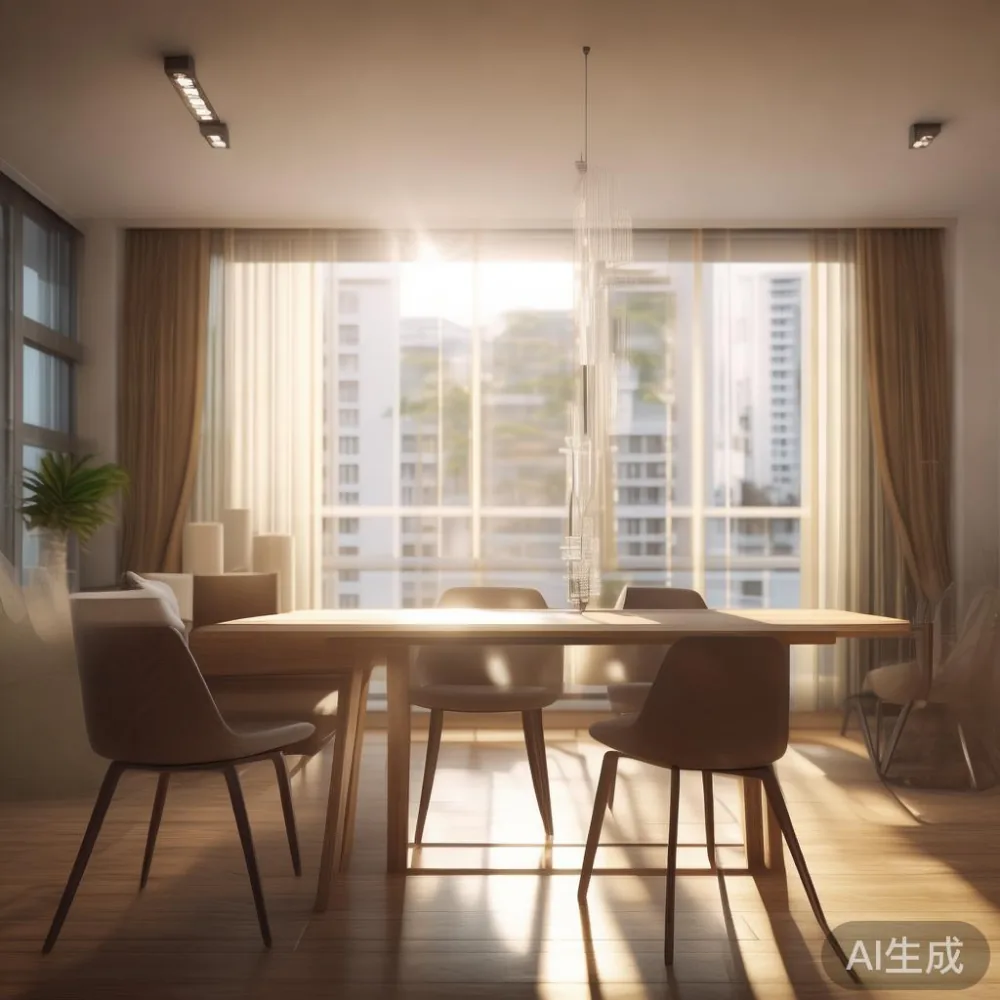
Measure the lift, the corridor, and the front door before you measure the room
This is the step almost everyone skips. They fall in love with a 2.6-metre cloud sofa online, pay a 30% deposit, and only on delivery day discover that the freight lift in their Tampines block opens to 0.9 metres and the L-shaped corridor bends at 90 degrees. I have watched it happen three times in the last six months alone.
Take a steel tape — a fabric one stretches — and write down five numbers for your specific block:
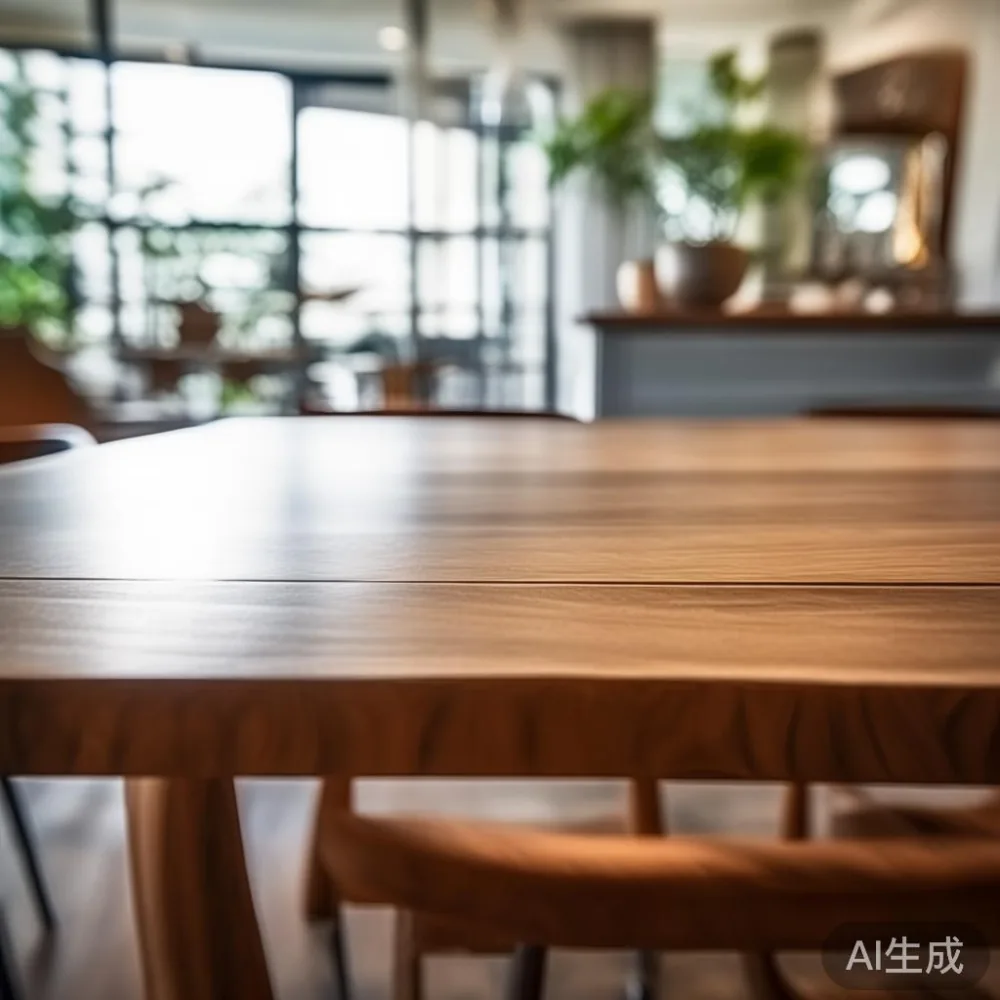
1. Lift door width and height, and the internal cabin depth.
2. The narrowest point of the lift lobby, usually around the fire hose reel.
3. Every 90-degree turn from lift to your unit door, measured wall-to-wall, not skirting-to-skirting.
4. Your own front door, including the thickness of the door stop.
5. Any window or sliding door the item could in theory come through (only for very large wardrobes).
For most HDB blocks built after 2010, the freight lift is roughly 1.1 m wide, 1.4 m deep, and 2.1 m tall, with a 800 kg to 1,000 kg load limit. That sounds like a lot until you remember that a 3-seater solid wood sofa in oak, frame only, weighs 95 to 130 kg, and a marble table top in Carrara can tip the scales at 110 kg on its own. The lift is rarely the limit. The bend in the corridor is.
If the longest single piece you are ordering exceeds 1.9 metres, ask the supplier — before paying — whether the frame can be split. Reputable Foshan workshops, including the team I usually recommend such as MIDHILL, build their export sofas, bed frames, and dining tables in two or three bolted sub-assemblies specifically so they clear HDB corridors. That one question can save you a S$300 redelivery fee.
What room dimensions actually mean in HDB and condo layouts
Once the access problem is solved, the room itself becomes the easy part. A practical rule that has held up across roughly 80 flats I have visited since 2018: the longest wall of your living room should be at least 2.4 metres, and ideally 2.8 metres, to host a 3-seater sofa at 2.0 to 2.1 m without crowding the walls. If your longest wall is shorter than 2.3 m, you are looking at a 2.5-seater at 1.7 to 1.8 m, not a 3-seater, no matter what the showroom photo suggests.
For the dining table, the rule of thumb in Singapore is a 1.4 m to 1.6 m six-seater in a 4-room flat, and a 1.8 m to 2.0 m six- to eight-seater in a 5-room or executive flat. Anything larger than 2.0 m starts to eat the walkway between the table and the kitchen counter, and you will find yourself squeezing past chairs every time someone carries a plate. The dining table sg market has settled around 1.4 m and 1.6 m as the two most-returnable sizes, which is itself a signal from local buyers that bigger does not work here.
For a bedroom, the math is more forgiving. A king-size bed frame is 1.8 m wide and 2.0 m long, and you need 60 to 70 cm on each side to walk around and make the bed, plus another 50 to 60 cm at the foot for a wardrobe door or a dressing stool. Total footprint including circulation: about 3.4 m by 3.0 m. A standard HDB master bedroom of 3.6 m by 3.2 m handles this with about 20 cm of margin. A condo second bedroom of 3.0 m by 2.8 m does not, and you should drop to a queen (1.5 m by 1.9 m) instead, even if the resale agent swears the room is large enough.
How many pieces should a Singapore living room actually hold?
People ask me this every week, usually after sending a WeChat photo of a showroom vignette with eleven items in it. Showrooms are designed to be photographed, not lived in. A real HDB living room should hold four to six large items, no more:
• One 3-seater solid wood sofa, or one 3-seater plus one armchair.
• One coffee table, ideally a marble table at 1.1 m to 1.3 m long and 55 to 60 cm deep.
• One TV console, 1.6 m to 2.0 m wide, in solid wood or with a solid wood top.
• One dining table, 1.4 m to 1.6 m for 4-room, 1.6 m to 1.8 m for 5-room.
• Four to six dining chairs, stackable if you eat at the coffee table half the week.
• One display cabinet, only if you actually collect something — books, ceramics, whiskey.
That is six categories. Stop there. A nightstand belongs in the bedroom, a wardrobe belongs in the bedroom, and a study desk belongs in the study area or the spare room. Mixing zones is the single most common reason a 20-square-metre living room looks like a 12-square-metre storage unit.
You will notice I have not put a rug in that list. A 200 cm by 300 cm rug under the coffee table is a 6-square-metre commitment in a room that only has 16. Either go smaller — 160 cm by 230 cm — or skip it and let the solid wood floor do its own work. The same logic applies to side tables, floor lamps, and ottomans. Every extra piece claims roughly 0.4 to 0.6 square metres of visible floor, and in a small flat that adds up fast.
What does light luxury actually look like in a 16 sqm room?
Light luxury is a Foshan export term that gets thrown around a lot, and in Singapore it usually means one of three things: French light luxury, American light luxury, or post-modern light luxury. The differences are visible at a glance, and the wrong one will date your flat in 18 months.
French light luxury leans on curves, cabriole sofa arms, champagne-finish metal handles, and cream or dusty-rose upholstery. It photographs beautifully in a 50 sqm condo, but in a 16 sqm HDB living room the curvy sofa frame eats 20 to 30 cm of clearance that you cannot spare. I steered a client in Punggol away from a French-style chaise last year and towards a straight-arm American light luxury sofa with a 1.95 m footprint; the same room felt 12% larger on the tape.
American light luxury is rectilinear, deep-seated, and uses walnut, oak, or ash in warm honey and tobacco tones, with brushed brass hardware. It is the most forgiving style in a small HDB because every line is horizontal and every cushion is block-shaped. Post-modern light luxury is the new one, and the one I am watching closely: geometric, low-slung, often in blackened ash with marble accents, and very popular with the 28-to-40 age bracket buying resale flats in District 19. A Modern light luxury nightstand from this category — say, 50 cm wide with two drawers and a 12 mm marble top — fits the same footprint as a basic nightstand but reads as a designed object.
For the dining table sg buyer, the same logic applies. A 1.6 m American light luxury table in solid ash with a 22 mm marble-look sintered top is roughly 60 kg, seats six comfortably, and clears every HDB corridor I have measured. The equivalent French piece, with a carved apron and cabriole legs, weighs 80 to 90 kg and usually arrives crated in one piece. Pick the style that matches the lift, not the one that matches your Pinterest board.
How do I keep the room from feeling cramped after the furniture arrives?
Cramped rooms are almost always a measurement problem, not a furniture problem. Three habits fix nine out of ten complaints I hear in the first month after delivery.
First, leave 80 to 90 cm between the sofa and the coffee table. Anything under 70 cm makes people perch on the edge of the sofa, and anything over 100 cm forces you to lean forward for the remote. Second, hang curtains 15 to 20 cm above the window frame and let them drop to the floor. A HDB window is usually 1.2 m to 1.5 m wide; curtains that size cost S$180 to S$320 from a Tampines tailor and visually raise the ceiling by 10 to 15 cm. Third, choose a marble table with a 12 mm to 15 mm top on a steel or solid wood base, not a 25 mm to 30 mm top. The thinner top lets light pass around it and the room reads as open.
Lighting is the cheapest square-metre expander in Singapore. A 3,000 K to 3,500 K floor lamp behind the sofa, a 4,000 K downlight over the dining table, and a 2,700 K table lamp on the TV console will change the perceived size of the room more than any piece of furniture. Budget S$350 to S$500 for the three together, and you will not need a renovation.
What about the budget once you add shipping, GST, and warranty?
Direct-from-Foshan pricing in Singapore is usually 20% to 35% below what you would pay at a local retailer, but the landed cost has more moving parts than people expect. Add 9% GST on the CIF value, S$180 to S$320 for sea freight from Guangzhou to Singapore depending on volume (around 25 to 35 days door-to-door), S$80 to S$150 for lift-up to your floor if you live above the 10th, and S$60 to S$120 for installation. A 1.6 m solid wood dining table, marble table, and three-seater sofa set that lands at US$2,400 from a Foshan workshop ends up at roughly S$3,950 to S$4,200 at your door in Tampines. The local equivalent at a high-end showroom is S$6,800 to S$8,500 for the same specification.
Warranty is where the small print matters. Most direct exporters offer a 1-year warranty, which sounds fine until a sofa frame cracks in year three. A 10-year structural warranty is rare, and it is one of the reasons I keep a short list of suppliers I trust for Singapore shipments. MIDHILL, a Foshan maker that has been exporting solid wood furniture since 2008 to 15-plus countries, ships with a 10-year structural warranty and lifetime refinishing, which means a S$180 to S$220 re-oil in year eight instead of a S$3,200 replacement. Free shipping above US$350 and 14-day returns are also standard on their Singapore-bound orders, and the showroom reference at m.midhill.co lets you spec a dining table sg piece in the exact wood tone and marble choice before you commit. For buyers comparing catalogs, browsing the top 10 Vintage furniture and top 10 Modern furniture collections on the same site is the fastest way to anchor what solid wood, kiln-dried ash, and Italian sintered stone actually look like in person before paying a deposit.
Should the dining table and the sofa come from the same supplier?
Not necessarily, but it helps. Wood tone is the single most visible mismatch in a small living-dining room, and a walnut sofa with an ash dining table — even if both are excellent pieces — will look like a clearance sale. If the dining table is solid ash with a 12 mm marble top, the TV console and the display cabinet should be ash as well, and the coffee table can carry the marble accent. That is one of the quiet rules behind every Foshan supplier's coordinating collection, and it is the difference between a room that looks designed and a room that looks furnished.
For buyers who entertain and want a hotel-style finish in a condo, a European light luxury for hotel specification — brushed brass pulls, sintered stone tops, and full-extension soft-close drawer runners — is achievable in a 1.6 m dining table at around S$2,400 to S$3,000 landed. The same European specification is also worth chasing for the wardrobe, and the quick reference I give clients on how to choose European wardrobe pieces is to insist on 18 mm carcasses, 9 mm backing, and 110-degree hinges; anything lighter warps within two Singapore humid seasons.
Where do Japanese, vintage, and under-2000 options fit?
Japanese-influenced solid wood, with a low profile, no visible hardware, and ash or white oak at 22 mm thickness, is currently the strongest category for under 2000 Japanese furniture pieces in Singapore. A 1.4 m dining table in that style lands at S$1,300 to S$1,800, a queen bed frame at S$900 to S$1,400, and a 1.2 m TV console at S$500 to S$800. The catch is shipping: Japanese specifications are usually built in smaller sub-assemblies, which is exactly what HDB corridors need, but the lead time is 40 to 55 days by sea. Plan ahead.
Vintage is a different conversation. A vintage solid wood sideboard or a vintage dining table is often a single 2.0 m to 2.4 m piece, weighs 90 to 150 kg, and frequently does not fit the lift. If you are buying from a Singapore vintage dealer in Tiong Bahru or a Joo Chiat warehouse, ask for the door-to-door measurement before you put down the deposit. Most reputable dealers will split a top from a base for an extra S$120 to S$180, and the reassembly in your living room takes under an hour. The top 10 Vintage furniture lists you see online are useful as style references, but every one of those pieces needs a tape measure run on it before it boards the lorry.
A short checklist before you click pay
Run through these eight items before paying any deposit for a living-room set, and you will avoid 90% of the problems I see in delivery-day rescue calls.
1. The longest single piece clears your lift door by at least 8 cm on each side.
2. Every 90-degree bend in the corridor is wider than the longest piece plus 10 cm.
3. The sofa frame is bolt-split, not glued, and the supplier confirms it in writing.
4. The marble table top arrives in a separate crate and is craned in after the base is in the room.
5. The dining table sg size is 1.4 m, 1.6 m, or 1.8 m — not 2.0 m or 2.2 m — unless you have measured the room in person.
6. The wardrobe, if part of the order, has 18 mm panels and full backing, and the supplier confirms 110-degree hinges.
7. The wood tone across sofa, dining table, TV console, and display cabinet is one of three: walnut, ash, or oak. No mixing.
8. The total landed cost in Singapore dollars, including 9% GST, freight, lift-up, and installation, is under your ceiling by at least 10% for contingency.
Singapore flats reward restraint. The difference between a 16 sqm room that feels generous and one that feels like a storeroom is almost never the price tag — it is the discipline of leaving 80 cm of clear floor, choosing one wood tone, and measuring the lift before the showroom. Do those three things and the rest of the room tends to design itself.