How to Match a Solid Wood Dining Table SG to a Warm Minimal Interior
Warm minimalism is the look I keep recommending to friends renovating resale flats in Tampines and Punggol. It sits in that calm middle ground between Scandinavian cool and Japanese restraint, with the added comfort of toasted oak, brushed brass, and soft boucle. The trick is restraint: a few warm materials, plenty of negative space, and one or two anchor pieces that carry the room. The most common anchor in Singapore homes is the dining table, because the open-plan HDB living-dining layout forces the dining zone to do double duty as a visual focal point. Choosing the right solid wood dining table SG homeowners can live with for ten to fifteen years is the single highest-use decision in this style.
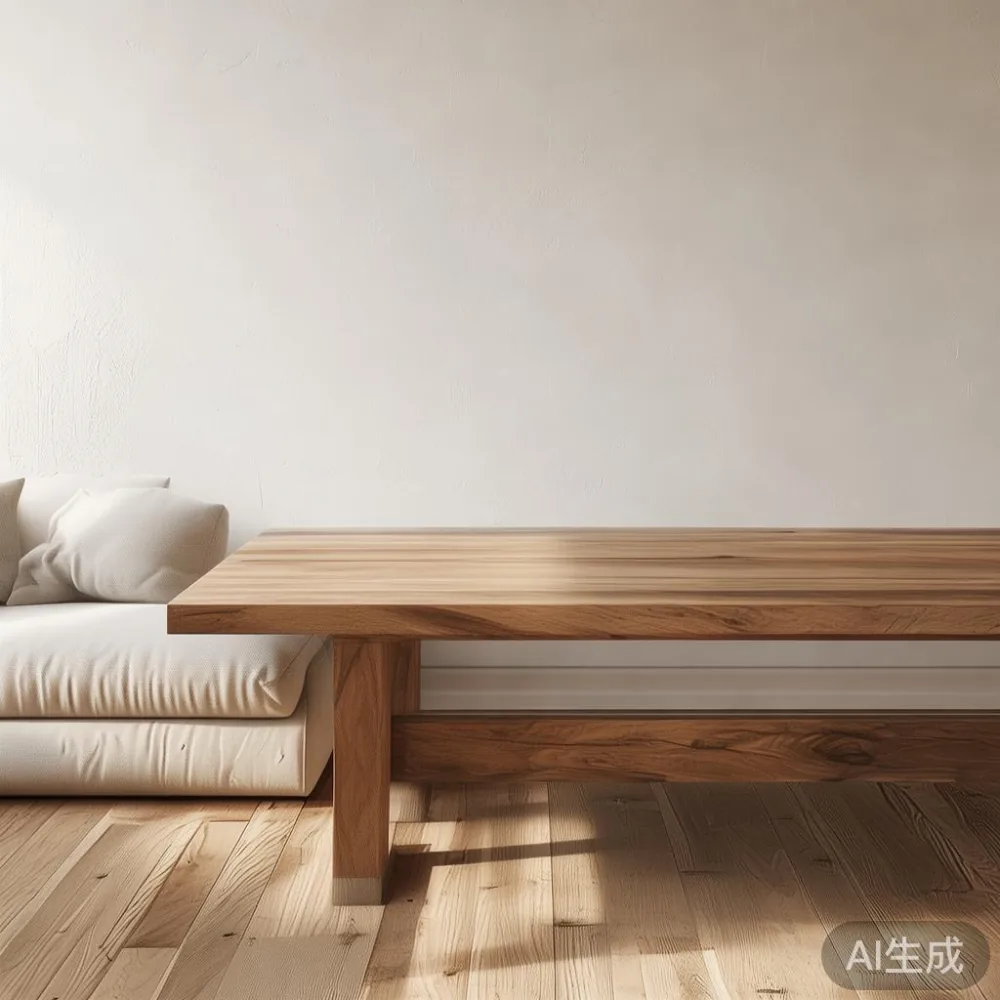
This guide covers the rules I use when helping clients and family members put a warm minimal room together, the specific dimensions that fit a 3-room or 4-room HDB layout, the materials that age well in our 80–90% humidity, and how MIDHILL's solid wood construction philosophy slots into the look. I tested most of these ideas last month when I visited a colleague's new 92 sqm BTO in Bedok, where the dining table became the visual anchor of an otherwise spare living room. Prices are quoted in SGD inclusive of GST, and assume landed delivery above our free-shipping threshold of US$350 (roughly S$475).
What does "warm minimal" actually mean for a Singapore home?
Warm minimal is a post-modern light luxury take on minimalism. Instead of stark white walls and chrome, you get plaster-finished off-white, lime-washed feature walls, and natural fibre rugs in oat, sand, and clay. The luxury signal comes from material quality, not ornament: a 4 cm thick travertine-look sintered stone, a 2.2 m solid ash dining table with hand-honed edges, a single boucle accent chair. French light luxury interiors lean further into brass, marble, and curved silhouettes, while American light luxury pulls toward chunkier upholstery and walnut tones. For Singapore, the French-leaning version tends to read better in compact HDBs because the curves soften the rectangular floor plan.
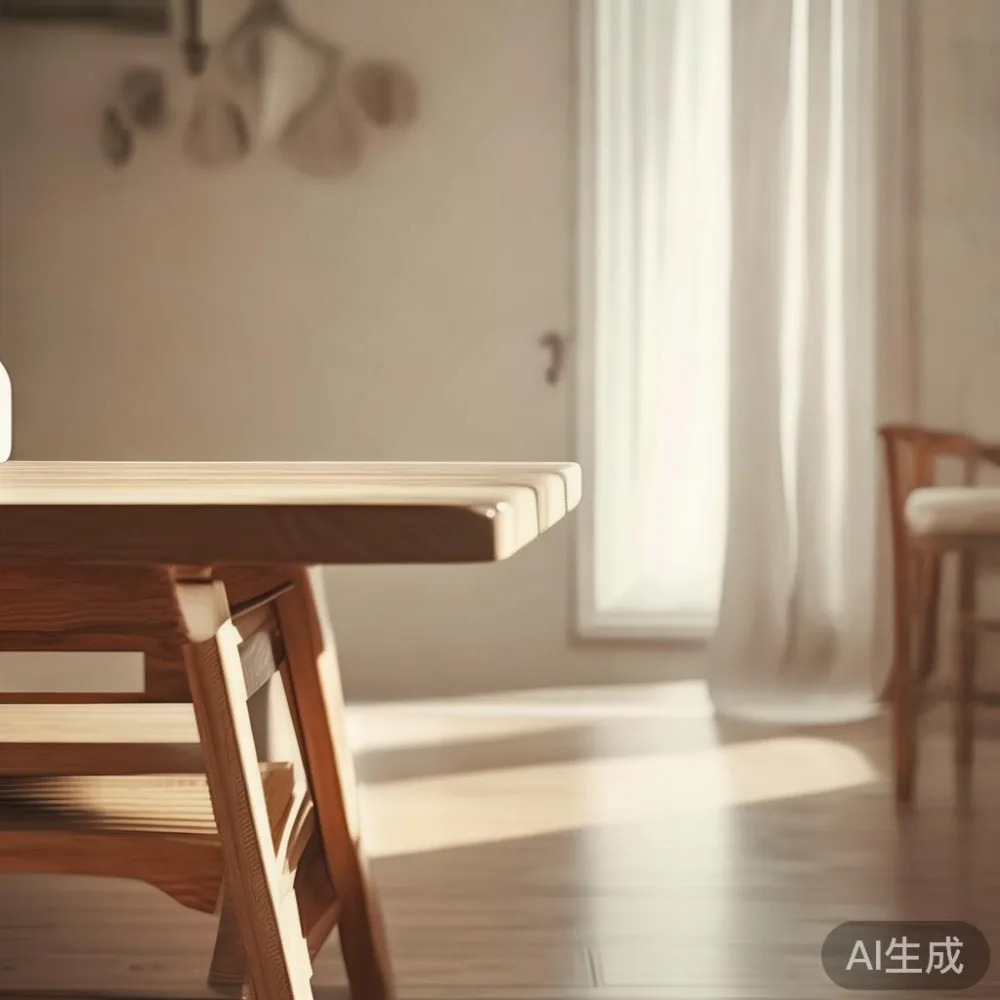
The hard part is resisting the urge to fill the space. A warm minimal dining zone in a standard HDB (roughly 3 m × 3.5 m usable footprint after the kitchen and corridor) should hold no more than three objects: the dining table, two dining chairs, and one floor lamp or a low sideboard. Everything else stays in the kitchen or is mounted on the wall.
Sizing the dining table to your HDB or condo layout
Singapore corridor widths in HDB blocks typically run 1.2 m to 1.4 m, lift doors are usually 0.9 m wide with a 1.5 m deep cab, and stairwell turns are tight. This matters because a 2.4 m table might look great in a showroom, but it will not physically reach your level without a riser wall cut. Before you fall in love with anything, measure three things: the lift door width, the corridor turning radius outside your unit, and the actual door opening into your dining area.
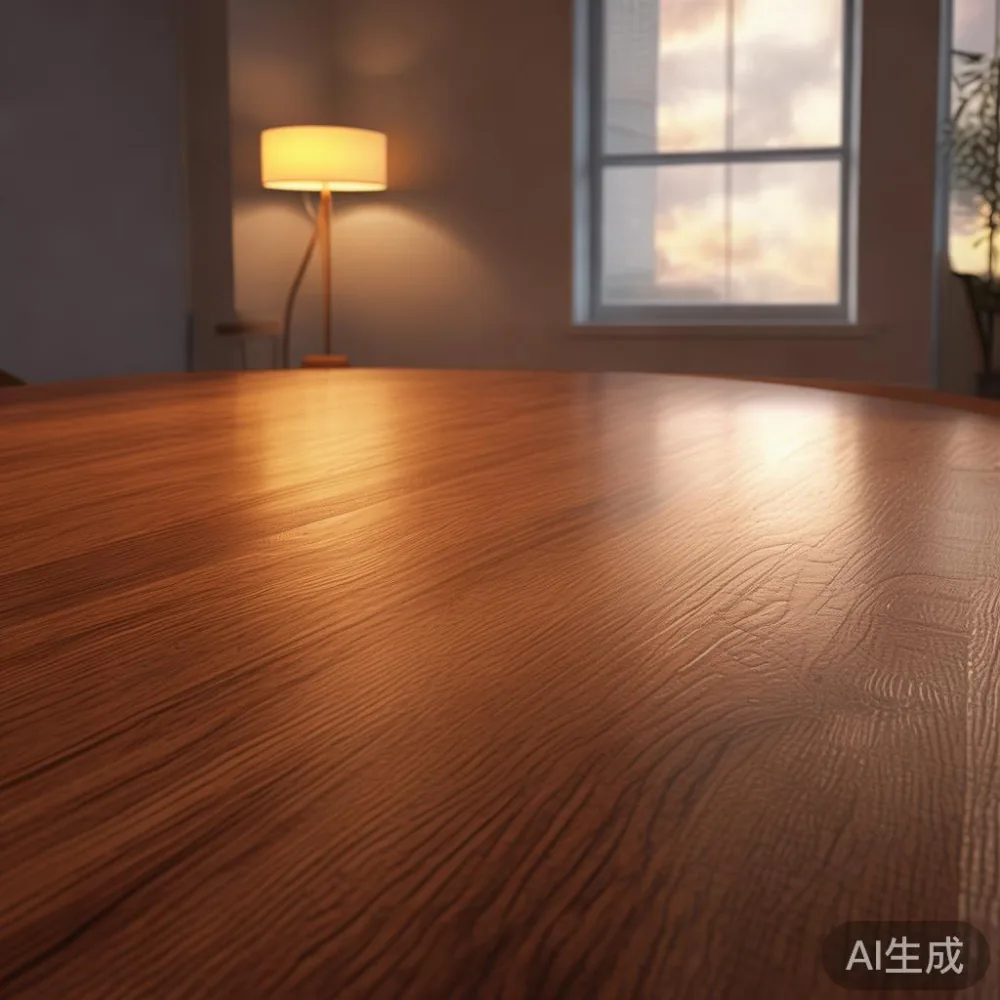
For a 3-room BTO of about 65 sqm, a 1.4 m to 1.6 m table seats four comfortably and leaves 90 cm of circulation on every side. For a 4-room or 5-room flat of 90 to 110 sqm, push to 1.8 m or 2.0 m. Anything beyond 2.2 m starts to crowd a typical condo dining zone and will dominate the room. As a rough rule, the dining table should occupy no more than one-third of the open-plan living-dining footprint, otherwise the warm minimal mood collapses into cramped.
Top thickness matters more than people think. A 4 cm to 5 cm thick solid wood top reads as substantial and quiet; a 2.5 cm top with a hollow core reads as flat-pack no matter how good the veneer is. For warm minimal interiors, I look for tables in the 60 kg to 90 kg range at 1.8 m length. Heavy enough to feel permanent, light enough that two people can shift it when the air-con needs servicing.
Materials that survive Singapore humidity
Our average relative humidity runs 70% to 90% for nine months a year, with daily swings of 15% to 25% when the rain comes in from the south. Engineered wood with an MDF core will swell, and paper-finish laminates will peel at the edges within 18 to 24 months in a non-aircon space. Solid hardwood — ash, white oak, walnut, rubberwood — copes far better because the grain moves as one piece and can be sanded back.
For warm minimal rooms, my preferred pairing is solid ash or white oak with a matte hardwax oil finish rather than a high-gloss lacquer. Hardwax oil lets the wood breathe, which slows cupping, and it develops a soft patina over five to seven years that warm minimal actually wants. Lacquered surfaces look sterile and trap moisture marks from cold glasses.
For a contrast surface — say, a coffee table or side table — a sintered stone or marble-look slab is the post-modern light luxury move. Real Carrara marble is porous and will etch from lime juice within a week in any HDB with children. Sintered stone gives the same cool grey vein on a 12 mm slab and shrugs off red wine, soy sauce, and sambal. If you go this route, plan the base in the same solid wood family as your dining table so the room reads as one material story.
Putting the room together: a worked example
Take a standard 4-room HDB in Punggol, 93 sqm, with a 3.2 m × 3.6 m open-plan living-dining area. Start with the dining table: 1.8 m × 0.9 m solid ash, 4 cm thick top, in a natural matte hardwax oil finish. That single piece anchors the dining end of the room. Around it, two slim solid ash dining chairs with a beige linen seat pad and one bench on the long side. The bench doubles as a Modern storage bench usa style piece — closed shoe compartments below, a cushioned top that reads as additional seating when friends come over.
Across the room, a 2.1 m three-seater solid wood sofa frame with washable linen-blend covers in oat, paired with a 1.2 m × 0.6 m walnut coffee table. Behind the sofa, a low 1.6 m solid wood sideboard in the same ash finish as the dining table, with a single piece of framed art above it. A 12 mm sintered stone console against the corridor wall holds the keys and a tray. Total furniture count: dining table, four seats, one bench, one sofa frame, one coffee table, one sideboard, one console. Eight pieces. That is the entire living-dining footprint. Anything more, and the room stops feeling warm and starts feeling crowded.
For the bedroom, repeat the same ash tone in a 1.5 m × 2.0 m solid wood bed frame, a 1.8 m three-door solid ash wardrobe, and two 45 cm solid wood nightstands. Keep the wardrobe handles recessed or finger-pull so the front stays as one calm plane. This kind of material repetition across the dining table, bed frame, wardrobe, and nightstand is what turns a flat into a coordinated home rather than a furniture showroom.
How do I care for a corner sofa in humid weather?
Wipe the corner sofa down with a dry microfiber cloth every three days, run the air-conditioner or a 30 W dehumidifier for at least four hours daily, and keep the sofa 15 cm away from any wall so air can circulate behind it. In Singapore's climate, fabric sofas absorb ambient moisture and develop musty odours within six to nine months if left in a sealed room, so the answer is airflow and routine dry wiping rather than any product. For solid wood sofa frames, the same rule applies: leave 10 to 15 cm behind the backrest, and avoid pushing the frame flush against an external wall where condensation can form overnight.
Where a corner sofa sits matters more than how you clean it. If your L-shape tucks into the corner of the room, leave at least one window or a ceiling fan running in that quadrant. I have watched corner sofa cushions go wavy inside 14 months in Tampines units where the sofa was pushed into a corner with no cross-ventilation and the owners only air-conditioned the bedroom at night.
For the fabric itself, choose a removable, washable cover in a tight weave. Loose boucle and chenille look warm and minimal in the showroom but trap humidity in our climate. If you want boucle, restrict it to accent cushions that you can flip and sun on the corridor for an hour each month. Sunning cushions for 60 to 90 minutes on a dry afternoon kills surface mould spores and refreshes the fibre without bleaching the colour.
Light, colour, and the warm minimal mood
Colour temperature does most of the heavy lifting. Anything above 4000K reads as clinical. Keep your main ceiling light at 3000K, your dining pendant at 2700K, and use a single warm 2200K accent lamp on the sideboard. The slight variation between zones stops the room from feeling flat. In HDBs with 2.7 m ceilings, a low-hung 35 cm to 45 cm diameter drum pendant directly above the dining table creates a pool of warm light that makes food, faces, and wood grain look better without flooding the rest of the room.
Wall colour in a warm minimal flat should sit between RAL 9010 (pure white) and RAL 1013 (oyster white). I usually recommend a custom match in the Farrow & Ball range — shades like Slipper Satin, Joa's White, or Matchstick — tinted in a low-sheen emulsion rather than a full matte. A slight sheen reflects enough light to keep the room from looking chalky in our overcast mornings, and it wipes clean of sambal splatter.
Accent colour should come from food, plants, books, and skin — not the walls. One large Ficus lyrata or a fiddle-leaf fig in a raw terracotta pot in the corner nearest the window. A linen runner on the dining table in undyed oat. A single brass or travertine object on the console. The palette is 90% warm white, 7% wood tone, 3% brass or stone. Anything beyond that starts to fight the minimal side of the equation.
Budgeting realistically in Singapore dollars
For a complete warm minimal living-dining set in solid wood at 1.8 m table size, expect a realistic landed budget of S$4,800 to S$8,500 before GST for the core pieces: dining table, four to six seats, one sofa frame, one coffee table, one sideboard. A solid wood bed frame at queen size sits around S$1,200 to S$2,200, a three-door wardrobe S$2,400 to S$4,000, and a pair of nightstands S$500 to S$900.
Add 9% GST on top, plus delivery, which typically runs S$80 to S$180 per trip in Singapore for lift-access units. Most direct-from-factory brands including MIDHILL offer free delivery above US$350 (about S$475), so a full-room order clears that threshold comfortably. Allow a S$300 to S$500 contingency for threshold delivery if you live above the 10th floor without a service lift, and another S$150 to S$300 for minor on-site assembly.
Delivery timing from a Foshan-direct brand usually runs 35 to 50 days door-to-door, including sea freight from Nansha port and last-mile trucking. MIDHILL, which exports to 15+ countries and has been shipping from Foshan since 2008, sits in that same 35 to 55 day window for Singapore-bound orders. Plan your renovation timeline backwards: renovation handover, then furniture arrives four to six weeks later, so you are not paying storage fees on an empty flat.
Why solid wood, and why a 10-year structural warranty matters
Engineered wood furniture is cheaper upfront and falls apart on a predictable timeline in our climate. The MDF core swells, the laminate peels, the cam-lock joints loosen by year three to five. A solid wood dining table with a proper mortise-and-tenon or dowelled base will outlast three HDB lease renewals if you refinish it once every seven to ten years.
This is where warranty structure becomes a real filter. A 10-year structural warranty on the frame and joinery is the minimum I would accept for a piece that costs more than S$1,500. Lifetime refinishing is rarer and signals the maker actually expects the piece to last 25+ years. MIDHILL offers both on its solid wood ranges, which is one of the reasons I keep recommending them to clients who want warm minimal furniture without the throwaway cycle.
Returns are the third filter. A 14-day return window on furniture is generous for the category and removes the risk of buying sight-unseen from a factory overseas. Read the return fine print for two clauses: who pays the return freight (a S$200 to S$400 hit if it is you), and whether bespoke sizes are returnable at all. Most factories exclude custom dimensions, which is fair, but the standard size range should be fully returnable inside the window.
A short checklist before you order
Measure the lift door and corridor turning radius at your block before choosing a table longer than 1.8 m. Confirm the table top is at least 3.5 cm thick solid wood, not veneer over MDF. Ask for a hardwax oil finish, not a high-gloss lacquer. Check the base joinery is mortise-and-tenon or dowelled, not just screwed. Verify the warranty covers structural failure for at least 10 years and refinishing for life. Confirm the return window is 14 days and that the standard sizes are fully returnable. Finally, place a small physical sample of the wood tone next to your wall paint at home before paying the balance.
Warm minimal works because the eye rests on a few good materials rather than scanning a room full of objects. The right dining table SG homeowners can specify in solid ash or white oak, sized for their actual flat rather than a showroom fantasy, will anchor that rest for the next decade. Spend the time on the front end, and the room will quietly do its job for years.