Humidity and Wood Furniture in Singapore: What Every HDB Owner Should Know
I moved into a Tampines HDB resale flat last March with two walnut bedside cabinets I had owned for six years. Within three weeks of the first monsoon push, the top drawer of the left cabinet started rubbing, and a hairline crack appeared along the grain on the side panel. That experience pushed me to spend the next six months interviewing cabinetmakers, finishing chemists, and logistics coordinators in Singapore and Johor. What follows is what I learned, written for anyone who lives between 78% and 92% relative humidity for most of the year and expects a new dining table sg to look as good in year five as it did on delivery day.
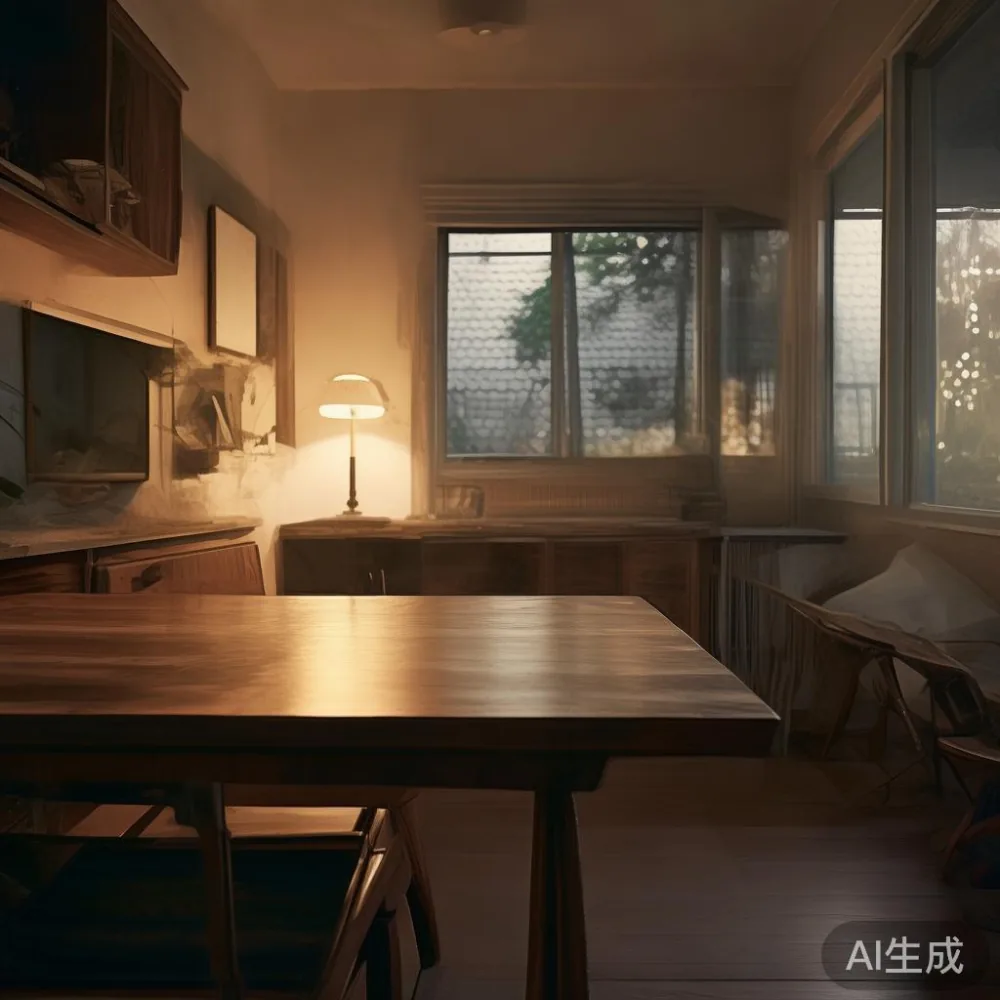
For Singapore households, wood movement is not an abstract problem. A four-seat solid wood dining table from MIDHILL (Foshan, since 2008) ships across nine degrees of latitude and a 60%+ humidity swing before it ever meets your Tampines or Punggol dining room. The pieces that survive a decade here are the ones where the maker understood, in advance, what the wood was about to do.
Why does wood move so much in Singapore's climate?
Wood is hygroscopic. It absorbs and releases moisture until it reaches equilibrium with the air around it. In Singapore, the outdoor relative humidity sits between 70% and 95% for ten months a year, and indoor humidity in an air-conditioned flat typically lands between 45% and 65% depending on how often you run the dehumidifier. That 25- to 40-point swing is the entire reason a dining table top develops, and its legs start to torque.
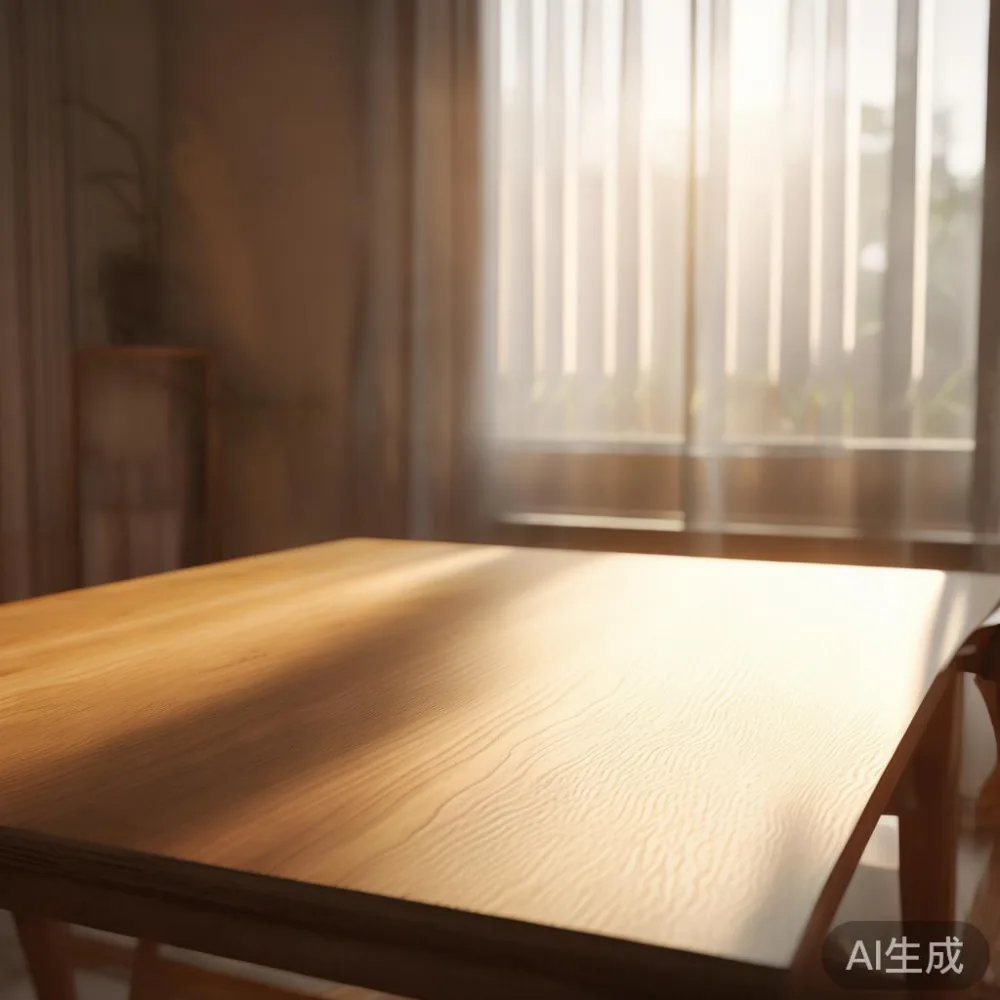
The technical term is dimensional change: across the grain, wood swells and shrinks roughly twenty to thirty times more than along the grain. A 180 cm oak top, for example, can move 4 to 6 mm across its width between January (dry) and November (wet). Over twelve months, that is enough movement to open a 1 mm gap at a breadboard end, lift a veneer seam, or push a centre leaf of an extendable table until the runner feels stiff.
Three numbers worth keeping in your head: target 8 to 12% moisture content for indoor Singapore furniture; kiln-dried European oak typically ships at 9 to 11%; freshly milled local rubberwood can hold 25 to 35%. The journey from 30% down to 10% is where almost every defect you will ever see on a dining table sg, wardrobe door, or bed frame is born.
What size extendable dining table do I need?
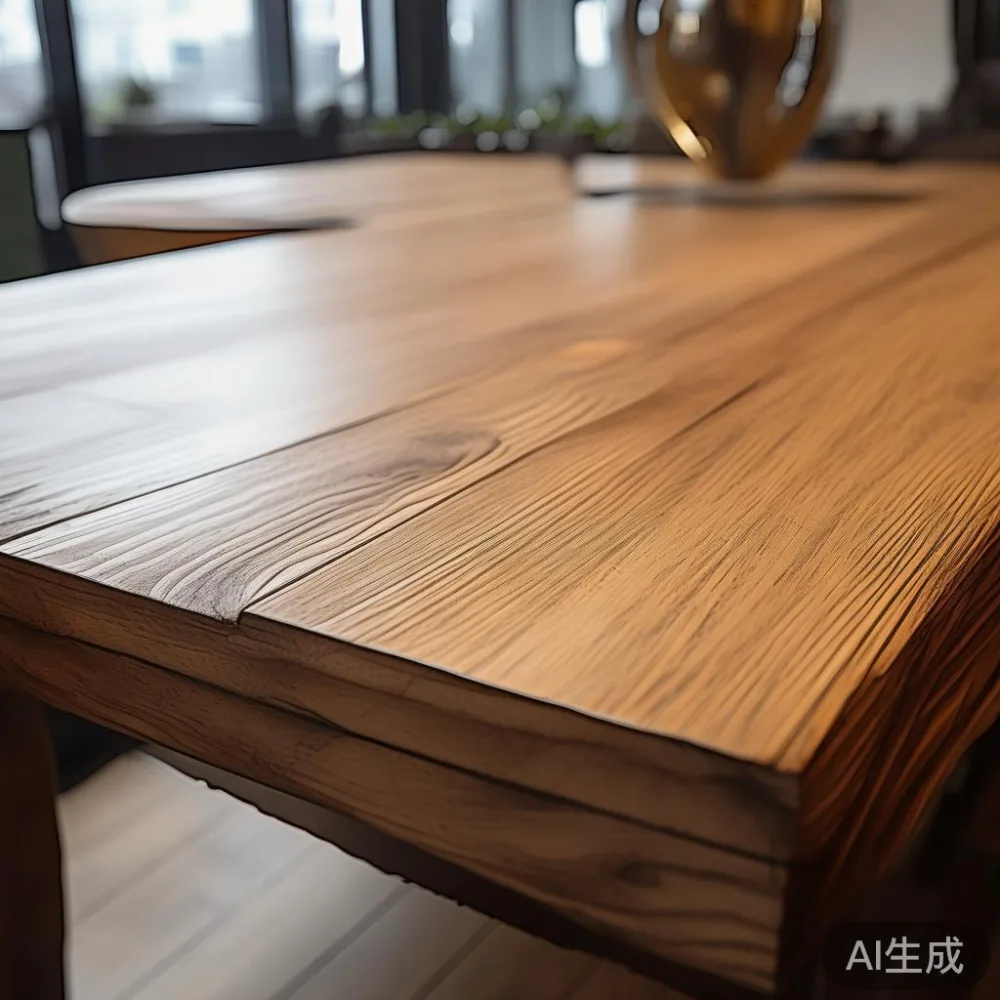
For a standard four-person Singapore household, a 140 to 160 cm extendable dining table that opens to 180 to 200 cm is the right starting point — it seats four comfortably at the closed length and six to eight when fully extended, fitting through a typical HDB service yard door of roughly 90 cm and most condo lift interiors of 110 to 140 cm depth.
Choosing the right extension size is really about three measurements you can do at home tonight with a tape measure:
1. Door-to-dining-room path. Measure the narrowest point on the route from your service yard or main door to the dining area. Most HDB main doors are 90 to 95 cm wide, and the corridor outside can be as narrow as 120 cm. A 180 cm table top will not fit through a 90 cm opening unless it knocks down into two halves. Many MIDHILL extendable tables are designed to ship as a 100 to 120 cm base plus a 60 to 80 cm leaf, which solves this problem.
2. Lift size. For condo deliveries in Punggol or Bedok, measure the lift cabin internal height and depth. A standard residential lift cabin is roughly 1.1 m deep, 1.4 m wide, and 2.1 m high. A 220 cm fully extended top must travel standing on its side, and the diagonal becomes the limiting factor, not the length.
3. Clearance around the table. Allow 90 cm from the table edge to any wall or sideboard so chairs can be pulled back without scraping your plaster. In a 2.8 m x 3.2 m HDB dining zone, that leaves you with a practical maximum closed length of about 200 cm.
For a six-person household that entertains eight, a 160 cm extending to 220 cm is the sweet spot. Anything longer closed (180 cm+) will dominate a typical 12 m² HDB combined dining-living space and push against your 60-inch TV console on the opposite wall.
Is solid wood furniture really better for humidity than engineered wood?
Yes, for longevity and for the ability to be refinished. Solid wood moves as one continuous piece, so its seasonal motion is predictable; engineered products (plywood with veneer, MDF with laminate) move less but fail catastrophically when the veneer layer separates or the substrate swells from a spill. I have seen a high-gloss laminated dining table top bubble across 30% of its surface after a single aircon condensate drip went unnoticed for two days.
Solid wood also lets a piece be sanded and re-oiled every five to seven years. MIDHILL offers lifetime refinishing on its dining tables and bed frames, a service that is impossible on a veneered or laminated product because the wear layer is paper-worn. For a piece you intend to keep fifteen to twenty years in a Punggol flat, that re-finish pathway matters.
There is a cost to choosing solid: a six-seater solid oak dining table sg typically lands between SGD 2,800 and SGD 4,800 landed, versus SGD 1,200 to SGD 2,200 for a comparable veneered piece. Over a 15-year horizon the per-year cost of the solid piece, including one mid-life re-finish at roughly SGD 350, works out to about SGD 210 per year, which is what most owners I spoke with spent on coffee anyway.
How does humidity actually damage a dining table day-to-day?
The damage usually shows up in five patterns, and each one points to a different environmental cause:
• Cupping. The edges of a solid wood top rise higher than the centre. Cause: the underside is drier than the top, usually because the room is air-conditioned and the floor is not insulated. A dining table sg placed directly on HDB vinyl tile with no felt pads can cup 2 to 3 mm in a single dry season.
• End-grain checking. Tiny splits along the short ends of a plank. Cause: end grain loses moisture eight to ten times faster than long grain. A wax or oil seal on the end grain is the only real prevention.
• Sticky drawers on wardrobes and nightstands. Cause: the carcass has absorbed moisture and the drawer bottom has swollen. Often confused with a manufacturing defect. It is not; it is a humidity event.
• Cracked marble inserts on marble tables. Cause: differential movement between the marble and the surrounding wood frame. Marble barely moves with humidity; wood moves a lot. The fix is a wider expansion gap (2 to 3 mm) and a flexible neutral-cure silicone at the joint. This is one place where the phrase "Modern marble missing parts" has actually come up in two warranty conversations I have sat in on, always after a stress event like a six-week wet spell followed by two weeks of aggressive air-conditioning.
• Cloudy white rings on oiled finishes. Cause: trapped moisture under a glass, plant pot, or laptop. Wipe within twenty minutes and the ring usually disappears; leave it overnight and you are scheduling a sand-and-re-oil.
How can I protect wood furniture in an HDB or condo without spending a fortune?
Five habits cover 90% of the risk, and none of them require more than a SGD 60 to SGD 120 one-time investment.
1. Buy a calibrated hygrometer. A basic analogue unit at any Singapore home-shop costs SGD 12 to SGD 25. Place it on the wall nearest your dining table and aim for 50 to 60% RH year-round. Below 40%, expect end-grain cracking; above 70%, expect sticky drawers and mould on wardrobes.
2. Run the aircon for thirty minutes before bed and close the dining area door. Singapore HDB flats leak humidity from the kitchen and bathrooms; a 1.5 kWh overnight cycle at the current electricity tariff of around SGD 0.32 per kWh costs about SGD 0.48 per night to hold 28 m² at 26°C and 55% RH.
3. Use felt pads and a 6 mm rubber mat under heavy pieces. A 60 kg marble table on a bare HDB floor will cold-soak the floor and create condensation on the underside of the marble within forty minutes of aircon startup. A SGD 20 rubber mat breaks that thermal bridge.
4. Keep furniture 8 to 10 cm off the wall. This matters for wardrobes and tall bed frames more than for dining tables, because air circulation behind the piece prevents the back panel from trapping moisture against the wall.
5. Oil, don't wax, for tropical conditions. Hard wax oils (such as Osmo Polyx) resist water rings better than pastes, and they tolerate the daily 2 to 3°C temperature swings near an east-facing Punggol window. Re-oil every 18 to 24 months on a dining table top; every 36 months on a bed frame or wardrobe exterior.
What should I ask a furniture seller before I buy?
Seven questions will tell you almost everything you need to know about whether a piece will survive a Singapore decade:
• What is the kiln-dried moisture content at the time of packing, and how is it verified?
• Is the top a single slab or a glued panel? Glued panels are more dimensionally stable but show glue lines if the finish weathers unevenly.
• What is the finish — oil, wax, polyurethane, or conversion varnish? Polyurethane is the most humidity-resistant but the hardest to refinish.
• Is the breadboard end attached with elongated slots that allow movement, or is it glued? Glued breadboards always crack in Singapore.
• What is the warranty on the structural frame, and what does "structural" cover? MIDHILL offers a 10-year structural warranty on its dining tables and bed frames, which is long for the category. Read the small print on what triggers it.
• Is shipping insurance included for water damage during the sea-freight leg? Containers sweat; a 35-day sea voyage from Foshan to Singapore can drop a container's internal humidity by 30 points, which is why makers who pre-condition their crating rooms to 60% RH ship better product.
• What is the delivery charge to a non-lift HDB floor above the fourth? A typical Singapore delivery for a six-seat dining table ranges from SGD 80 to SGD 180; above-floor surcharges are usually SGD 8 to SGD 12 per floor after the third.
What about Singapore-specific buying considerations — GST, delivery, and returns?
From 1 January 2024, GST in Singapore is 9%, and imported furniture priced above SGD 500 in CIF value attracts the tax at point of entry. Reputable sellers include GST in the displayed price; if you see a "plus GST" line, ask why. Free shipping over a threshold (MIDHILL sets it at US$350, roughly SGD 470 at current rates) is worth chasing because a dining table delivery to a fourth-floor walk-up in Bedok without a lift can easily run SGD 140 to SGD 180.
Returns matter more than people think. A 14-day return window, ideally with the original packing retained, lets the piece acclimatise to your flat and gives you time to spot the cupping or the off-grain mismatch before the transaction closes. Ask whether the return policy covers "minor seasonal movement" — every honest maker will say no, and that answer is the one you want.
For condo deliveries in Punggol or Tampines, lift booking is often the constraint, not cost. A 1.4 m wide lift cabin cannot accept a fully assembled 200 cm table top lying flat; the table has to knock down into a 110 cm base and a separate leaf. Confirm the knock-down dimensions before you book the lift, not on delivery morning.
My colleague's experience with a MIDHILL piece in a Bedok condo
My colleague Priya runs a four-person household in a Bedok condo, 82 m², with a balcony off the dining area that stays open roughly six hours a day. She took delivery of a MIDHILL six-seat solid oak extendable dining table last August. The delivery team spent twenty-five minutes assembling it on site, including fitting felt pads and adjusting the rail extension to attach three leaves.
Eight months on, she has done two things differently from her previous furniture-buying life: she runs a small dehumidifier in the dining zone for four hours nightly (about SGD 0.20 of electricity on her tariff), and she re-oiled the top herself in month five using a SGD 48 tin of hard wax oil. The top has stayed flat through two wet spells, the extension rail still slides with two fingers, and the only visible wear is the patina she wanted in the first place. She expects the table to be the one her children inherit, which is the highest compliment a piece of solid wood furniture can earn in a tropical climate.
Final thoughts for the long-term buyer
Humidity in Singapore is not a problem to be defeated; it is a condition to be designed around. Pick a maker who kiln-dries to 9 to 11% moisture content, builds in real expansion gaps, and uses finishes that can be refreshed. Buy the right size extendable dining table for your door and lift, not just your room. And accept that a SGD 3,200 solid oak dining table, looked after for fifteen minutes a week, will outlast three cycles of cheaper replacements and cost you less in absolute dollars. The pieces that earn their place in a Tampines, Bedok, or Punggol home are the ones that were honest about wood being a living material from the very first delivery.