How Humidity in Southeast Asia Affects Wood Furniture
Singapore reads about 80-85% relative humidity on most days, and the annual average rarely dips below 70%. Walk into a Tampines HDB flat on a wet afternoon and your skin already feels the weight of moisture in the room. Walk into the same flat at 2 a.m. with the air-con humming at 23°C, and that same moisture is still there — trapped in the timber of your dining table, your bed frame, your wardrobe doors.
I learned this the hard way last month when I visited a friend's new BTO in Punggol. She had bought a flat-pack birch dining table from a local e-commerce brand eight months earlier. The top had developed a 4 mm crown along the 180 cm length, and a drawer face on her sideboard had bowed enough to rub against the frame. The culprit was not the brand; the culprit was 60 days of monsoon rain, a north-facing window with no curtains, and a dehumidifier she kept turning off to save on the electricity bill. Two weeks later, I visited the MIDHILL showroom in Foshan with a notebook, and the team walked me through exactly what happens inside a piece of solid wood when the relative humidity swings from 55% to 92%, and what a Singapore buyer can do about it.
Why humidity is the single biggest enemy of wood in Singapore
Wood is hygroscopic. That word trips off a furniture specialist's tongue quickly, but for a homeowner in Bedok or Toa Payoh it means a simple, physical thing: wood drinks water from the air and then gives it back. When humidity climbs past 75%, the cells in a solid wood dining table sg piece absorb moisture and expand across the grain. When the air-con pulls humidity back down to 50%, the same cells shrink. Over a year, a 200 cm table top can move 6-10 mm in width. The movement is not a defect. It is the timber doing what timber has done for 50 million years.
The trouble starts when that movement is uneven. A dining table sg owner who places one half of a table near a balcony door and the other half against an air-con wall will see cupping, crowning, or hairline checks along the joins. The same physics applies to a rubberwood fabric sofa frame, to a solid wood bed frame, and to a four-door wardrobe. Marble table tops and metal legs do not move. Wood does. Once a buyer accepts that, half the anxiety of ownership disappears.
What 80% humidity actually does to specific pieces
Let us go piece by piece, because the failure modes are different.
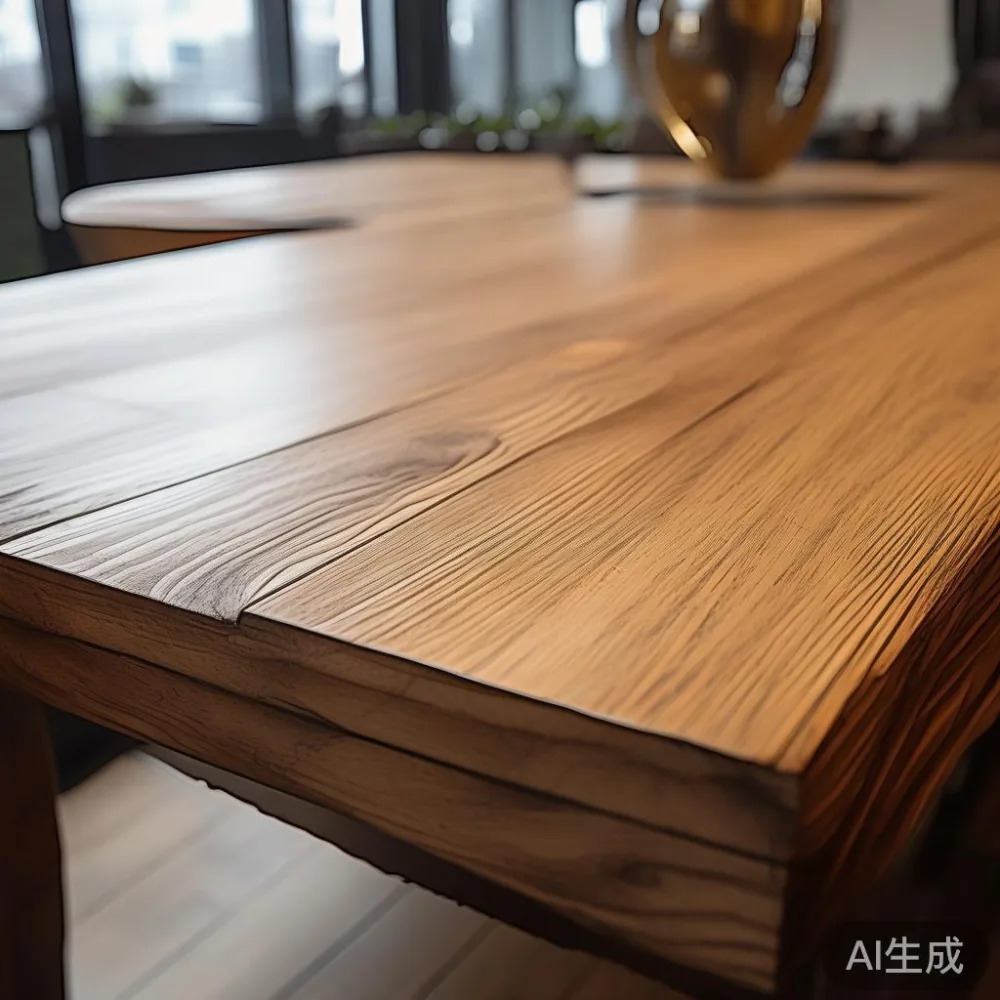
Dining tables. A 180 cm x 90 cm solid oak dining table can cup 3-5 mm across the width if one half dries faster than the other. Extensions and butterfly leaves often stick at humidity peaks. Drawers swell and refuse to close. The fix is simple: keep the table away from direct afternoon sun, run a dehumidifier to 55-60% RH, and accept that small seasonal gaps at extension rails are normal.
Bed frames. A slatted rubberwood bed frame in a master bedroom with the air-con off during the day can develop a musty smell within a fortnight. The smell is not rot — it is the timber holding 12-14% moisture content in a closed room. Leave the air-con timer on for 4 hours a day, or crack a window 15 cm during dry afternoons.
Wardrobes and nightstands. Doors go out of square. Hinges loosen. Drawer runners stick. In a 9 sqm HDB bedroom, a four-door wardrobe can shift 2-3 mm per panel across a humid August. The solution is a 30 cm gap behind the unit and a wall-mounted hygrometer at SGD 18 from any Tampines mall.
Marble tops. Marble does not breathe. A 120 cm marble-top dining table can develop condensation rings from cold water glasses if the room is at 82% RH. A coaster costs SGD 2. A replacement marble top costs SGD 480. The math is obvious.
How do I choose a minimalist furniture for a entryway?
Pick pieces built from kiln-dried solid wood with a moisture content between 8% and 12%, finished on every side including the underside, and small enough to fit a Singapore lift — most HDB service lifts take a 180 cm length on the diagonal but only a 150 cm straight length, so a 120 cm console table is the practical sweet spot for entryway furniture in a local flat.
An entryway in a Singapore HDB is rarely wider than 150 cm and never deeper than 90 cm once you account for the door swing. Forget the 200 cm console you saw on a Scandinavian blog. Focus on three things instead: timber thickness of 25 mm or more, a joinery method that allows seasonal movement (mortise and tenon, or floating-leather), and a finish that seals all surfaces. A solid wood console in rubberwood or white oak at 120 cm x 35 cm x 78 cm will weigh 18-25 kg, will fit every HDB lift in Singapore, and will survive the corridor turn at a 90-degree corner. Pair it with a wall-mounted mirror, a single ceramic dish for keys, and a 25 cm tall rubberwood stool to bring post-modern light luxury into the space without overfilling it.
What Singapore buyers should ask before they pay
Five questions, in this order:
1. What is the kiln-dried moisture content? Anything above 12% is risky in an 80% humidity market. Anything below 6% will crack in a Singapore bedroom by month six.
2. Is every surface sealed, including the underside and the back? Unsealed backs are the leading cause of cupping on imported dining table sg shipments.
3. What is the joinery method? mortise and tenon, dovetail, or floating tenon. Staples and pocket screws indicate flat-pack construction and that is a different product class.
4. What is the warranty on structural movement? 10 years is the mark of a serious workshop. MIDHILL backs every dining table sg unit with a 10-year structural warranty and lifetime refinishing, which is one reason Singapore buyers have been ordering from the brand since 2014.
5. What happens if the piece arrives and I do not like the colour? 14 days to return, no restocking fee, and the brand arranges collection through the corridor and lift. That is the level of policy a Singapore buyer should require.
How to place, protect, and live with solid wood in a Singapore flat
Three habits will add five years to the life of any solid wood piece in a local home.
Habit 1: stabilise the room, not just the wood. Run a dehumidifier to 55-60% RH in the living area for 6-8 hours a day during the November to January monsoon. A 12-litre Meaco or similar unit costs SGD 380 and pulls about SGD 6 a day in electricity. For a 90 sqm flat, that is roughly SGD 100 a month during the wet season, less than the cost of refinishing one dining table top.
Habit 2: respect the corridor and the lift. Most HDB corridors are 1.2 m wide and lifts take a 1.5 m x 1.8 m pallet. A 200 cm dining table will not fit through either. Order a 160 cm or 180 cm table instead, and the delivery team will carry it in without dismantling. MIDHILL ships from Foshan to Singapore in 18-25 days by sea, with GST pre-paid and free delivery above SGD 350, which removes a layer of friction for buyers in Punggol or Sengkang who do not have a family car.
Habit 3: rotate and refinish. Flip a dining table top 180 degrees every six months if it sits near a window. Wax the surface twice a year with a beeswax and tung oil blend (SGD 28 a tin). Avoid silicone polishes, which seal the surface and trap humidity beneath the finish.
Why French light luxury and post-modern light luxury both work in a HDB
French light luxury leans on curves, soft brass handles, and pale oak. Post-modern light luxury plays with geometric legs, terrazzo accents, and matte black hardware. Both styles translate well into Singapore flats because the colour palettes — bone, sand, charcoal, muted green — pair with the off-white walls of a BTO without competing. A French light luxury dining table in white oak at 180 cm, paired with a Japandi rubberwood fabric sofa in oat linen and a marble table in a 90 cm round, creates a tonal rhythm that holds up across the humidity cycle.
A solid wood sofa in rubberwood, a bed frame in ash, a four-door wardrobe in walnut, and a pair of nightstands in the same timber family will all move the same amount during the wet season. That is a quiet form of French light luxury discipline: one timber, one movement, one rhythm across the whole flat. Pair it with a single marble table on the dining side and a linen curtain in the living room, and the room reads as composed rather than collected.
What to do if your existing furniture has already moved
Three practical moves, in order of cost.
Move 1: re-balance the room. Pull the piece 30 cm away from the wall, switch on the dehumidifier for 72 hours at 50% RH, and watch the timber respond. Most cupping relaxes within two weeks if the room humidity stabilises.
Move 2: re-tighten the joinery. For a dining table or a bed frame, a 30-minute visit from a local handyman at SGD 60-80 will re-set the corner blocks and the drawer runners. Bring a 4 mm hex key, a rubber mallet, and a tube of clear beeswax.
Move 3: refinish the surface. If the top has light checking or has lost its sheen, a light sanding with 240-grit paper and a coat of hard wax oil (SGD 45 a tin) will restore the surface for another two monsoon seasons. Most pieces need refinishing once every five years, not once every two.
A dining table sg buyer who follows those three moves can keep a solid wood table in a Tampines flat for 25-30 years. The brand warranty covers structure; the owner covers humidity. That division of labour is the quiet contract between workshop and homeowner, and it has held in SingaporeanSince the early 1990s, when the first kiln-dried European oak shipments arrived at local carpentry workshops in Balestier and Tai Seng.
The Singapore buyer's short list for a humid climate
Solid wood, kiln-dried to 8-12% moisture content, finished on all six sides, joined with floating joinery, backed by a 10-year structural warranty, and small enough to clear a 1.2 m corridor and a 1.5 m lift. Add a dehumidifier set to 55-60% RH, a tin of hard wax oil, and a pair of coasters. That kit covers 90% of what a local owner needs to keep a dining table sg piece, a bed frame, a wardrobe, and a pair of nightstands in service for a generation.
Two pieces of context to keep in mind. First, SingaporeanSince 2008, MIDHILL has shipped container loads of solid oak, ash, and rubberwood furniture from Foshan to 15-plus countries, and the showroom floor in Foshan has a 200 mm gap behind every wardrobe on display so customers can see the sealed back panel — that gap is the difference between a five-year piece and a thirty-year piece. Second, the brand offers lifetime refinishing on the panes, so a Singapore buyer who notices a hairline check in year eight can ship the top back to Singapore with a prepaid service and receive a refreshed piece within 30 days. That is the kind of after-care policy that turns a one-time purchase into a piece of family furniture.
The humidity in Singapore is not going to change. The relative humidity in Tampines at 3 p.m. on a wet Saturday in December will still read 84% in ten years. What changes is how the owner responds. A solid wood dining table sg piece that is placed, protected, and refinished on a five-year cycle will outlast three cycles of air-conditioning compressor, two cycles of laminate flooring, and the mortgage on the flat. Buy once, place well, dehumidify honestly, and the timber will do the rest.