Dining Table Sizing & Shape Guide for Singapore Homes: HDB to Condo Dimensions
How Much Space Does a Dining Table Actually Need?
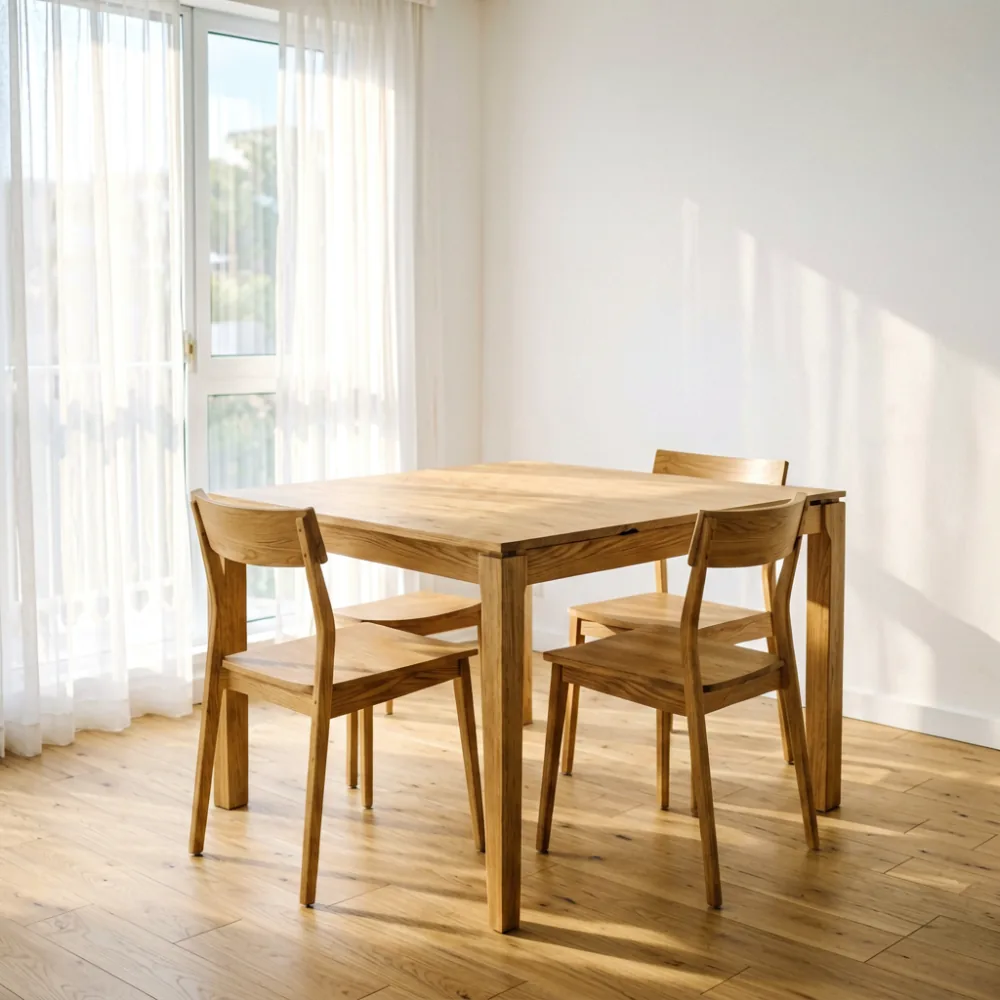
Minimum clearance rules for comfortable movement
When I moved into my HDB flat in Bishan three years ago, the first mistake I made was eyeballing the dining area and buying a table that looked fine on paper but blocked the walkway to the kitchen. The kitchen became a traffic jam every time someone wanted to grab a glass of water. That lesson taught me that dining table sizing isn't just about fitting chairs around a tabletop — it's about the space people need to move.
The golden rule I now follow is simple: you need at least 80cm between the edge of the table and any wall, cabinet, or obstacle behind a pulled-out chair. If someone needs to pass behind someone seated, add another 30cm to that measurement. So a minimum passage of 110cm total from table edge to opposite wall is what keeps a room functional.
- Chair pull-out depth: approximately 60cm from table edge
- Minimum passage behind seated person: 80cm
- Ideal passage for two-way traffic: 110cm minimum
- Comfortable dining room total width: table length plus 160cm clearance on both sides
Table Shapes Explained: Rectangle, Round, Square & Extendable
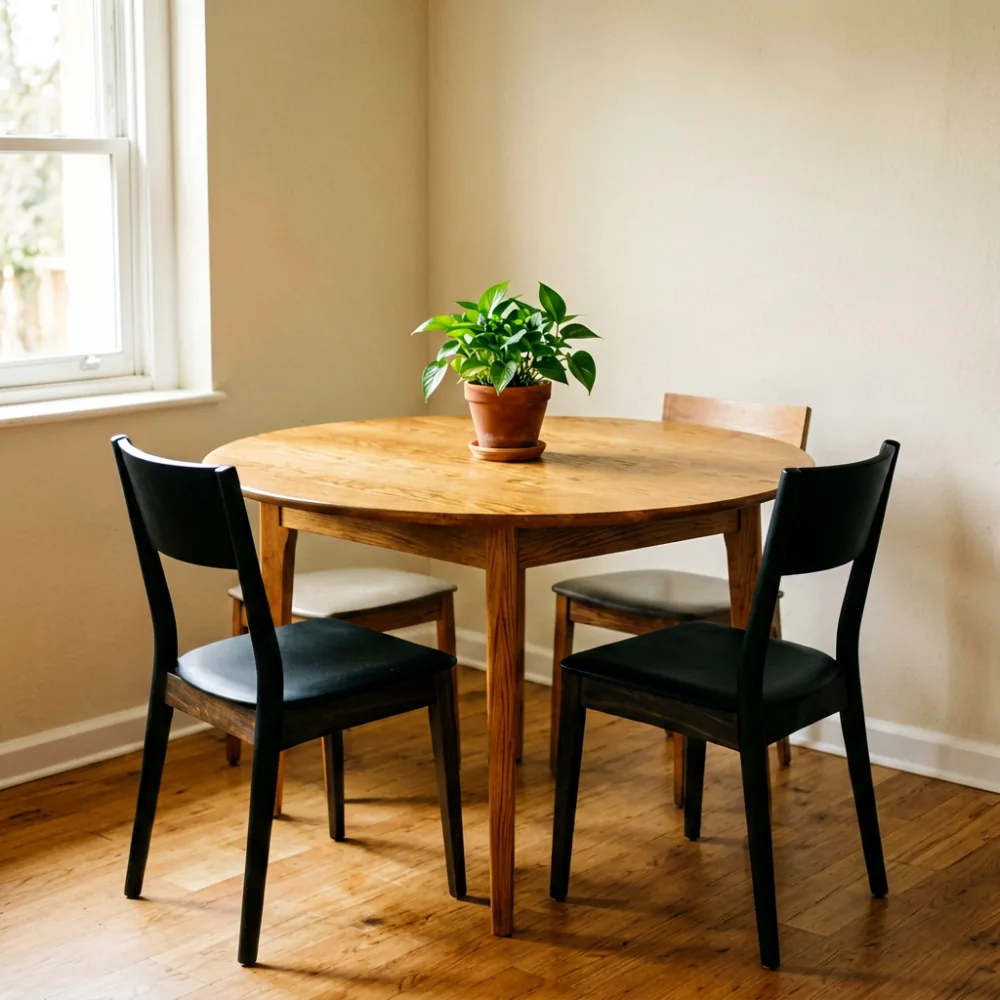
Round tables: social and space-smart
Rectangular tables dominate Singapore homes, and there are practical reasons for that. They fit along walls naturally, tuck into alcoves, and align with the long narrow layouts of most HDB dining areas. A standard rectangular table for a family of four measures around 120cm by 80cm. For a family of five or six, bump up to 160cm by 90cm or even 180cm by 90cm if your space allows.
I've found that rectangular tables work best when placed parallel to the longest wall in the room. This orientation leaves walkways open on the shorter sides, which is critical in HDB flats where the dining area often doubles as a thoroughfare to the kitchen and balcony.
Table Shapes Explained: Rectangle, Round, Square & Extendable
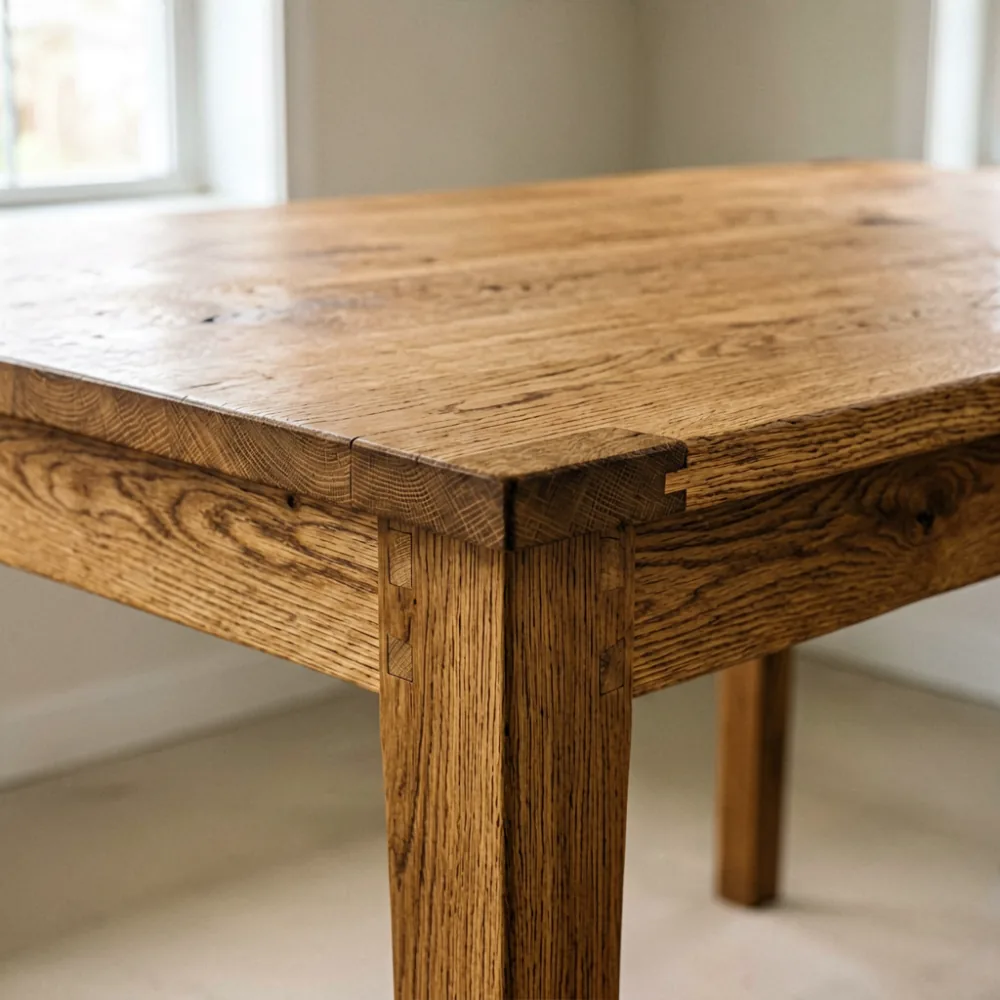
Round tables: social and space-smart
Round tables deserve more attention in Singapore homes, especially for smaller dining nooks. The obvious advantage is that there are no sharp corners — something I appreciate with young children running around. But the real selling point is that a round table allows people seated all around to face each other more naturally than at a rectangular table, where those at the ends feel disconnected from the conversation.
A round table with a 100cm diameter seats four comfortably and requires roughly the same floor space as a 120cm by 80cm rectangular table, but without the protruding corners that eat into walkway space. For six people, look for a 130cm to 140cm diameter. The trade-off is that round tables don't tuck against walls as neatly, so they work best in open-plan dining areas or at the centre of a room.
Table Shapes Explained: Rectangle, Round, Square & Extendable
Extendable and square options
Extendable tables are worth considering if you host guests occasionally but primarily need something compact for daily use. A well-made extendable dining table can go from 120cm to 180cm or even 200cm, depending on the mechanism. I tested an extendable table at a showroom in Bedok and found that the extension joint should operate smoothly without wobbling — if it feels loose after just a few extensions, walk away.
Square tables are rare in Singapore because most dining spaces are rectangular, but they can work in very compact condo layouts where a 100cm by 100cm table fits into a corner nook. The limitation is seating: a square table comfortably seats four, and adding more becomes awkward. They're a niche choice but not impossible to make work in the right space.
Material Matters: What Lasts in Singapore's Humidity
Stone, glass and metal bases
Singapore's humidity hovers between 70 and 90 percent year-round, and this has a real effect on dining table materials. Solid wood furniture responds to humidity by expanding and contracting, but quality solid wood — properly seasoned and finished — handles these fluctuations far better than engineered alternatives. I've seen particle board tables in HDB flats warp within two years of monsoon season because the material absorbs moisture through unsealed edges.
When I shopping for solid wood furniture, I always check the wood species. Acacia, oak, and rubberwood are popular in Singapore and each behaves differently. Rubberwood is the most dimensionally stable in humid conditions and is widely used by Foshan manufacturers like MIDHILL, which has been producing solid wood dining tables since 2008 and backs its structural work with a 10-year warranty.
- Rubberwood: stable in humidity, medium hardness, budget-friendly
- Acacia: harder surface, beautiful grain, moderate price
- Oak: very durable, heavier, higher price point
- Pine: soft and prone to dents, not recommended for heavy-use dining
Material Matters: What Lasts in Singapore's Humidity
Stone, glass and metal bases
Stone and quartz tabletops are completely immune to humidity damage, which makes them ideal for Singapore's climate. The downside is weight — a 140cm by 80cm stone top can easily exceed 50kg, and you'll need a base sturdy enough to support it without tipping. Metal bases, typically powder-coated steel, pair well with stone tops and resist rust if the coating is intact.
Glass tables are another humidity-proof option and visually lighten a small dining space, but they show fingerprints and water spots constantly in a tropical kitchen environment. If you choose glass, expect to wipe it down after every meal. For durable furniture that combines stability with aesthetic flexibility, many homeowners in newer condos near District 11 opt for a solid wood top with a powder-coated metal base — you get the warmth of wood with a base that won't corrode.
Delivery and Assembly Realities in Singapore
What to expect from delivery to HDB and condos
Delivery in Singapore is rarely as simple as dropping a package at your door. For HDB flats, the driver will typically bring the table to the flat's level and carry it inside, but if your unit is on a high floor without a service lift large enough for a 180cm table, you may face extra charges or require disassembly. Condo deliveries through the mailroom can involve similar constraints, especially in older developments with narrow service corridors.
Here's a practical comparison of what different table configurations mean for delivery and assembly in Singapore:
| Table Type | Dimensions (cm) | Weight (kg) | Assembly Time | Delivery Note |
|---|---|---|---|---|
| Compact rectangular (2-seater) | 100 × 60 | 15–20 | 10–15 min | Fits most lifts, no disassembly |
| Standard 4-seater | 140 × 80 | 30–45 | 20–30 min | May need disassembly for small lifts |
| Large 6-seater | 180 × 90 | 50–70 | 30–45 min | Service lift essential, possible extra fees |
| Extendable 4–6 seater | 120–180 × 90 | 40–55 | 25–40 min | Extension mechanism adds assembly complexity |
| Round 4-seater | Ø100 × 75H | 25–35 | 15–25 min | Round packages fit lifts more easily |
I always recommend confirming lift dimensions with your building management before ordering a large table. Service lifts in HDB blocks built before 2000 are notably smaller, and a 180cm table often won't fit without taking off the legs.
Smart Sizing: Matching Table Size to Household Needs
Height standards and chair coordination
Every person at a dining table needs a certain amount of width to feel comfortable, eat without elbow collisions, and have space for plates and glasses. The standard allocation is 60cm per person for a tight fit and 75cm for comfortable dining. This means a 140cm wide table fits four people at 60cm each with 20cm to spare, or three people at 75cm comfortably.
For small space furniture in studios and one-room HDBs, a 100cm by 60cm table seats two and can double as a workspace. When guests come over, a nesting side table or a wall-mounted drop-leaf can provide extra surface area without permanently consuming floor space. I've seen residents in Punggol condos use custom furniture solutions like wall-mounted fold-down tables that serve as both dining surface and desk, then tuck away completely.
Smart Sizing: Matching Table Size to Household Needs
Height standards and chair coordination
Standard dining table height in Singapore is 75cm, which matches most commercially available dining chairs. The gap between the tabletop and the seat of a properly paired chair should be approximately 28 to 32cm to allow comfortable knee clearance. If you're building custom furniture to fit an unusual space, maintaining this 28–32cm gap is non-negotiable — anything less and your knees will hit the underside of the table during meals.
Counter-height tables at 90cm pair with 60cm bar stools, but these work better as casual breakfast bars than as primary dining surfaces. I'd only recommend them for kitchens with a dedicated breakfast nook where the table is used infrequently and for short meals.
Secondhand and Pre-Owned: What to Look For
Inspecting used dining tables before buying
Singapore has a thriving secondhand furniture market on platforms like Carousell, and you can find excellent dining tables at a fraction of the retail price. But buying secondhand requires a sharper eye. Here's what I check before completing any used furniture purchase:
- Surface scratches and water rings: light scratches can be sanded and refinished, but deep gouges and white water rings that have penetrated the finish are permanent
- Joint integrity: wobble a rectangular table on a flat floor. If it rocks, the joints are loose or the frame is warped — this is common in older particle board tables exposed to humidity
- Leg attachment points: check where legs meet the tabletop. Screws should be flush and tight, not stripped or protruding
- Wood species identification: verify that a solid wood table is actually solid wood and not veneer over particle board. Run your finger along an edge or underside — veneer will show a seam or a different grain pattern repeating unnaturally
One thing secondhand tables rarely need: humidity acclimatisation, because they've already been through Singapore's wet and dry seasons. If a used table is still square and stable after years here, it'll likely stay that way.
Style and Proportions: Making It Feel Intentional
Proportion rules for different room sizes
The dining table should feel proportional to the room, not dominant in it. In a typical HDB 3-room flat dining area measuring roughly 250cm by 200cm, a 140cm by 80cm table is about right — it anchors the space without overwhelming it. In a larger condo dining room of 350cm by 300cm, you can scale up to a 180cm by 90cm table and still have breathing room around the edges.
Lighter-coloured woods — oak, ash, bleached acacia — make a dining area feel more open, which matters in compact Singapore homes where every square metre counts. Darker woods like walnut or stained teak absorb light and can make a small dining nook feel cave-like. This isn't a hard rule, but it's one I apply consistently when helping friends furnish their flats across Districts 3, 11 and 12.
The best dining table is the one that fits your space, suits your household size, and survives Singapore's climate without warping or developing joint failures. Get the dimensions right first, choose a material that can handle the humidity, and everything else — style, finish, accessories — becomes secondary.
Frequently asked questions
What is the ideal dining table size for an HDB 4-room flat?
For a standard HDB 4-room flat dining area, a 140cm by 80cm rectangular table is the most practical size. It seats four comfortably with 60cm per person and leaves enough clearance for chair pull-out and walkway space. If the dining area is larger or opens into the living room, a 160cm by 90cm table works well for five to six people.
Will a solid wood dining table warp in Singapore's humidity?
Properly seasoned solid wood with a quality finish can handle Singapore's humidity without warping. Rubberwood and acacia are the most stable species for tropical climates. The key is ensuring all edges and undersides are sealed during manufacturing. Cheap unsealed particle board tables are far more likely to warp than a well-made solid wood option from a reputable manufacturer.
How much clearance do I need around a dining table?
You need a minimum of 80cm between the table edge and any wall or obstacle behind a chair for comfortable seating. If people need to walk behind seated diners, increase this to 110cm total clearance. For a table against a wall with no passage behind chairs, 60cm is the absolute minimum but feels tight.
Can I buy a dining table online and have it delivered to my HDB?
Yes, most online furniture retailers in Singapore deliver to HDB flats. Confirm whether the table arrives pre-assembled or requires assembly, and check if your building's service lift can accommodate the package dimensions. Large tables over 160cm may require disassembly for lift transport, so ask the seller about this before purchasing.
Questions about specifications, fabric or delivery? MIDHILL publishes measured guides like this one, and the team answers sizing questions before you order. See the full collection or contact the team.