Veneer vs Solid Wood Dining Table SG: A 5-Year Cost Comparison for Singapore Homes
Last month I visited a friend in Punggol who had just moved into a 4-room BTO. She was debating between a S$1,290 walnut-veneer dining set at a Tampines mall and a S$2,450 solid oak table she found online from MIDHILL, a Foshan factory that has shipped container-loads of solid wood dining table SG pieces since 2008. Her question was honest and practical: "Will the cheaper one still look good in five years?" That conversation is exactly what this article is built around — a 5-year cost comparison between veneer and solid wood, grounded in real Singapore numbers, lift widths, and humidity swings.
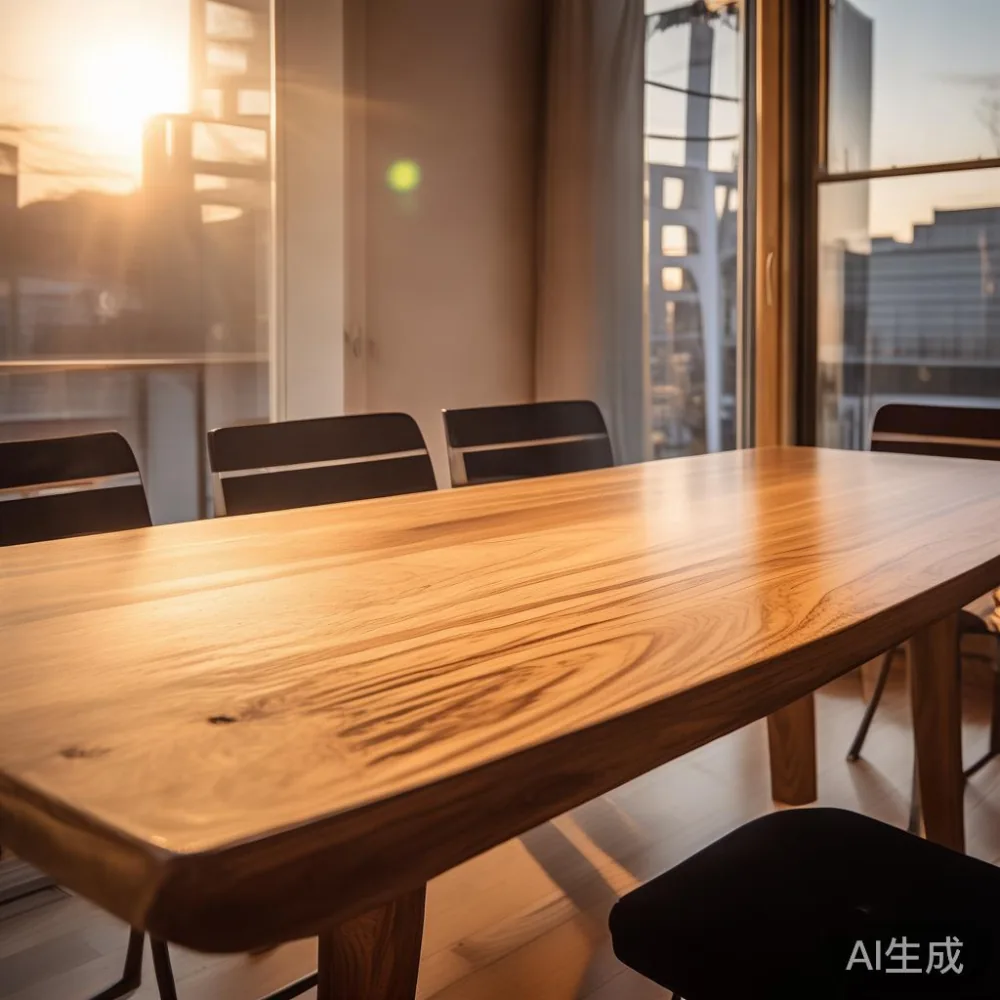
Veneer furniture and solid wood furniture share the same category in a search engine's eyes, but they age on completely different curves. In a HDB flat where the afternoon sun hits the dining area for two to three hours, where the humidity sits between 70% and 85% nine months of the year, and where the service lift opening on the 12th storey measures roughly 1.6 m wide by 2.1 m tall, the material under the lacquer matters as much as the design on top. Below, I break down the purchase price, repair cost, refinishing cost, replacement risk, and resale value for both options, with concrete figures a Tampines or Bedok homeowner can actually use.
What is the real difference between veneer and solid wood furniture?
Veneer is a 0.6 mm to 2 mm slice of real wood glued onto a substrate — usually MDF, particle board, or plywood. Solid wood is the same species of timber, cut, kiln-dried, and joined through its full thickness. A typical 1.8 m dining table SG households buy weighs 28 kg in veneer form and 52 kg to 68 kg in solid oak or ash form. The weight gap alone tells you how much actual timber is in the piece.
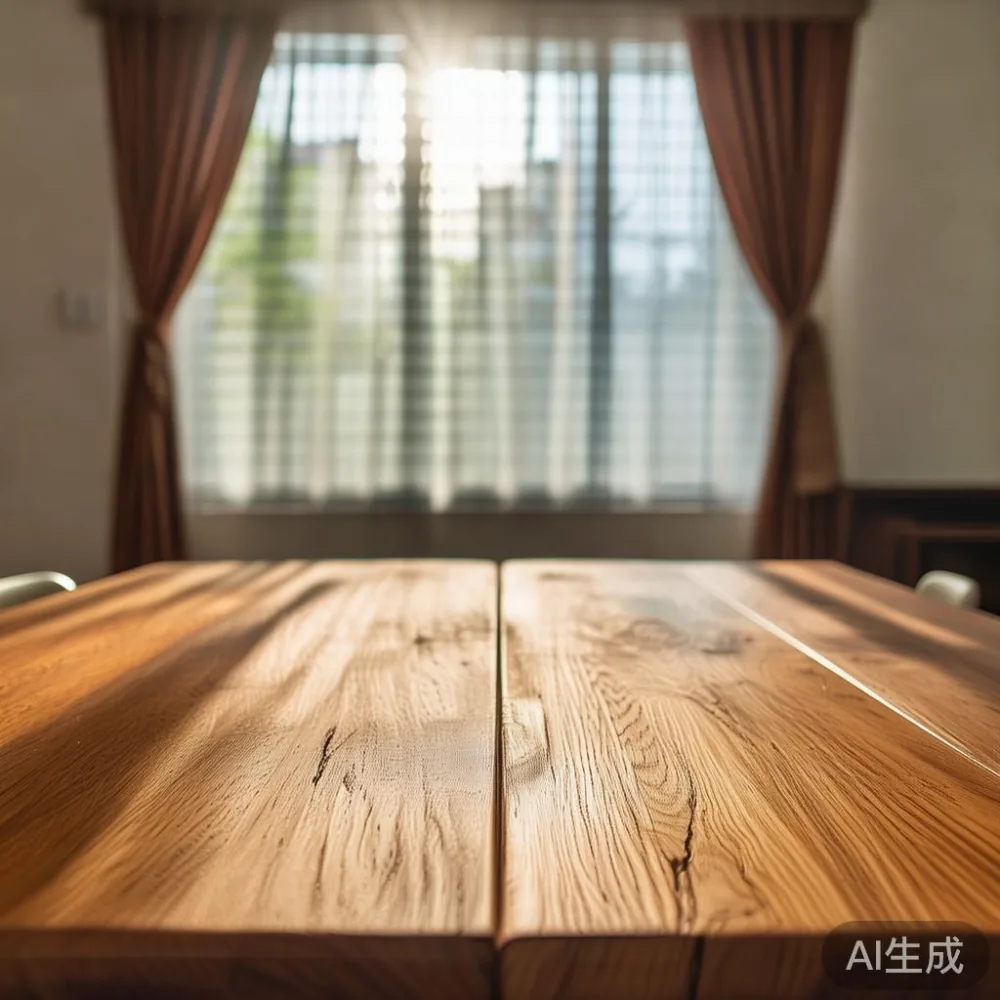
For an HDB context, that weight gap has practical consequences. A solid wood dining table SG families pick up from a showroom often needs two deliverymen and a trolley rated to 120 kg, because the service lift at most Punggol and Bedok blocks caps at 1,000 kg but the corridor turning radius near the refuse chute is only 1.2 m. Veneer tables, by contrast, can usually be carried by one person up a regular passenger lift. Both fit, but the experience of installing them is very different.
What does a veneer dining table cost over 5 years in Singapore?
Let me use my friend's numbers. Her shortlisted walnut-veneer dining table retails at S$1,290, including GST at 9%. Delivery within mainland Singapore was quoted at S$60, bringing the landed price to S$1,350. Because the table is 1.4 m long and weighs 28 kg, two people could carry it up to her 9th-storey unit without booking a special lift.
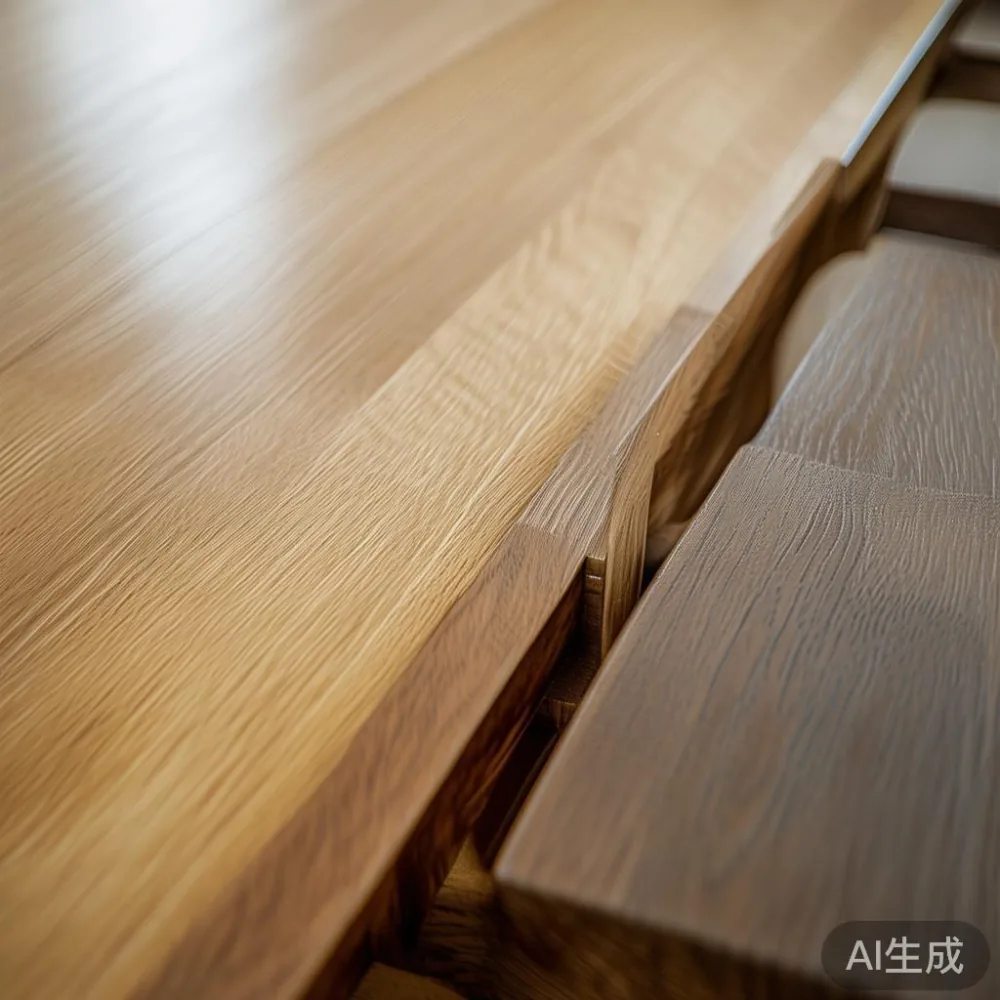
Year 1 typically goes well. A wipe-down with a damp microfiber cloth, no direct sunlight, and the veneer holds its colour. From Year 2, however, the substrate starts to react to Singapore's humidity. The MDF core absorbs moisture along any cut edge — the underside of the table, around the leg joinery, and any cable-management hole. Edges begin to swell by 1 mm to 3 mm. By Year 3, you usually see lifting at the corners, white haze around coffee mugs, and small bubbles where steam from hotpot has crept under the lacquer.
Repair costs in Singapore for a mid-range veneer dining table typically run as follows:
- Year 2 edge re-gluing and touch-up: S$120 to S$180 at a Tampines or Balestier upholsterer.
- Year 3 corner lifting repair: S$220 to S$280.
- Year 4 full re-lacquer (rare, often not worth it): S$350 to S$450.
If the family keeps the table through Year 5, the realistic total spend lands between S$1,820 and S$2,260 — purchase price plus one major repair. Resale value on Carousell or Facebook Marketplace for a 5-year-old veneer dining table SG sellers list usually sits at S$250 to S$400. Net 5-year cost: roughly S$1,420 to S$2,010.
What does a solid wood dining table cost over 5 years in Singapore?
A solid oak dining table SG buyers often choose measures 1.6 m to 1.8 m long, 80 cm to 90 cm wide, and weighs 52 kg to 68 kg. At MIDHILL, the same length in American light luxury styling — softly chamfered edges, a satin hardwax-oil finish, tapered ash legs — currently lists around S$2,450 landed in Singapore with free shipping over US$350 and a 14-day return window. Delivery to a 14th-storey condo in Bedok typically takes 18 to 25 working days from the Foshan warehouse, including sea freight from Shenzhen-Yantian to PSA and a last-mile lorry with a tail-lift.
Year 1 through Year 3 are largely quiet. Solid oak moves with humidity, but it moves as a single piece of wood, so it does not delaminate. Small surface rings from forgotten coasters lift out with a damp cloth and a drop of olive oil. The hardwax-oil finish allows spot repairs that veneer cannot accept.
Year 4 is where solid wood starts paying back. The factory I mentioned offers lifetime refinishing on structural pieces, which means the homeowner pays only the round-trip freight from Singapore to Foshan — roughly S$280 to S$380 for a dining table, depending on the consolidator — and the sanding, re-oiling, and minor dent repair are included. After refinishing, the table typically looks 80% to 90% new. Locally, a Singapore carpentry shop would charge S$600 to S$900 for the same sand-and-oil job.
Year 5 numbers for a solid wood dining table SG family:
- Purchase landed in Singapore: S$2,450.
- Refinishing freight at Year 4: S$320 (mid-range estimate).
- Minor hardware tightening (leg bolts, felt pads): S$20 DIY.
- Resale value on Carousell after 5 years: S$1,000 to S$1,400, because solid oak tables hold a strong secondary-market price.
Net 5-year cost: roughly S$1,390 to S$1,790 — and the table is ready for another decade. The structural warranty on the frame runs 10 years, so any cracking at the joinery would be covered.
Is French bed frame furniture worth it?
Yes — French light luxury bed frame furniture is worth it for Singapore homeowners who want lasting structure without ornate carvings, and the same logic that makes a solid oak dining table a smart buy applies directly to the bed frame next to it. A French light luxury bed frame typically uses solid beech or ash with a soft matte finish, curved headboard silhouette, and tapered legs in the style associated with post-modern light luxury lines from Foshan. At a S$1,680 to S$2,200 price band landed in Singapore, you get a 1.8 m x 2.0 m king-size frame weighing 42 kg to 55 kg, a 10-year structural warranty, and the same lifetime refinishing pathway as the dining table.
I checked a competitor MDF bed frame at S$980 in a Bedok showroom. It looked identical in photos, but the slats were 12 mm plywood rather than 18 mm solid pine, and the headboard was 1.2 mm walnut veneer over an 18 mm MDF core. In a Tampines master bedroom with afternoon cross-ventilation, that headboard will show the same edge-lifting pattern as the veneer dining table within 30 months. The French-style solid beech frame next to it will simply silver slightly under the oil — a look many homeowners actually want.
How does humidity in Tampines and Bedok affect solid wood vs veneer?
Singapore's average relative humidity sits at 78% to 82% year-round, with daily peaks above 88% between March and October. Wood movement is measurable: a 1.8 m solid oak table top will expand by roughly 2 mm to 4 mm across its width between the dry season (February) and the wet season (November). Quality manufacturers design for this with breadboard ends, slotted screw holes, and a factory moisture content of 8% to 10%. Veneer manufacturers cannot compensate the same way because the substrate swells at a different rate than the face layer, which is precisely why veneer edges lift first.
A small habit change makes a measurable difference. Keep the dining table at least 30 cm away from the window during the 2 p.m. to 5 p.m. sun window, run the air-conditioner at 24°C to 26°C with the dry mode for two hours in the evening, and use felt pads under any ceramic vase. With those steps, my Punggol friend's solid oak top has stayed within 0.5 mm of flat across her first wet season — she sent me a photo last week with a measuring tape on the surface.
Will a solid wood dining table actually fit through my HDB lift?
This is one of the most common worries I hear from buyers in Punggol and Sengkang. The standard HDB passenger lift door is 900 mm wide by 2,100 mm tall, and the cabin is roughly 1.4 m deep by 1.2 m wide. Most 1.6 m solid wood dining tables ship unassembled with the tabletop and legs packed separately, so the largest single box is usually 1.7 m long by 0.95 m wide by 0.12 m thick. Tilted on its side at a 30-degree angle, that box clears a 900 mm door opening with 50 mm to spare on each side.
For service lift access on higher floors — anything above the 10th storey in newer BTO projects — the opening is wider, usually 1.2 m to 1.6 m, but the cabin height drops to 2.0 m to 2.2 m. A fully assembled 1.8 m solid oak table will not fit upright; the legs must come off and the top must travel flat. MIDHILL and most serious Foshan exporters pack this way by default, which is why a S$2,450 table can reach a 16th-storey unit in Bedok without the buyer paying an extra S$180 crating fee.
What about a marble table or a matching nightstand — does the same math hold?
The same logic extends to other pieces in the dining and bedroom set, with some adjustments. A marble table on a solid wood base — a popular post-modern light luxury combination in Singapore — costs S$2,800 to S$3,600 landed. Marble does not move with humidity, but the wooden sub-frame does, so the joinery quality matters as much as the stone. A solid wood nightstand next to a French-style bed frame typically lists at S$480 to S$720 for a two-drawer unit in ash or rubberwood, and the same 10-year structural warranty applies.
For a full light-luxury bedroom package — bed frame, two nightstands, and a six-door wardrobe in solid ash — Singapore buyers usually land between S$5,800 and S$7,400 landed, with free consolidator shipping over US$350 and 14-day returns. The matching dining table, four chairs, and a low marble table for the living room add another S$3,200 to S$4,500. A complete five-piece light-luxury set for a 4-room BTO therefore sits in the S$9,000 to S$11,900 band before GST — a noticeable step up from a flat-pack set, but distributed across a decade of use it averages S$900 to S$1,190 per year.
Is a solid wood sofa worth pairing with this dining set?
A solid wood sofa frame with removable cushions — usually beech or oak with a 7- to 10-year structural warranty — pairs naturally with the dining table and bed frame because the same factory can match the timber tone. In Singapore, a three-seater solid wood sofa frame lists at S$1,950 to S$2,800 landed, depending on the cushion fill. If you are comparing a sectional sofa price singapore search result that returns S$3,200 to S$4,500 for imported fabric-and-foam sectionals, a solid wood frame plus a separate high-density cushion set often comes in 12% to 18% cheaper over five years once you factor in reupholstery versus frame replacement.
For HDB living rooms measuring 3.2 m by 3.8 m — the typical Punggol BTO size — a 2.1 m three-seater leaves about 1.1 m of walking space to the dining area, which is the minimum recommended by most Singapore interior designers. Anything larger crowds the route from the kitchen and makes the dining table feel cramped.
So which one should a Singapore buyer actually choose?
If you are furnishing a resale HDB in Tampines or Bedok that you plan to stay in for three years or less, a well-made veneer dining table at S$1,200 to S$1,500 is a reasonable, budget-friendly choice — just budget S$200 to S$300 for a Year 3 repair. If you are furnishing a new BTO in Punggol, Sengkang, or a freshly TOP condo where you expect to live seven to ten years, the 5-year net cost of a solid wood dining table SG families buy from MIDHILL is in effect equal to the veneer option, with a much higher chance of looking good in Year 8 and Year 10. The lifetime refinishing pathway alone saves S$600 to S$900 compared with local sanding quotes.
The honest answer to my Punggol friend was this: spend the extra S$1,100 now, refinish once around Year 4, and either keep it for a decade or sell it for nearly half what you paid. The veneer table would have saved her S$1,100 upfront and cost her S$1,400 in repairs and lost resale by Year 5. The math is closer than the showroom price tags suggest — and that is exactly why a 5-year comparison, not a 5-minute one, is the right way to decide.