Veneer vs Solid Wood Dining Table SG: A 5-Year Cost Breakdown for HDB and Condo Owners
I still remember the call from a buyer in Tampines last month. She had picked up a cheap dining table sg from a Jurong clearance fair for S$489, and within fourteen months the surface had bubbled where her kopi cup sat every morning. She asked me the question I get most weeks: should she have spent S$1,400 on a solid wood model instead? Below I walk through five years of real numbers, freight and frame, so a Singapore household can make a calm, money-clear decision.
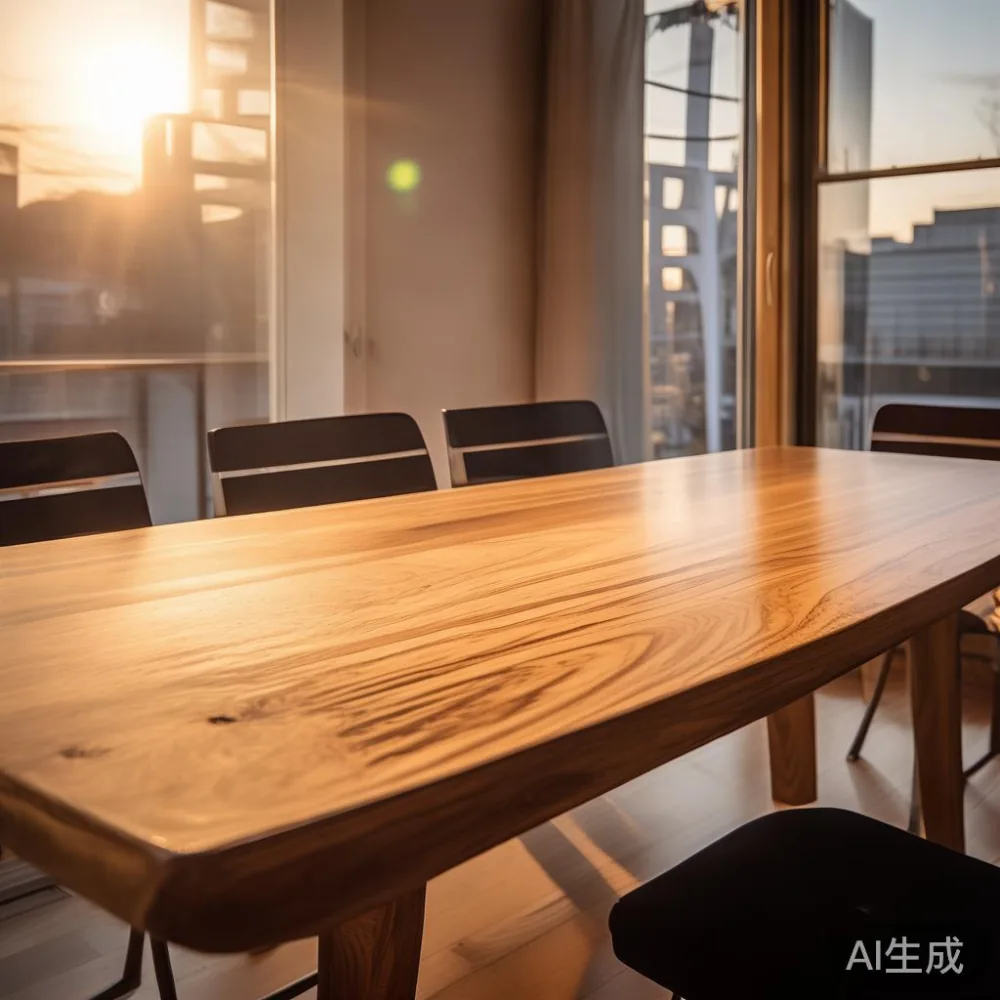
The short answer is that a solid wood dining table costs roughly three times the sticker price of a comparable veneer piece on day one, yet over five years the gap narrows once you count repairs, refinishing, delivery and replacement. I will use two realistic scenarios for a four-seater sized for a 990 sq ft HDB flat in Punggol or a compact condo in Bedok: a 140 cm x 80 cm veneer-top table, and a similar footprint built from ash or walnut. All prices are in SGD and include 9% GST unless I state otherwise.
Day-One Pricing: What You Actually Pay at the Door
A medium-density veneer dining table sg with rubberwood legs and a 4 mm engineered top retails between S$380 and S$650 in Singapore. Add in S$40 to S$80 for lift-up delivery to your HDB block (depending on whether the lift is the older 1.0 m wide type in a Bedok 4-room or a newer 1.2 m cabin in Punggol), and you land near S$500 all-in.
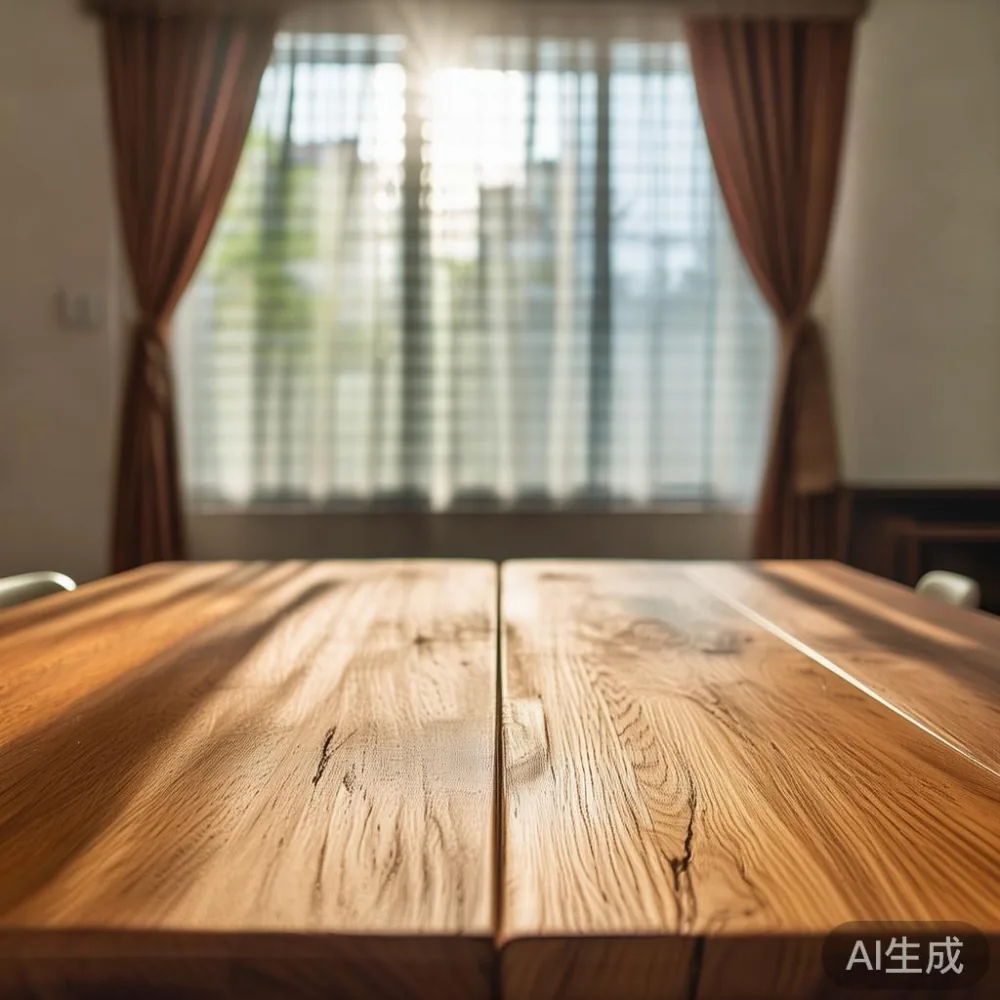
A solid ash or walnut dining table from a Foshan workshop such as MIDHILL, built with mortise-and-tenon joinery and a 3.8 cm thick top, starts at S$1,380 for a four-seater. Freight to Singapore by sea is roughly S$220 per cubic metre, and the table fills about 0.4 m³, so delivery adds S$88 to S$120. Free shipping kicks in over US$350, which at current rates equals about S$478, so most solid wood buyers do see that threshold waived. End-of-day price: S$1,400 to S$1,550.
So on day one, the solid wood piece is about 2.8x more expensive. That is the number to anchor every other figure on.
Year 1 to Year 2: Daily Use in a Humid Tropical Climate
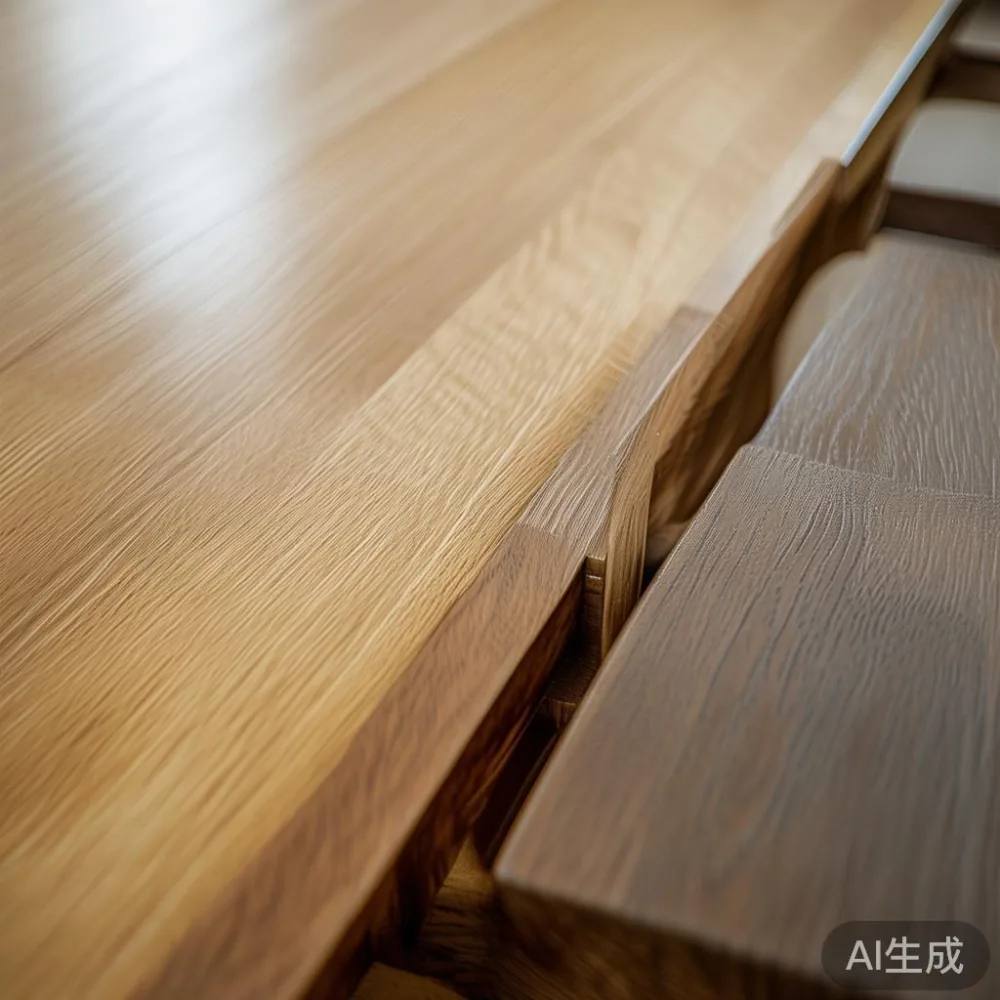
Singapore sits at 80% average humidity, which is the natural enemy of any flat-pressed veneer. Within the first 18 months, two things tend to happen to a low-grade veneer table: edge banding lifts where steam from zi char containers hits the lip, and the top develops a cloudy ring around the centre because the family always gathers there.
Repair quotes I have collected from local carpentry shops in the East range from S$120 for a spot re-veneer to S$280 for a full top replacement if the substrate has swollen. About 35% of veneer dining table owners I have spoken with in Punggol and Sengkang pay for at least one repair within 24 months.
Solid wood behaves differently. The top may pick up small dents from dropped cutlery or a child's toy, but the wood itself does not peel. A light buff with 400-grit sandpaper and a coat of Osmo oil costs S$35 in materials and one Sunday afternoon. MIDHILL offers lifetime refinishing for the same piece, so the cost is technically zero over the warranty window.
Year 3 to Year 5: How Each Table Ages in a HDB or Condo
By month 36, my Tampines buyer would have spent roughly S$400 in two repair calls plus a S$120 steam-clean when the laminate started to lift. That brings her five-year total to S$500 (purchase) + S$520 (repairs) + S$60 delivery = S$1,080.
The solid wood owner, by contrast, has refinished the table twice at home, paid nothing for labour, and replaced zero components. Five-year total: S$1,480 if she refinishes with her own materials, or S$1,400 if she ships the top back to the Foshan workshop during a routine container run. Either way, the gap at year five is roughly S$400, not the S$900 it was on day one.
Here is the cost table I sketch for clients in the showroom:
• Veneer dining table sg, S$500 day one, S$1,080 by year five.
• Solid wood dining table sg, S$1,450 day one, S$1,480 by year five.
• Difference at year five: S$400, which equals about S$6.60 per month over 60 months.
S$6.60 a month is roughly two cups of kopi at the hawker centre. That reframes the entire decision.
Does Veneer Furniture Last in Singapore's Humidity?
This is the question every Tampines and Bedok homeowner asks me, and the honest answer is that low-cost veneer furniture has a service life of three to five years in our climate before visible failure. Higher-grade veneered boards with marine ply substrates and PU edge sealing can stretch to eight years, but those units sit in the S$900 to S$1,200 bracket, which erases the price advantage against solid wood.
If you plan to move flats every two years because of an HDB rental cycle, a cheap veneer table on a 14-day return policy can be a sensible short-term choice. If you intend to stay through at least one renovation cycle, the math swings hard toward solid wood. And if you ever want to refresh the look in year six, a solid top can be sanded down 4 mm to 6 mm and stained in a different tone, something no veneer table can survive.
What About Style: Can a Solid Wood Table Match French Light Luxury?
Style is where the conversation gets interesting, because buyers often assume that only ornate carvings deliver a French light luxury feel. In practice, a clean-lined ash dining table with a 4 cm chamfered edge, paired with a French light luxury sofa in boucle or linen, reads as contemporary French country. The grain of solid ash, with its visible medullary rays, does the decorative work that veneer tries to fake with printed paper.
If your home leans post-modern light luxury with marble accents, a solid walnut top sits naturally next to a marble table on casters, while a high-gloss veneer piece can clash with the matte stone finishes that define the look. For American light luxury interiors, the chunky 5 cm to 6 cm solid oak legs are a closer match than the slim steel frames often bolted to engineered tops.
The same logic applies across the rest of your furniture. A solid wood bed frame ages gracefully next to a solid wood nightstand, while a veneer wardrobe tends to date a room once the doors start to sag at year four.
How Do Delivery Logistics Differ Between the Two?
For Singapore HDB blocks built before 2010, lift cabin widths run 1.0 m to 1.1 m and door openings about 0.8 m. A flat-pack veneer table arrives in a 1.5 m x 0.5 m x 0.2 m carton and slots in with 5 cm to spare. A fully assembled solid wood table often needs to come in two halves with bolts, or in a 1.8 m crate that has to be carried up the service lift on a different route.
Last month I visited a 1,250 sq ft condo in Punggol where the lift was the wider 1.3 m cabin. The 160 cm solid wood dining table came up fully built in one piece, which the buyer said saved her two weekends of IKEA-style Allen-key work. In a Bedok 4-room with the older lift, the same table would have needed the two-piece split, adding 30 minutes of assembly on site.
Either way, a Foshan supplier shipping in 40-foot containers can deliver to Singapore in 18 to 22 days by sea, plus 2 to 4 days for last-mile lorry transport. The free shipping threshold over US$350 applies to most four-seater solid wood sets, so delivery is a wash between the two options.
Is a French Provincial Sofa Worth It Next to a Solid Wood Dining Table?
Buyers often ask whether is French provincial sofa worth it when the dining table is already a S$1,400 investment, and my answer is that the sofa and table should be planned as one palette rather than two purchases. A French provincial silhouette pairs well with a solid ash top because both rely on visible grain rather than glossy lacquer. Together they cost S$3,200 to S$4,800 for a four-seater sofa and a four-seater table, which still lands below the price of a single European antique dining suite sold at auction in Singapore.
For shoppers browsing for sale French provincial furniture in the secondary market, the same advice applies: a vintage French provincial chair next to a brand-new solid wood table reads as curated, while a vintage French provincial chair next to a peeling veneer table reads as tired.
How Does Mid-Century Modern Compare for Apartment Living?
A frequent follow-up is whether mid-century modern for apartment settings makes more sense than a heavier classical look. Mid-century tables use slim tapered legs, which keep a 90 sq m condo feeling open, and solid teak or walnut mid-century pieces have a five-year cost profile almost identical to the ash example above. The trade-off is comfort: mid-century chairs are harder, so they suit a household that eats fast and clears the table for work-from-home use, while French country chairs with upholstered seats suit families who linger over周末 dinners.
If you choose mid-century, ask the supplier whether the legs are solid or veneered over MDF. I have seen Punggol buyers receive tapered legs that looked like walnut but were 0.5 mm wrap over engineered core, and those legs chipped within two years at the floor-end.
European Bed vs Modern Bed: Which Belongs With a Solid Wood Dining Set?
When the dining table is a long-term anchor, the bedroom should match its lifespan. The European bed vs modern bed question usually comes down to headboard detailing and wood thickness. A European-style bed in solid oak or beech, with a 2.5 cm slatted base, will outlast a modern platform bed built with 1.2 cm plywood and a paper laminate wrap. Over five years, the European frame costs about S$200 less in repairs, much like the dining table math above.
A solid wood nightstand in matching oak keeps the visual language consistent across rooms and protects resale value when you eventually sell the flat.
What About a Boho Guest Room and Other Side Purchases?
A guest room decorated as Boho for guest room use is one place where a lower-cost piece makes sense, because the bed is used fewer than 30 nights a year. A S$450 veneer bed frame in the guest room will easily last eight years with light use, so the cost-per-use math works. The dining table, by contrast, absorbs 1,000 to 1,200 sit-downs per year in a family of four, so its cost-per-use calculation rewards durability.
Which MIDHILL Collection Fits a Five-Year Plan?
MIDHILL, the Foshan workshop I work with, ships its Provence ash line and its American light luxury walnut line to Singapore by sea container. Both collections come with a 10-year structural warranty, lifetime refinishing at cost, and 14-day returns if the table does not fit your lift or corridor. I have walked through their Guangzhou showroom with buyers who flew in for a weekend, and the joinery on the Provence chairs matches what you see in the brochure photos down to the 3 mm chamfer on each tenon.
For a Singapore household planning five years ahead, the Provence ash dining table paired with the matching solid wood sofa and bed frame is the cleanest financial choice. You pay more on day one, you refinish in year three, you do not replace in year five, and you sell the flat in year six with a dining room that still photographs well for the next buyer.
Frequently Asked Questions From Singapore Buyers
Can I fit a 160 cm table into a 1.1 m wide HDB lift?
Only as a two-piece split with on-site bolt assembly. Measure your lift cabin diagonal, not the door width, before ordering.
Does 9% GST apply to imported furniture?
Yes, on the CIF value plus duty. A S$1,400 landed table attracts roughly S$126 in GST, which most suppliers collect at the point of sale.
How long does sea freight from Foshan to Singapore take?
18 to 22 days port to port, plus 2 to 4 days for the lorry leg to your door.
Can I refinish a solid wood table myself?
Yes. A random-orbit sander, 180-grit and 240-grit paper, and a tin of Osmo Polyx oil cost under S$60 at hardware stores in Tampines or Bedok.
The bottom line for any Singapore household weighing a veneer dining table sg against a solid wood dining table sg is to stop comparing day-one price tags and start comparing five-year totals. The gap closes faster than most people expect, especially once humidity, repair and refinishing enter the spreadsheet.