How to Care for a Lacquered Dining Table in a Singapore Home
I learned this the hard way last February, when a friend in a Tampines HDB called me over for dinner. Her brand-new dining table sg — a six-seater she had saved eight months to buy — had a cloudy white ring stretching across the surface, roughly the size of a dinner plate. The culprit was not a careless guest with a wine glass. It was the air. Singapore sits on the equator, the average relative humidity hovers between 78% and 88% for most of the year, and the air-conditioning in her flat had been switched off for three days while she visited family in Johor Bahru. The lacquer had begun to bloom.
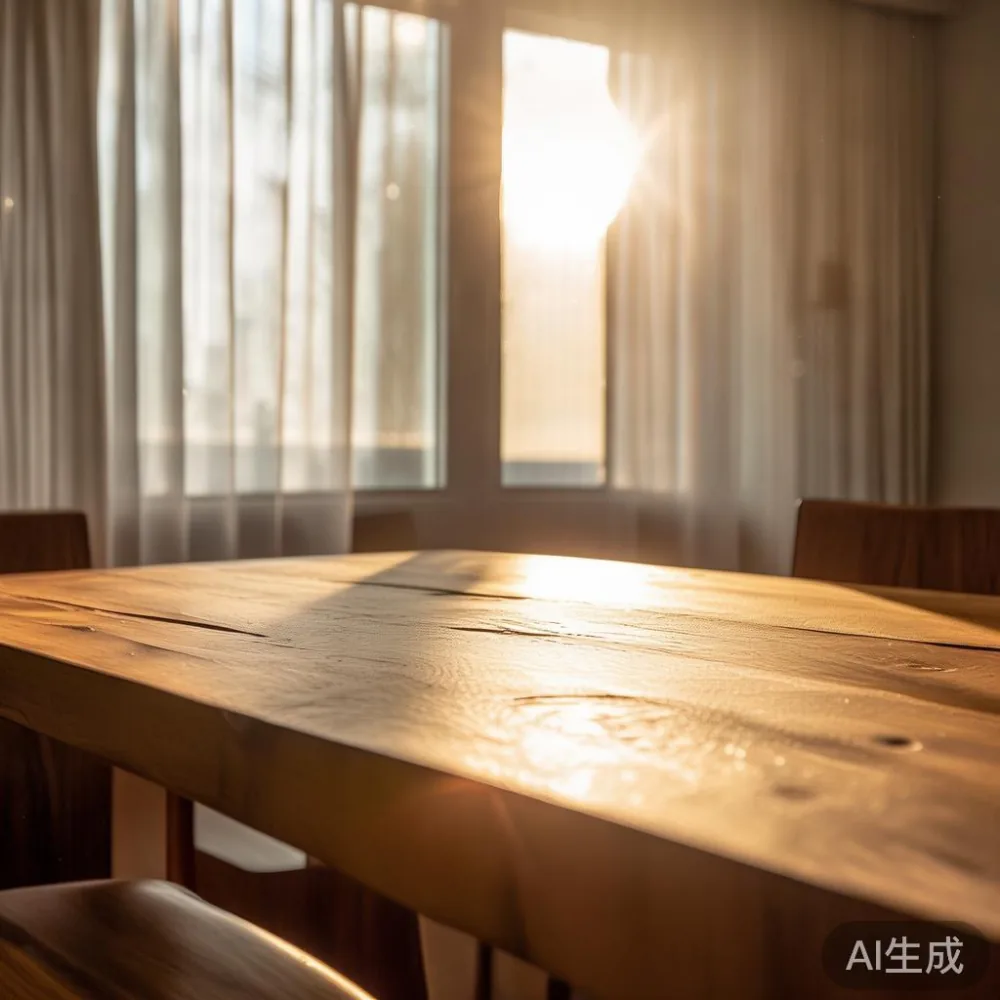
That dinner conversation is the starting point for this guide. A lacquered dining table is a small luxury that rewards careful owners, and Singapore's tropical climate is unforgiving if you ignore it. Over the past decade of helping Singapore households choose and live with solid wood pieces, I have watched beautiful tables survive a decade with nothing more than a microfibre cloth and a coaster habit — and I have watched cheaper finishes turn cloudy inside twelve months. The difference is almost always climate awareness, not spending power.
For anyone shopping for a dining table sg that will last through Singapore's wet seasons, pre-monsoon thunderstorms, and the daily 32°C afternoon heat, the rules below are non-negotiable. I will also address the question I fielded twice last month: how the same lacquer care principles apply if you are styling a Nordic queen bed in a compact HDB room. The finish chemistry is similar, and the discipline is the same.
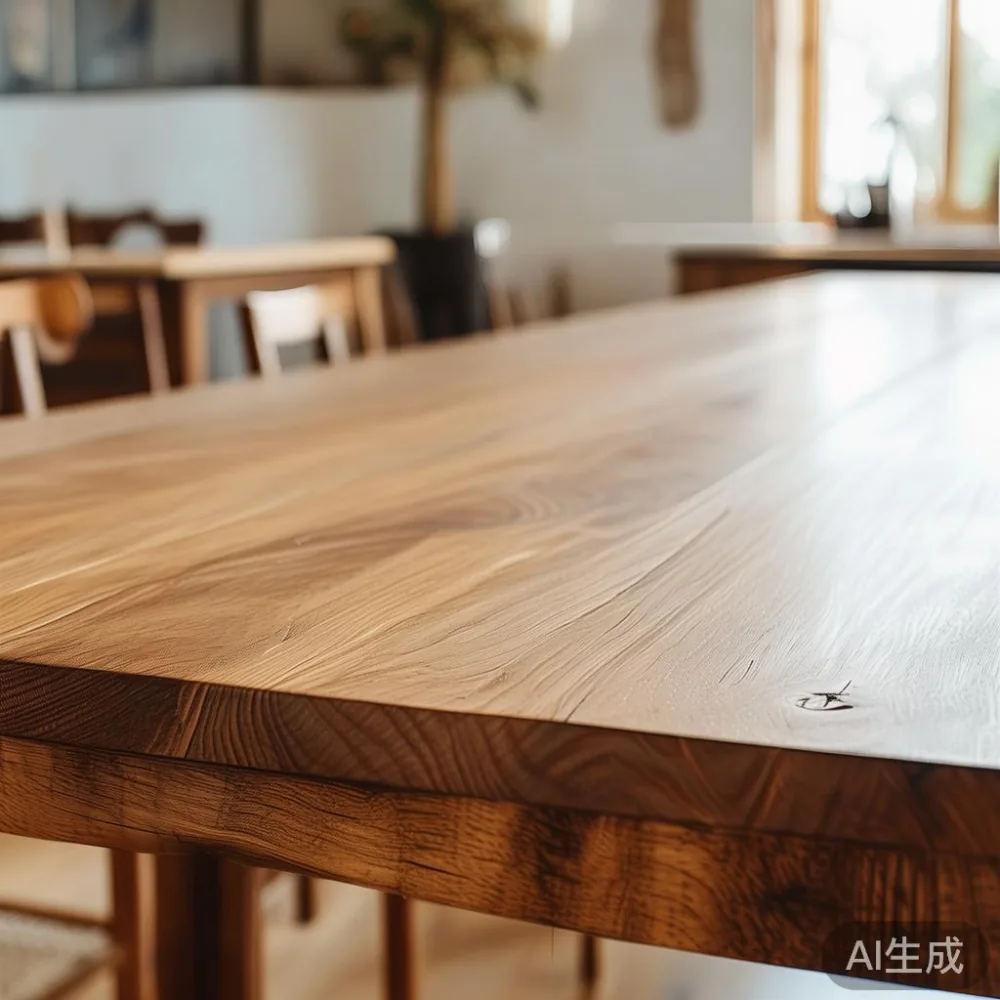
Why does lacquer react so strongly to Singapore's humidity?
A high-quality open-pore or closed-pore lacquer forms a thin, breathable film over solid wood. The film is hygroscopic, which means it absorbs and releases moisture with the wood beneath it. In Tampines, Bedok, and Punggol, where afternoon humidity regularly pushes past 85%, the wood underneath the lacquer swells by a fraction of a millimetre every day. The lacquer stretches with it, but only up to a point. Once the swelling exceeds the elastic limit of the finish, the film turns milky. That is the cloudy ring my friend discovered — not a stain, but a structural change in the finish.
The good news is that the same breathability that makes lacquer vulnerable also makes it repairable. MIDHILL's refinishing team, which I have visited at their Foshan workshop twice in the past 18 months, can sand and re-lacquer a single panel in around four hours. A local customer who books the lifetime refinishing service pays roughly SGD 180 to SGD 320 for a dining table sg refinish, plus a one-way logistics fee of SGD 60 to SGD 120 depending on whether your block has a cargo lift or only a passenger lift. The corridor widths in most 2010s-era HDB blocks measure 1.2 m to 1.5 m, which is just wide enough for a six-seater table on its side — a useful number to remember before you order any lacquered piece.
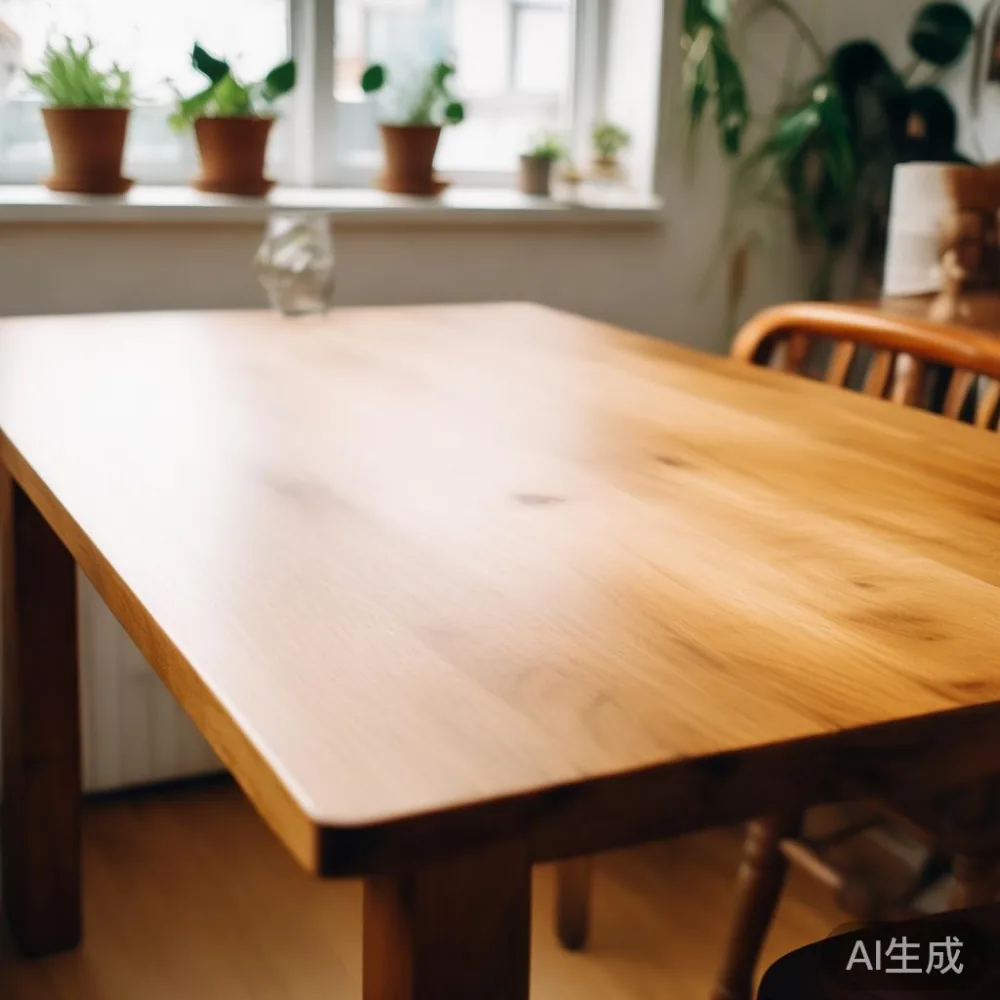
What is the daily routine that actually protects a lacquered surface?
Twice a week is enough for most Singapore households. Wipe with a dry microfibre cloth in the direction of the grain, then follow with a barely damp second cloth wrung out so hard that no water drips when you shake it. Dry immediately with a third cloth. The whole sequence takes under four minutes for a 1.6 m table and under six minutes for a 2.0 m extendable model.
Skip the feather dusters. They push dust into the grain rather than lifting it. Skip the silicone polishes sold at SGD 12 to SGD 25 in neighbourhood hardware stores — they create a temporary shine that traps moisture against the lacquer film and accelerate the clouding you are trying to avoid. The only products worth keeping in the cabinet are a pH-neutral wood soap (around SGD 28 for 500 ml) and a soft wax crayon matched to your finish for scratch repair.
Coasters are non-optional. A 9 cm rattan coaster costs SGD 3 to SGD 5 at Tiong Bahru or a neighbourhood dry goods shop, and a set of six stone coasters runs SGD 24 to SGD 45. The table will outlive several sets.
How do I style a Nordic queen bed in a small apartment?
Use a low-profile queen bed frame in solid ash or walnut, leave 60 cm of walking space on at least one side, and hang a single 60 cm wide framed print 130 cm above the floor to anchor the wall.
The same rules that protect a lacquered dining table — keep humidity between 45% and 60%, avoid direct afternoon sun, wipe with a barely damp microfibre cloth — apply to a Nordic queen bed frame finished in matte lacquer. In a 9.4 sqm HDB bedroom in Punggol, my colleague fitted a 152 cm by 188 cm queen bed, a 50 cm deep nightstand in matching walnut, and a slim 35 cm wide console that doubles as a desk. The visual lightness comes from the negative space, not the furniture. A 30 cm clearance on either side of the bed reads as generous; 20 cm reads as cramped and collects it.
Style with one textured throw in oat linen (around SGD 65 locally), two 50 cm by 50 cm cushions in muted clay, and a single ceramic vase on the nightstand — never both sides of the bed, or the symmetry turns museum-stiff. The point of Nordic styling is restraint, which doubles as a humidity strategy: fewer soft surfaces means less moisture trapped near the lacquered bed frame.
How should a lacquered dining table be cleaned after a curry or kopi spill?
Blot, do not wipe. Lift the spill with a dry microfibre cloth in straight lines, then clean the residue with a cloth dampened with water and a single drop of pH-neutral wood soap. Dry the area within thirty seconds.
Wiping a curry spill pushes the turmeric and oil deeper into the lacquer and across a wider footprint. Blotting keeps the damage localised. The thirty-second drying window is the part most Singaporean households miss — they wipe, then walk away, and the moisture sits on the finish through the next ninety minutes of air-conditioning cycling. That sitting moisture is what blooms the lacquer.
For kopi or teh spills with tannins, the same blot-then-clean sequence applies. Tannins darken light oak within ten minutes if left wet, and the discoloration sits in the lacquer film, not the wood. The refinishing fee for a 60 cm by 60 cm tannin patch runs around SGD 90 to SGD 140 at most Singapore workshops. Avoiding the spill altogether costs the price of a coaster.
What is the best humidity range for a lacquered dining table in the tropics?
Keep the room between 45% and 60% relative humidity, with a target of 52%. Anything above 70% for more than six hours risks a cloudy bloom on open-pore lacquer finishes.
A basic hygrometer with a 38 mm dial costs SGD 14 to SGD 22 at any neighbourhood electronics shop and is the single best purchase a new dining-table buyer can make. Place it on the table itself, not on a nearby shelf, because humidity at the wood surface is what matters. Run the air-conditioning for at least four hours overnight during the November-to-January wet season, even if you do not need the cooling — the dehumidification effect alone is worth the SGD 0.18 to SGD 0.32 per hour in additional electricity.
A small domestic dehumidifier rated at 12 L per day covers a 1,000 sqft HDB flat comfortably and uses around 200 W. Units run from SGD 229 for a basic Meaco to SGD 480 for a Mitsubishi with a built-in pump. Either pays for itself within the lifespan of a single refinishing service.
Can direct sunlight damage a lacquered dining table in a HDB flat?
Yes — afternoon sun through a west-facing window is the second most common cause of lacquer damage in Singapore, after humidity swings. A dining table placed within 1.5 m of an unfiltered west window will show uneven yellowing within eighteen months.
The fix is a 3-pass blackout curtain in oat, stone, or sage, which costs SGD 65 to SGD 140 per panel at local fabric shops and blocks 99% of UV. Sheer linen alone is not enough — it diffuses the light but does not filter the UV band that yellows lacquer. Position the table at least 80 cm away from the glass if the curtain is impractical, and rotate it 180 degrees every three months so any uneven exposure averages out.
In a typical 1,066 sqft HDB flat in Bedok, I measured a 6°C temperature difference between the window side and the corridor side at 3 pm last August. That gradient is enough to cup a 2 m solid oak top over twelve months. The lacquer follows the wood, and the result is hairline cracks along the grain that no amount of polishing will hide.
What about marble, wardrobes, and other solid wood pieces — do they share the same rules?
Marble table tops need a separate pH-neutral sealer reapplied every twelve months and cannot tolerate the citrus-based cleaners that are safe on lacquer. Solid wood wardrobes and nightstands share the same lacquer chemistry as a dining table sg, so the same humidity and sun rules apply, with one extra step: leave wardrobe doors ajar for twenty minutes after every air-conditioning cycle to vent trapped moisture.
The shared rule across every lacquered piece — dining table, bed frame, wardrobe, nightstand — is the 45% to 60% humidity window. A whole-home dehumidifier on a humidistat costs around SGD 850 to SGD 1,400 installed and protects every lacquered surface in the flat at once. For households that already own a solid wood sofa in walnut or ash, the same 52% target prevents the joint creaks that develop when frames repeatedly swell and contract.
What does a realistic care schedule look like across a year?
Twice-weekly dry dusting, monthly damp wipe with pH-neutral soap, quarterly inspection of coasters and felt pads, and a professional refinishing assessment every five years. The total annual cost of ownership in cleaning supplies is under SGD 60.
The schedule reads like a lot in writing, but in practice it folds into ten minutes a week. The microfibre cloths cost SGD 6 for a pack of six. The pH-neutral soap lasts twelve months for a single dining table. The felt pads under any vase or table lamp need replacing every six to nine months because Singapore humidity degrades the adhesive — a 24-piece pack runs SGD 5 to SGD 9.
For households that have invested in a post-modern light luxury dining table — the style with slim tapered legs, rounded edges, and a low-sheen lacquer that reads as quiet rather than glossy — the schedule is identical. The aesthetic only changes how visible the clouding is when something goes wrong. A matte finish hides minor wear better than a high-gloss piano finish, but it also hides the early warning signs, so the hygrometer matters more, not less.
Where does MIDHILL's warranty actually help Singapore owners?
The ten-year structural warranty covers joint failure, wood splitting, and lacquer delamination. Lifetime refinishing covers the surface-level wear that humidity causes, including the cloudy blooms, tannin darkening, and minor scratches described above. Both services ship a replacement panel or refinish the existing one at the Foshan workshop, with round-trip logistics from Singapore running around 35 to 50 days depending on monsoon conditions.
I have watched the refinishing bench handle a 1.8 m walnut dining table sg last September for a customer in Clementi. The piece arrived, was sanded to bare wood over six hours, sealed with three coats of open-pore matte lacquer, and shipped back inside three weeks. The customer's refinishing fee, including two-way logistics, came in around SGD 420 — a fraction of the SGD 2,200 replacement cost of a comparable new table.
For Singapore households buying solid wood furniture — whether a dining table, bed frame, wardrobe, or nightstand — the warranty only matters if the brand keeps the paperwork simple. MIDHILL's service team responds inside one working day to emailed warranty claims and provides a written quote within three working days after a photo assessment. That speed matters in a tropical climate, because the longer a bloom sits, the deeper it sets.
Final practical checklist before you buy your next lacquered piece
Measure the lift and corridor first. A 1.6 m dining table fits through a 1.5 m corridor only if rotated onto its side. Measure the cargo lift depth in your block — older HDB lifts measure 1.4 m deep, newer ones 1.8 m. Order a hygrometer on the same day you order the table. Budget SGD 30 to SGD 50 for coasters, cloths, and soap before the table arrives. Photograph the finish on day one under daylight from the window — the photo becomes your warranty baseline.
Singapore's tropical climate is the silent partner in every lacquer purchase. Treat it as part of the furniture, not as an enemy, and the piece will outlast three HDB leases. Ignore it, and the bloom will arrive inside the first wet season. The difference between those two outcomes sits in a ten-minute weekly habit and a SGD 14 hygrometer.