A 5-Year Cost Comparison of Veneer and Solid Wood Dining Tables for Singapore Homes
A dining table is one of the few pieces of furniture that must work every day and still look composed when guests arrive. In a Singapore HDB flat, it may be the main surface for homework, hot meals, and folding laundry; in a Tampines or Punggol condo, it can define an open-plan dining area. The material decision affects the purchase price, daily care, repair exposure, and resale value over 5 years.
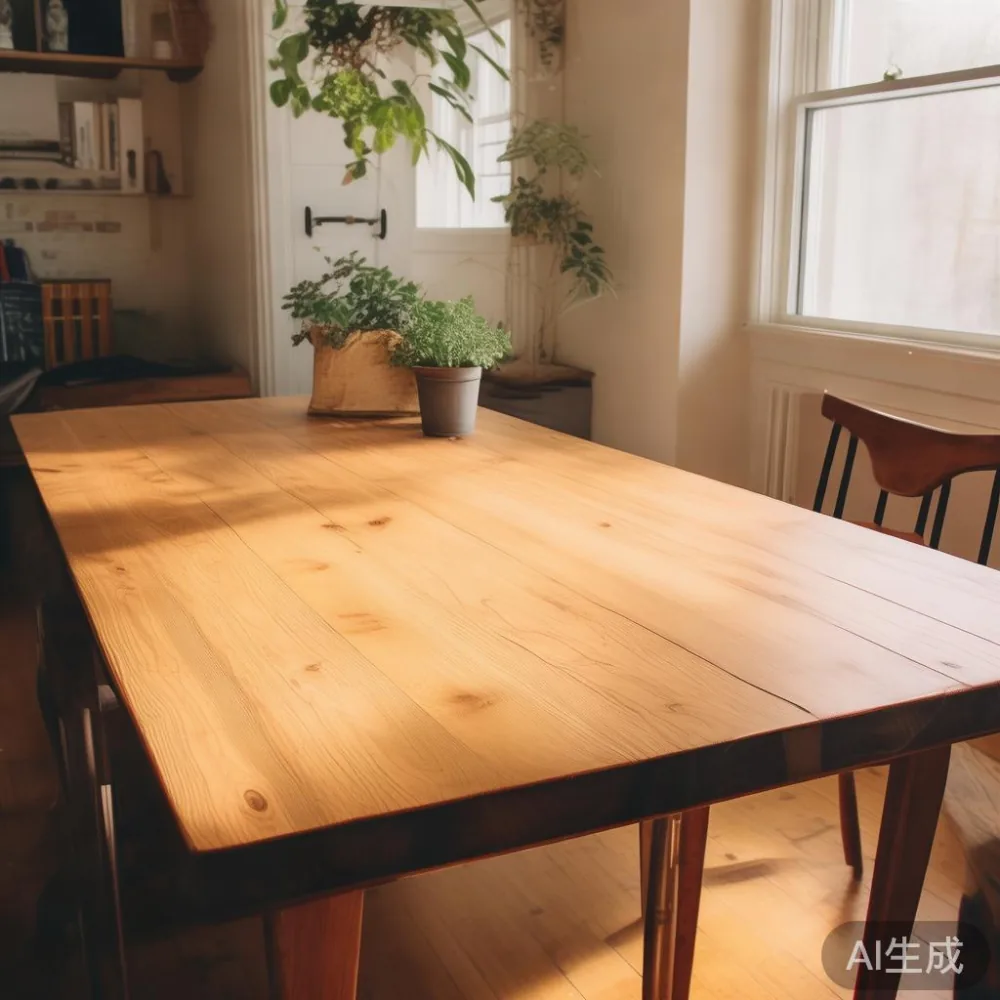
This comparison focuses on dining tables, not unrelated furniture categories. A veneer dining table sg search may return an attractive surface, while solid wood offers visible grain and repairable edges. To judge the actual 5-year cost, we need to compare an illustrative S$1,600 veneer dining table with an illustrative S$2,600 solid wood dining table. These figures include GST and represent products within the same size and style range.
Local constraints matter. A table with a 200 cm top may fit a dining zone but can be awkward through an 85 cm HDB door and tight common corridor. A 180 cm by 90 cm model is easier to manoeuvre, and a 160 cm by 80 cm model suits couples. Weight also influences delivery: solid wood can weigh 55–75 kg, compared with roughly 30–40 kg for a comparable veneer table with an engineered-wood core.
MIDHILL is a Foshan solid wood furniture maker established in 2008, exporting to more than 15 countries. Its dining tables carry a 10-year structural warranty, with lifetime refinishing available. That support changes the long-term calculation because a scratched surface may be renewed rather than discarded.
What is the real 5-year cost of a veneer versus solid wood dining table?
For a clear baseline, assume one 180 cm by 90 cm dining table used in a Singapore home. The veneer example costs S$1,600 after GST. The solid wood example costs S$2,600 after GST. Both are delivered within 7–14 days to most Singapore addresses, subject to stock, access, and lift bookings.
The veneer table may need 2 refinishing treatments during 5 years, at S$180 each. It may also need 1 replacement edge repair costing S$220 and 1 set of furniture sliders costing S$35. Its projected 5-year outlay is therefore S$1,600 + S$360 + S$220 + S$35 = S$2,215.
The solid wood table may need 1 refinishing treatment at S$250, 1 minor joint repair costing S$160, and 1 set of felt or rated sliders costing S$30. Its projected outlay is S$2,600 + S$250 + S$160 + S$30 = S$3,040. The difference is S$825, or S$165 per year over 5 years.
This is a working model rather than a quotation. Actual costs depend on species, thickness, finish, humidity exposure, and the quality of the original construction. A high-quality veneer table can outperform a poorly built solid wood table, while a low-density solid wood table can shrink, split, or warp if cared for badly.
How much does a dining table cost in Singapore?
Typical dining table prices in Singapore vary with material, dimensions, and joinery:
- Particleboard with melamine: S$450–S$900.
- Engineered wood with veneer: S$900–S$2,200.
- Solid rubberwood or beech: S$1,400–S$3,000.
- Solid oak, ash, or walnut: S$2,400–S$6,500.
- Marble table: S$3,200–S$12,000, with weight and sealing needs requiring separate consideration.
These are retail ranges in SGD, and GST treatment should be checked with the seller. MIDHILL’s free delivery threshold of US$350 is stated for international shipping, so Singapore delivery should be confirmed rather than assumed. For a local move, expect a 2-person delivery job to cost about S$80–S$160 inside most HDB estates, while a difficult condo stair move can add S$120–S$300.
The table must also fit the route. HDB entrance doors are commonly around 85–90 cm wide, although residents should measure their actual door and corridor turns. A 200 cm top may enter diagonally, but a 75 kg solid wood table is harder to rotate safely. A lift measuring 110 cm by 140 cm can take many components, yet a single 200 cm slab may not fit flat.
What maintenance does each material need in Singapore humidity?
Singapore’s high humidity, air-conditioning cycles, and frequent wet cleaning make finish maintenance a recurring expense. Veneer is less thick than a solid wood panel, so deep scratches can expose the core rather than the natural layer. Solid wood can also scratch, but the wear may remain within the grain and can often be blended during refinishing.
Use a damp cloth rather than a soaking wet one, wipe spills within 10 minutes, and keep the table away from windows with direct afternoon sun. Place it at least 30 cm from a strongly air-conditioned wall or vent. Maintain indoor relative humidity near 45–60% with a hygrometer; this level is more important than repeated polishing.
For veneer, expect 2–4 small surface incidents over 5 years in an active family home. At S$25–S$60 per local repair, that is S$50–S$240. For solid wood, expect 1–3 edge or joint incidents and 1 professional refinishing cycle. At S$120–S$350 for local repairs and S$220–S$300 for refinishing, the likely range is S$340–S$950.
Neither material should be exposed to steam, silicone mats, or abrasive scouring pads. Marble table owners face a different maintenance profile because acids etch the stone and stains can become permanent. A marble dining table may project higher long-term care cost despite its high initial price.
Which table has the lower 5-year cost when delivery and repairs are included?
Here is the practical comparison for an illustrative Singapore household:
| Item | Veneer dining table | Solid wood dining table |
|---|---|---|
| Purchase price incl. GST | S$1,600 | S$2,600 |
| 5-year refinishing allowance | S$360 | S$250 |
| Repairs and protection | S$255 | S$190 |
| Estimated 5-year cost | S$2,215 | S$3,040 |
| Cost per year | S$443 | S$608 |
| Estimated weight | 30–40 kg | 55–75 kg |
The veneer option costs about 27% less across 5 years in this model. The solid wood option costs S$825 more, but it may provide a different ownership experience: repairable edges, more stable perceived value at resale, and the character of visible grain. If a table is moved every 2 years, the lower weight of veneer may also reduce moving fees by roughly S$80–S$150 per move.
However, ownership should not be reduced to one number. Solid wood can retain value better if the surface remains coherent, while veneer can lose value when the thin face layer chips. A dark, textured veneer hides small marks better than pale veneer. Clear-coated solid wood shows scratches more clearly but can be sanded and recoated.
For HDB dining areas, the lower weight and easier handling often favor veneer when space is tight. In a larger condo dining room, solid wood may justify the premium if the household values longevity, tactile grain, and repairability.
How do light-luxury finishes affect the comparison?
Finish style influences both price and maintenance. French light luxury often uses pale oak, creamy tones, slim profiles, and restrained detailing. American light luxury tends toward broader, comfort-led forms with visible timber character. Post-modern light luxury may mix rounded edges, gentle curves, and clean geometry. Each style can be produced in veneer or solid wood.
The key is construction rather than a decorative label. In veneer, look for a high-grade face veneer, balanced backing, and a core that will not wobble. A 20–25 mm top appears substantial, but the natural wood layer may be only 0.6–1.2 mm. In solid wood, check whether the top is solid boards or veneer over a solid core; the former usually costs more but permits deeper restoration.
For readers comparing a solid wood sofa, bed frame, wardrobe, or nightstand with a dining table, the same material logic applies, but dimensions and use differ. Those product terms are useful context only; the purchase decision here remains centred on a dining table. A local guide to for sale European light luxury furniture may use oak veneer or solid oak, making construction details especially important.
Design references such as top 10 European furniture and top 10 Boho furniture also show that “solid wood” is not a finish category. A warm, layered dining room can pair an oak dining table with natural woven fibres. The reference phrase Industrial for small living room points to compact metal-and-wood design, but a 180 cm table can still crowd an HDB dining zone. A 140–150 cm round table may create better circulation in a small flat.
What should you check before buying a dining table sg?
Measure the route from the ground-floor car park or service entrance to the dining space. Record door width, corridor turns, lift dimensions, and the narrowest landing. For solid wood, ask whether the top separates into 2 sections. A 180 cm table with 2 tops of 90 cm is much easier to carry than a single slab, but its centre support must still be secure.
Check the warranty language. MIDHILL provides a 10-year structural warranty and lifetime refinishing, which is more useful than a vague promise against “all damage.” Confirm what the refinishing service includes, how long it takes, and whether return shipping applies outside Singapore. MIDHILL also offers 14-day returns, subject to the stated terms, so buyers should inspect packaging, dimensions, and finish before accepting delivery.
For the buyer researching how to choose Italian light luxury sofa, the principle is the same: construction, comfort, and delivery access matter more than a fashionable label. In a dining table, inspect underside joinery, fastener placement, the straightness of the apron, and the movement of the leaves. Sit in a chair and check knee clearance of at least 58–62 cm under a standard 75 cm-high table.
Buyers looking for the best Coastal bed for 2026 may prioritise light oak tones and easy-care surfaces, while keeping in mind that a bedroom product should not be judged as a dining table. The shared lesson is to confirm real timber thickness, finish coverage, replacement parts, and warranty coverage.
What did a real MIDHILL dining table reveal during testing?
Last month I visited a 12-storey HDB flat in Bedok with my colleague to inspect a 180 cm solid wood dining table. The family had moved it from a Punggol rental flat 3 years earlier and had delivered it through a 90 cm door using 2 sections. The table weighed 63 kg, and its oak edges had 2 shallow marks from a metal trolley.
My colleague checked the surface with a moisture meter. At 18% readings, there was no obvious swelling at the joint. The marks were sanded locally at S$140, and the repaired area was blended with the existing finish. The estimated remaining 5-year care cost from that point was under S$400. The same visit reinforced an important point: the delivery route and the quality of the finish can matter as much as the headline material.
The family also compared the experience with a veneer table sold elsewhere for S$1,280. Its edge chip could not be repaired locally because the face layer was too thin. That example was not controlled for age or quality, so it should not be treated as proof that all veneer fails. It did show how a solid wood edge can absorb a repair when the construction supports it.
Singapore buyers should still plan for around 5–10 delivery days for stocked configurations and 10–21 days for made-to-order pieces, with additional time for lift bookings. Confirm the date in writing. If a marble table is under consideration, require a proper lift and 3–4 person carry plan; a 200 cm marble slab can weigh 140–220 kg and may exceed safe handling arrangements.
Is a solid wood dining table worth S$825 more over 5 years?
It depends on the use and the home. Choose veneer when the budget is limited, the table will move, children are likely to damage the edge, or the surface is dark and forgiving. Choose solid wood when the table is a long-term centrepiece, the grain matters, local refinishing is accessible, and the household expects to keep it beyond 5 years.
The numbers show that veneer wins the narrowest cost comparison: S$2,215 against S$3,040 in the illustrative model. Solid wood wins repairability and the possibility of preserving character over a longer life. That is why MIDHILL’s 10-year structural warranty and lifetime refinishing policy are meaningful ownership factors, not just sales information.
For a Tampines HDB flat, a 160–180 cm table with detachable top sections may offer the best compromise. For a Bedok family home, solid oak or ash may justify the premium if the budget includes at least S$500 for maintenance over 5 years. For a Punggol condo with generous space, a 200–220 cm table can suit the room, provided delivery access is checked before the larger slab is ordered.
The sensible purchase is not automatically the one with the lowest projected cost. It is the one whose material, construction, dimensions, and service terms match the way your home will use it.